

The temples of Java: spirituality and sacred landscapes
Java, an island shaped by the sacred
In the temples of Java Indonesia, the sacred is not limited to religious practices: it structures space, landscapes, and forms of territorial organization. Temples are not placed randomly. Their location follows a logic in which the mountain, the earth, and invisible forces play a central role.
This organization is part of a long history, marked by the successive influence of Buddhist and Hindu kingdoms. Temples thus become symbolic anchor points, embedding spirituality within the very geography of the island.
The Buddhist and Hindu temples of Java
Between the 8th and 10th centuries, Java experienced a period of intense religious and political activity. Successive kingdoms left behind monumental complexes, designed as representations of the world and as means of spiritual transmission.
Temples are not merely places of worship. They embody a cosmic vision in which human beings evolve between different levels of existence. This conception is reflected both in the architecture and in the sculpted iconography.
Borobudur, Buddhist architecture and symbolism
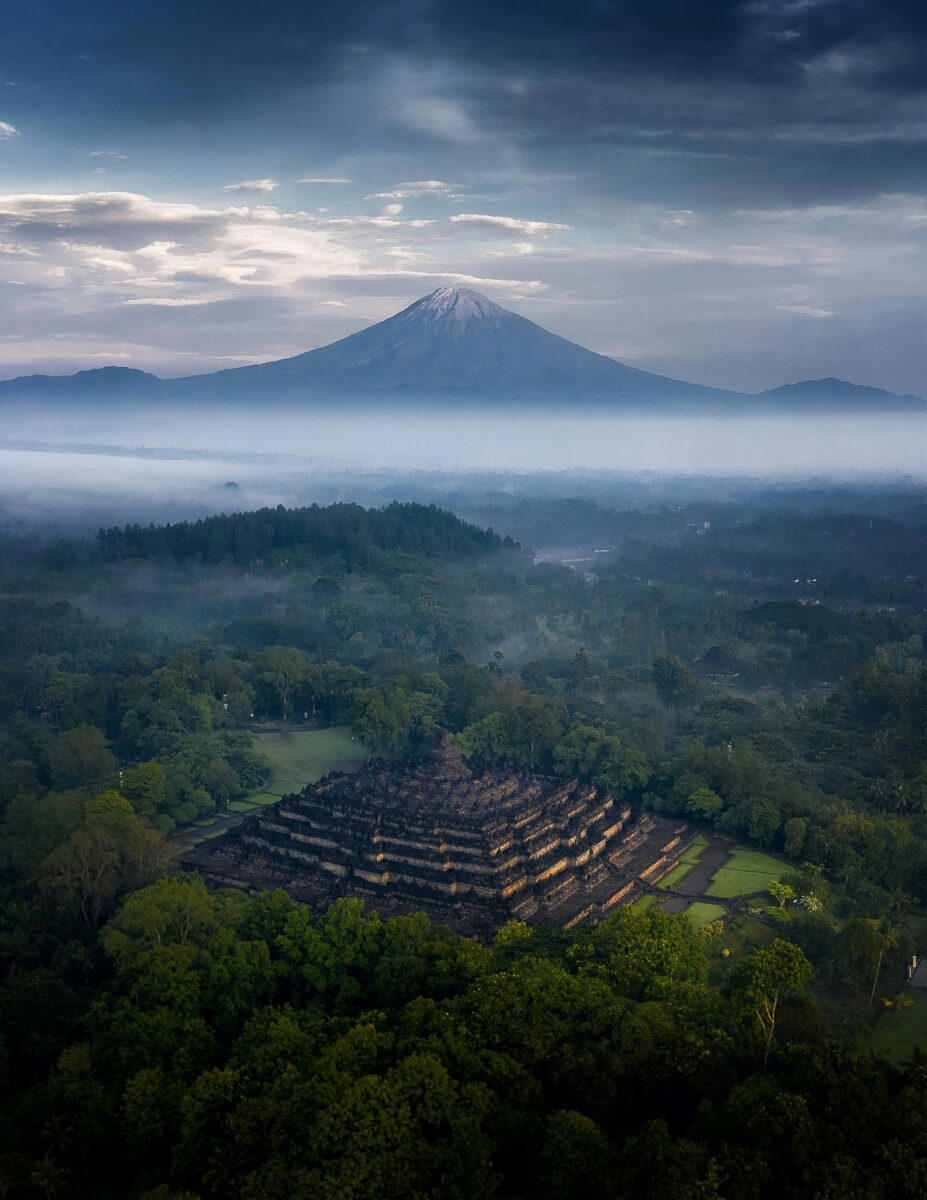
Borobudur stands as one of the finest examples of Buddhist architecture in Southeast Asia. Indeed, the Sailendra dynasty constructed this monument between the 8th and 9th centuries. As a result, its mandala-shaped structure symbolically represents the universe according to Buddhist cosmology.
A symbolic spiritual journey
The structure rises across nine superimposed levels, combining six square platforms and three circular terraces. In this way, the layout guides visitors along a gradual ascent, both physical and spiritual. Each level reflects a stage on the path to enlightenment, moving from desire to higher states of awareness. Thus, the architecture itself becomes a tool for spiritual progression.
Narrative reliefs and teachings
Moreover, the carved galleries extend for several kilometers and reveal an exceptional narrative richness. More than 2,600 bas-reliefs illustrate Buddhist stories, including episodes from the life of the Buddha and moral teachings. In addition, these scenes depict karma, rebirth cycles, and essential virtues. Consequently, as visitors walk through the monument, they engage in a meditative experience where movement supports inner reflection.
Sacred figures and symbolism
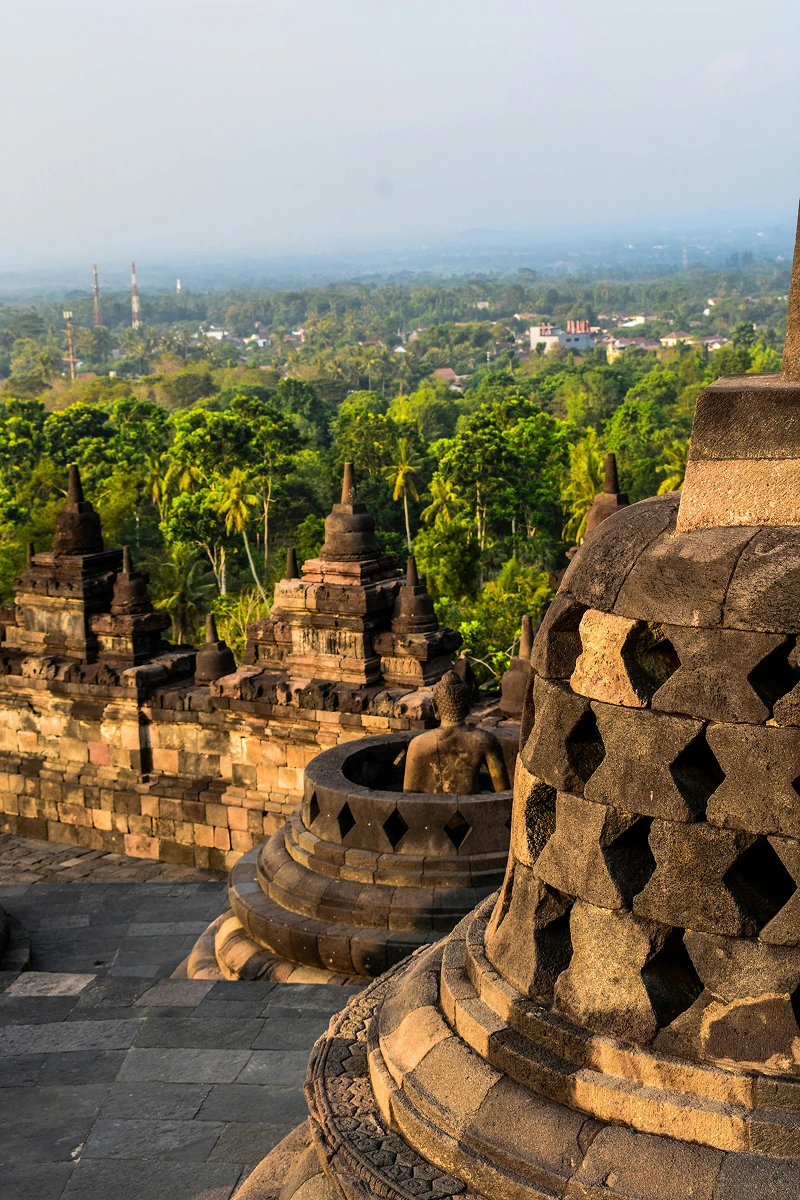
The site also contains more than 500 Buddha statues distributed throughout the monument. At the upper levels, perforated stupas enclose seated figures displaying symbolic gestures. Furthermore, the central stupa represents emptiness, a fundamental concept in Buddhism.
Rediscovery and preservation
However, after the decline of Buddhist kingdoms in Java, vegetation and volcanic ash gradually covered Borobudur. It was only in the 19th century that the site was rediscovered. Subsequently, restoration campaigns preserved the monument, particularly with UNESCO’s support. Today, Borobudur remains both a heritage site and an active place of pilgrimage.
A temple in harmony with nature
Finally, surrounded by volcanoes and overlooking a fertile plain, Borobudur integrates naturally into its environment. Therefore, this setting reinforces the connection between landscape and spirituality.
In conclusion, Borobudur represents more than a monument. It embodies a complete spiritual experience where architecture, symbolism, and nature interact.

Candi Plaosan
A symbol of religious coexistence
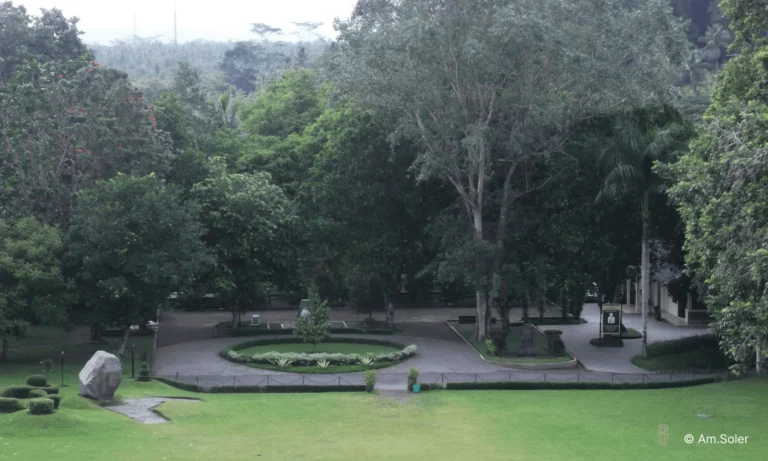
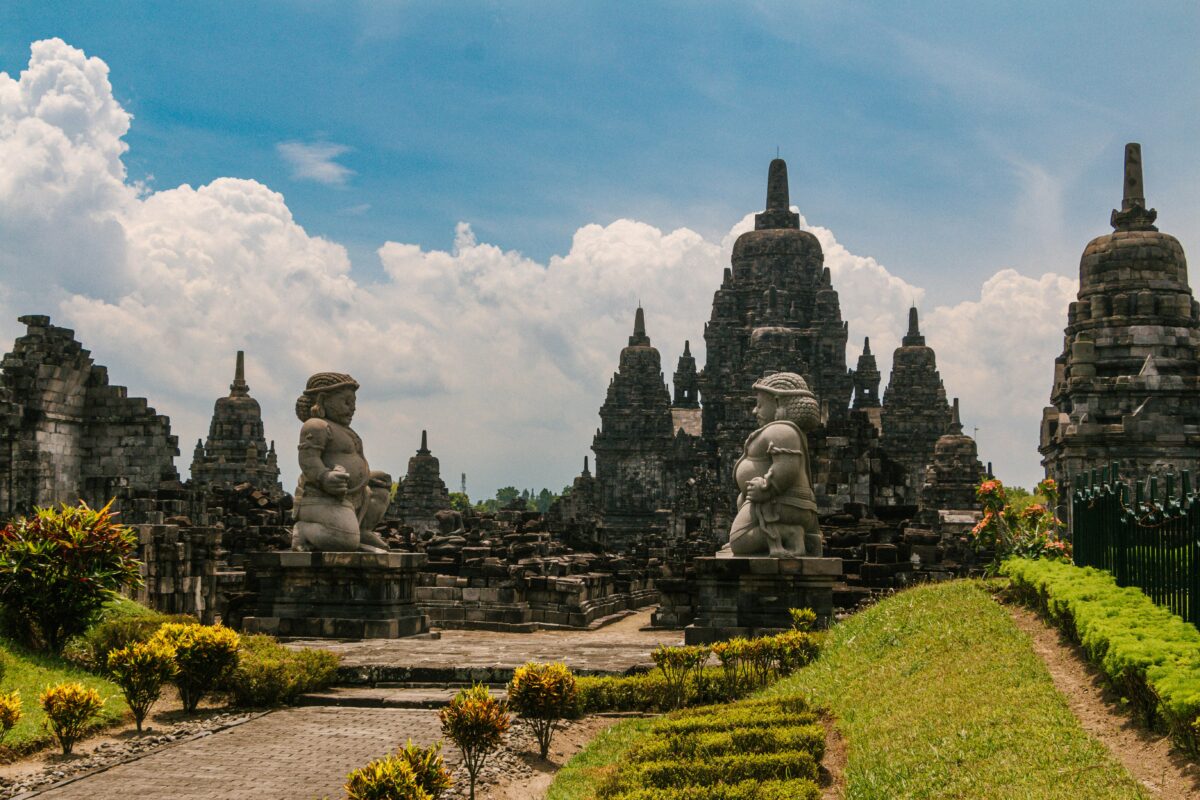
Located near Prambanan, Candi Plaosan occupies a special place among the temples of Java. The site stands out for the presence of both Buddhist and Hindu elements within a single architectural complex. The twin structures, stupas, and decorative motifs reflect this cross-influence.
This site is often interpreted as the reflection of a period of religious coexistence, when different spiritual traditions coexisted within Javanese kingdoms. This complementarity, visible in the stone, highlights an approach to the sacred based on harmony rather than opposition.
The temple thus illustrates a form of religious syncretism specific to Java, where cultural influences overlap without excluding one another.
Prambanan
The expression of Javanese Hinduism
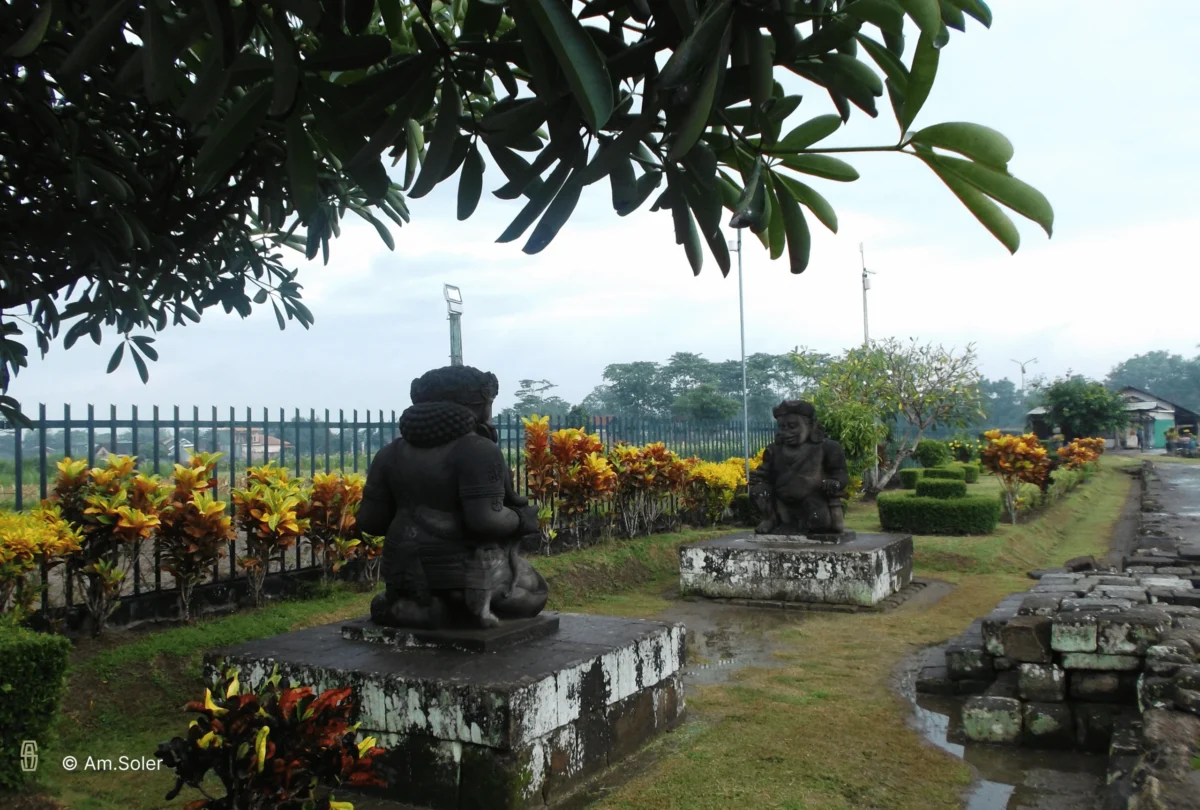
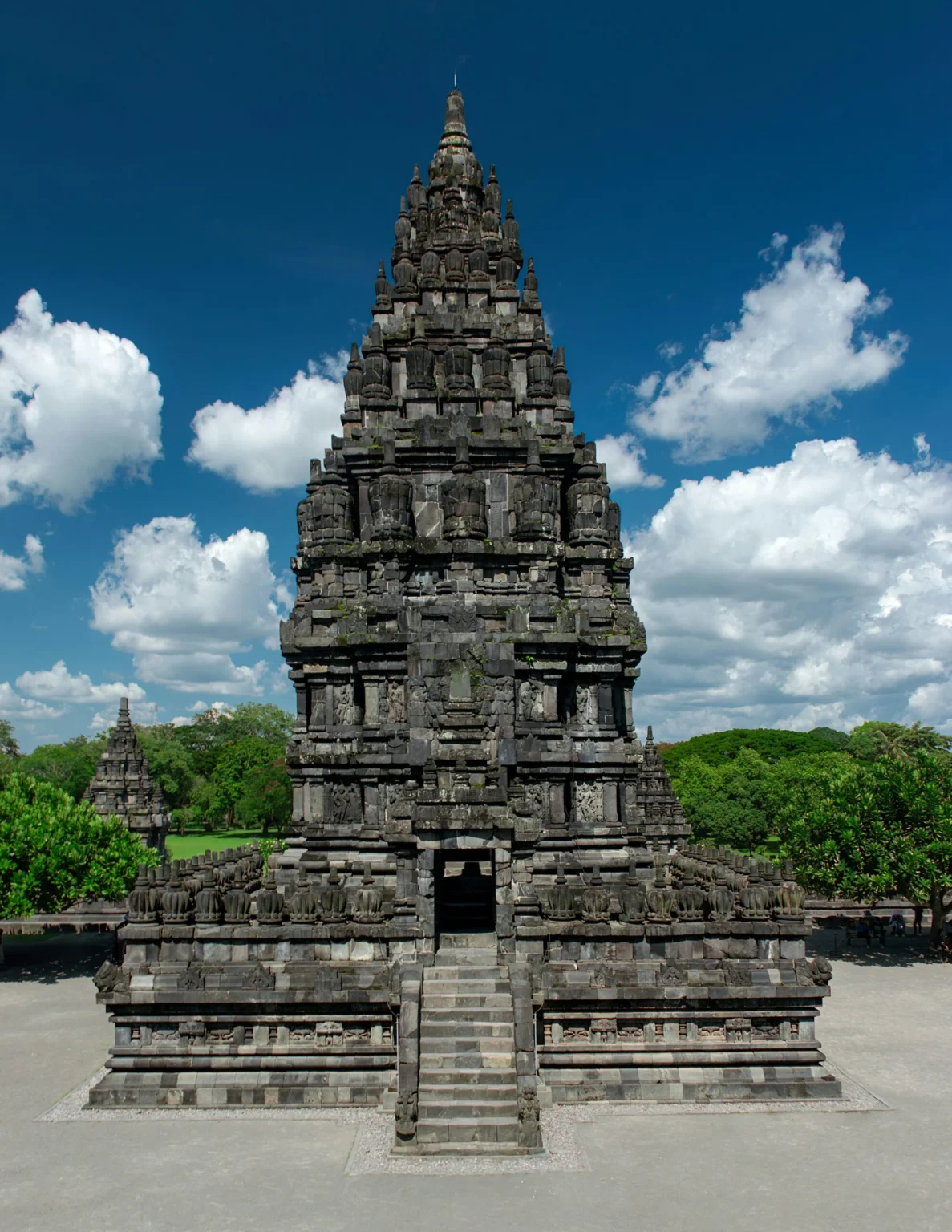
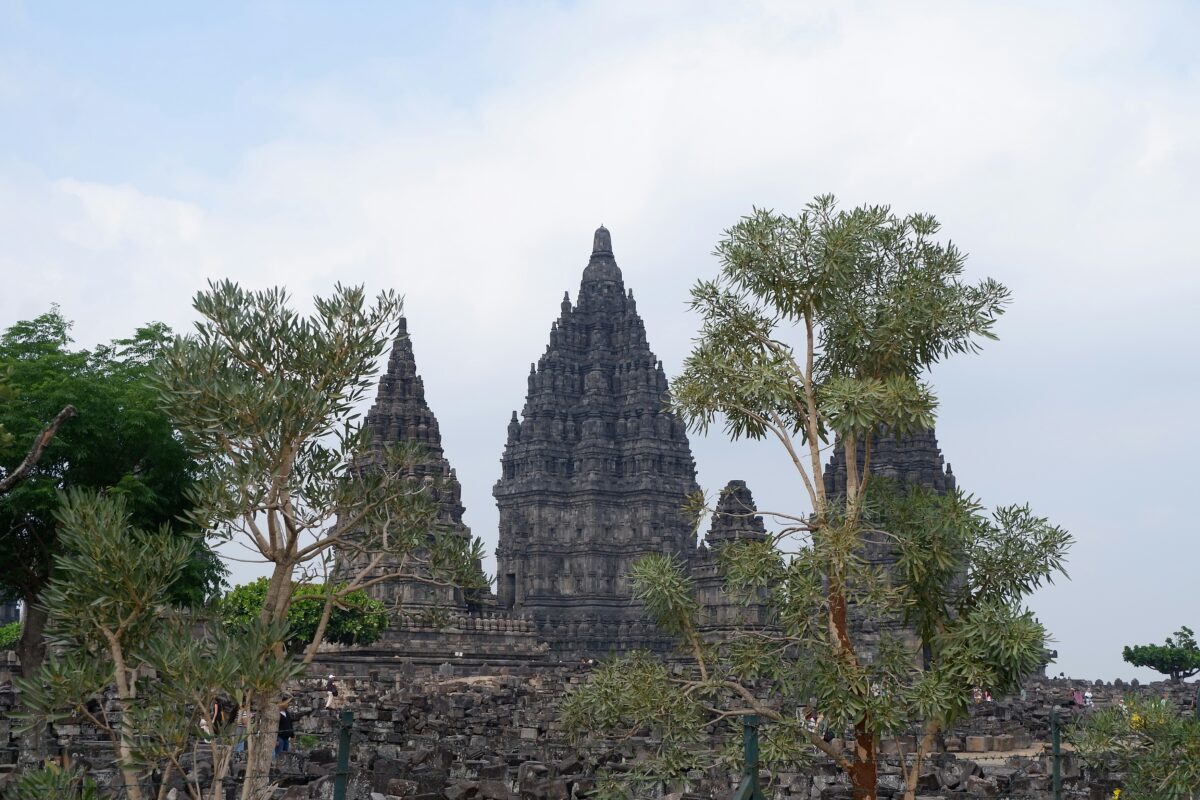
The Prambanan complex represents the pinnacle of Hindu architecture in Java. Dedicated mainly to Shiva, it is characterized by its slender towers and its rigorous geometric organization.
Moreover, the ensemble is structured according to a precise hierarchy, in which the deities occupy symbolic positions reflecting the cosmic order. The sculpted reliefs depict episodes from the Ramayana, integrating mythological narrative into the architectural space. The verticality of the temples reinforces the idea of spiritual elevation and the connection between the earth and the divine world.
Prambanan thus reflects a conception of the sacred deeply integrated into architecture, where each element contributes to a symbolic reading of the universe.
Temples, volcanoes, and territorial organization
In Java, the relationship between temples and volcanoes is fundamental. Volcanic mountains are often perceived as elevated places, close to spiritual forces. This perception influences the placement of sacred sites, which are often oriented or positioned in relation to the surrounding relief.
This logic can be found throughout the Javanese territory, where the sacred is embedded in a geography shaped by volcanism. Lava, the mountain, and the temple then form a coherent whole, linking the natural landscape to spiritual beliefs.
The temples of Java in contemporary traditions
Even today, the temples of Java retain a strong symbolic dimension. They are associated with ceremonies, rituals, and stories passed down through generations. Even when their original religious function has evolved, these sites remain essential cultural markers.
The temples thus continue to shape collective memory, linking the past of ancient kingdoms to present-day cultural practices.
The temples of Java exemplify a conception of the sacred that is intimately linked to the land, a theme that is also found in the world of Java, where volcanoes, landscapes and beliefs are closely intertwined. This relationship between spirituality and the natural environment is also evident in other parts of the archipelago, particularly in Bali, where temples play a central role in cultural and religious life.
Lonely Planet also features an article on Borobudur, one of Indonesia’s most important Buddhist sites and a major monument of Javanese heritage.
(External link to a reference site)