

Java, Indonesia: discover the landscapes and heritage of Java
Java in Indonesia: an island where nature, heritage and traditions come together
Volcanoes and spirituality: a relationship stretching back thousands of years in Java
Java in Indonesia combines natural landscapes, a remarkable historical heritage and traditions that are still very much alive. Dominated by an impressive chain of volcanoes, the island is also home to some of Southeast Asia’s greatest temples. Furthermore, its countryside, rice fields and villages keep alive skills passed down from generation to generation.
From volcanic peaks to ancient shrines, via agricultural lands, each region reveals a different facet of Java. This diversity shapes spectacular landscapes, a rich cultural heritage and traditions that remain deeply rooted in everyday life.
Finally, explore Java’s volcanoes, its iconic temples, and its countryside and traditions. Each of these aspects of its heritage reveals a different facet of the island and contributes to its identity.
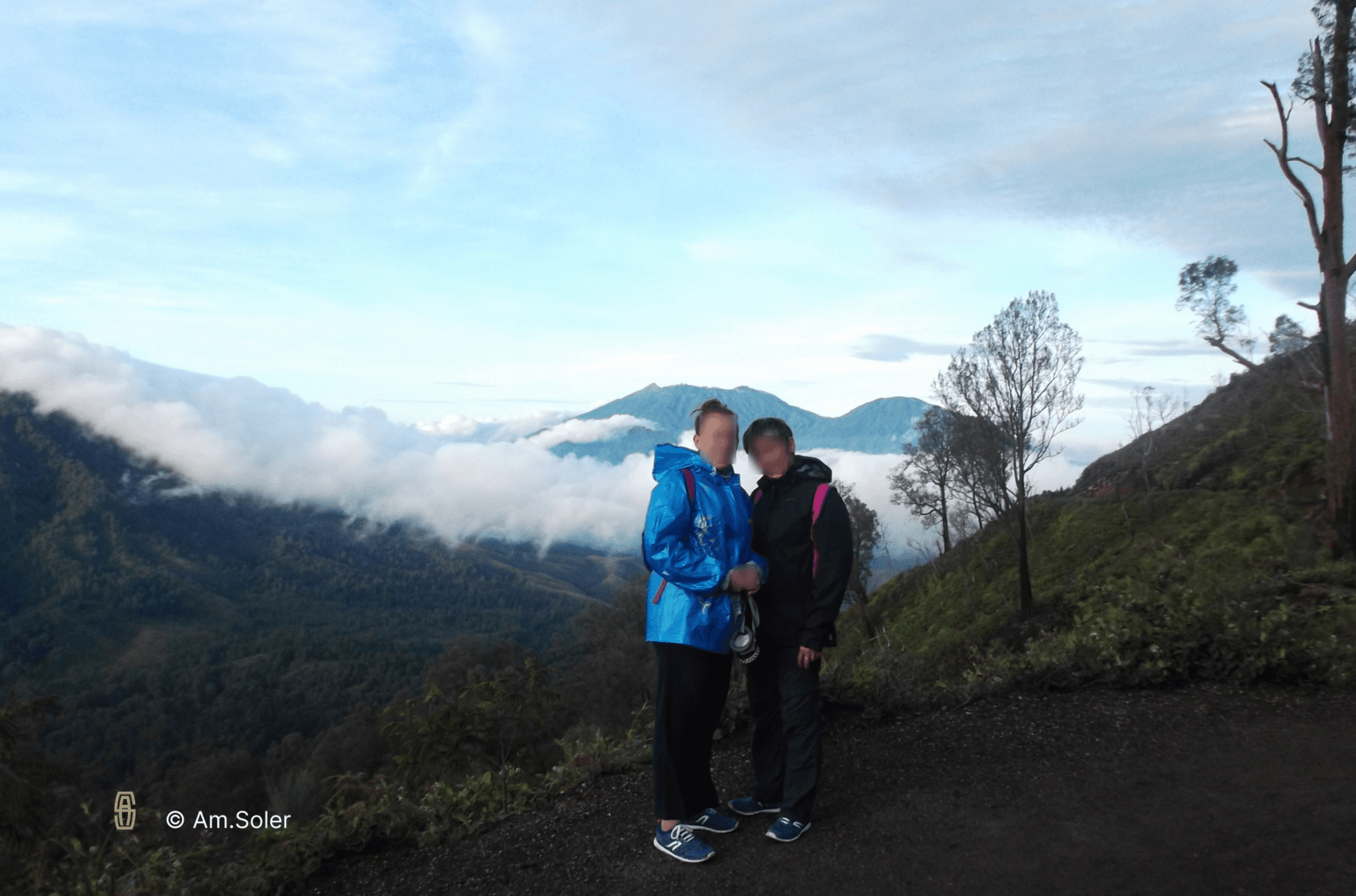
Kawah Ijen: a volcano with spectacular scenery
At the far east of Java, Mount Kawah Ijen fascinates with its unique geological phenomena. The volcano is known for its acidic crater lake and for its famous blue flames, visible at night. These flames, caused by the combustion of sulfuric gases, give the place both a spectacular and mysterious dimension.
The ascent to the crater of Kawah Ijen offers an intense experience. The trail winds through mineral landscapes where vegetation gradually becomes scarce, revealing rocky reliefs and volcanic layers. As one climbs, the panoramas open onto valleys and surrounding mountains. This progressive journey to the crater allows visitors to feel the power of geological activity.
Upon reaching the summit, travelers discover a striking landscape. The acidic lake occupies the bottom of the crater and contrasts with the surrounding rocky walls. In places, sulfur fumes escape from the ground, reminding visitors of the constant presence of volcanic activity. Sulfur miners, who work daily in these extreme conditions, also appear as direct witnesses to the relationship between humans and the mountain.
Thus, Kawah Ijen is not limited to a spectacular volcano. It embodies a complete experience, where raw nature, physical effort, and the human dimension meet. This place perfectly illustrates the power of Indonesian volcanic landscapes and their influence on local life.
The temples of Java: an exceptional spiritual heritage
In the center of Java, historic temples testify to an exceptional religious and artistic richness. These sanctuaries, built more than a millennium ago, embody spiritual traditions influenced by Hinduism and Buddhism.
Borobudur, with its superimposed terraces and narrative bas-reliefs, forms one of the most famous monuments in the world. This Buddhist temple, built in the 9th century, represents a sacred mountain. Its architecture follows a symbolic progression, where the lower levels illustrate the earthly world, while the upper terraces lead to a state of spiritual elevation.
Not far away, the temples of Prambanan and Candi Plaosan reflect the cultural heritage of the region. Their stone silhouettes rise above the plain, adorned with sculpted details illustrating deities and mythological scenes. Each temple possesses a symbolic organization, linked to the cosmic order and the divine.
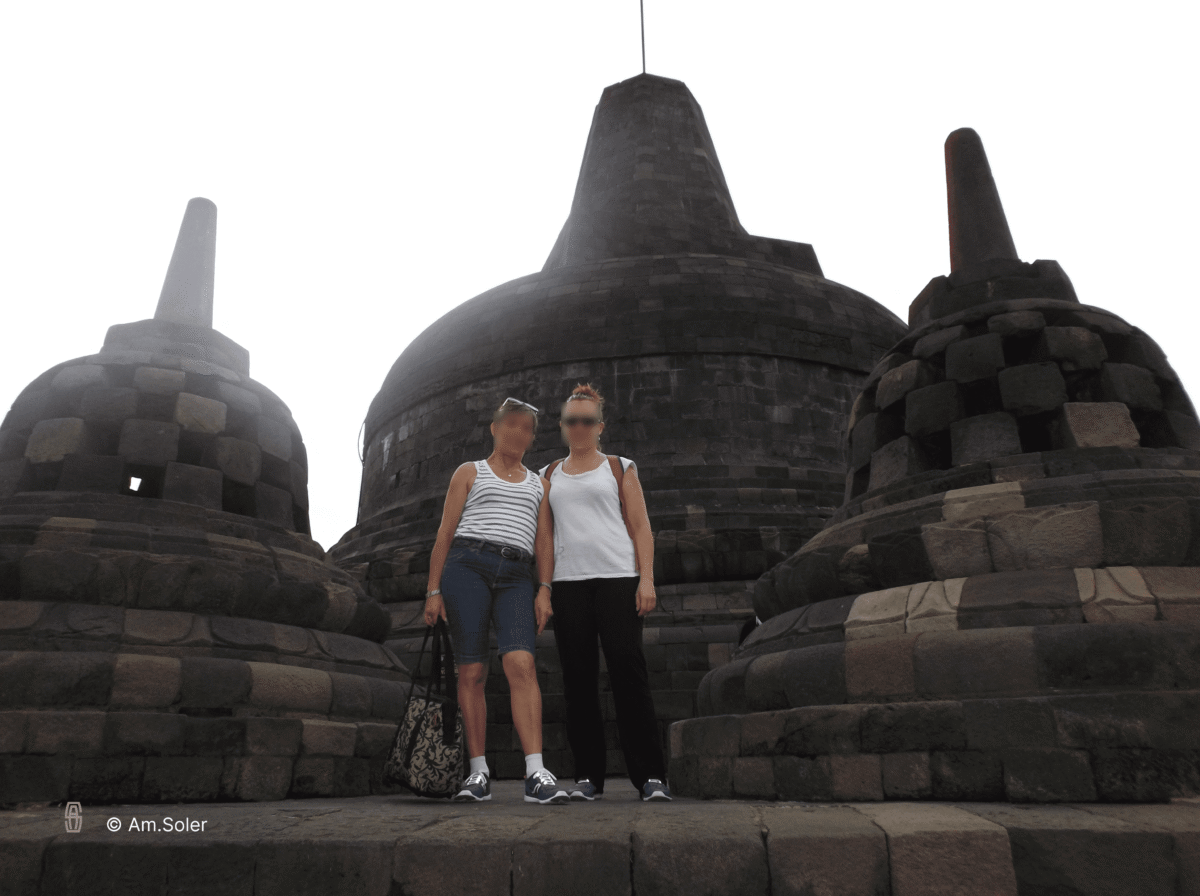
These temples are not randomly placed in the landscape. The ancient builders chose precise locations, often aligned with volcanoes or cardinal directions. Thus, the sanctuaries interact directly with the surrounding natural elements. Volcanic mountains become spiritual landmarks, considered as axes linking the earthly world to the divine world.
By visiting these temples, visitors discover not only refined architecture, but also a philosophy of life. The bas-reliefs tell mythological stories, scenes of daily life, and spiritual teachings. This narrative richness gives the temples a living dimension, where art and spirituality intertwine.
The Lands and Traditions of Java: a living heritage at the heart of the island
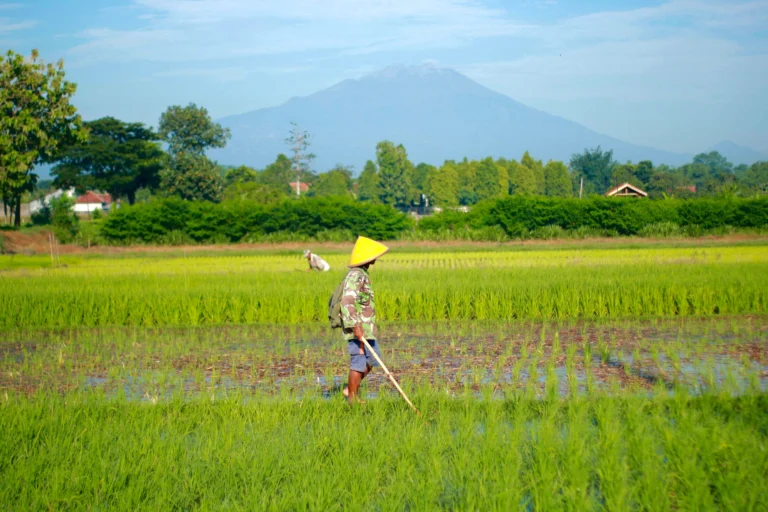
Beyond its volcanoes and temples, Java reveals a living heritage shaped by its countryside, rice paddies and villages. For centuries, local communities have been cultivating fertile land, passing on traditional craft skills and preserving traditions that still shape daily life. This cultural richness is evident both in the landscapes and in the practices handed down from generation to generation.
Across the island, each region has its own distinct identity. Terraced rice fields shape the landscape, whilst the villages keep traditional crafts and local customs alive. Furthermore, the markets, traditional festivals and interactions with the locals offer an authentic insight into Javanese heritage. This diversity naturally complements the exploration of the volcanoes and temples.
Explore Java in more depth
Three themes to help you understand the island better
Mount Kawah Ijen illustrates the power of the volcanic phenomena that shape Java. This feature article explores the volcano’s landscapes, its geological activity and the distinctive features that make it one of the island’s most iconic natural sites.
The temples of central Java offer a deeper insight into Java’s religious and architectural heritage. Their history, symbolism and setting within the landscape bear witness to centuries of spiritual traditions.
Finally, the countryside and traditions of Java shed light on a living heritage that is often less well known. The agricultural landscapes, villages and traditional crafts reveal another facet of the island and round off the exploration of its cultural heritage.
Volcanoes, temples and traditions showcase the richness of Java’s heritage. Together, they bear witness to the history, cultural diversity and landscapes that shape Java. To explore these different facets of the island in greater depth, the official Wonderful Indonesia portal offers an overview of Java, its regions and its natural and cultural heritage.
(External link to reference website)