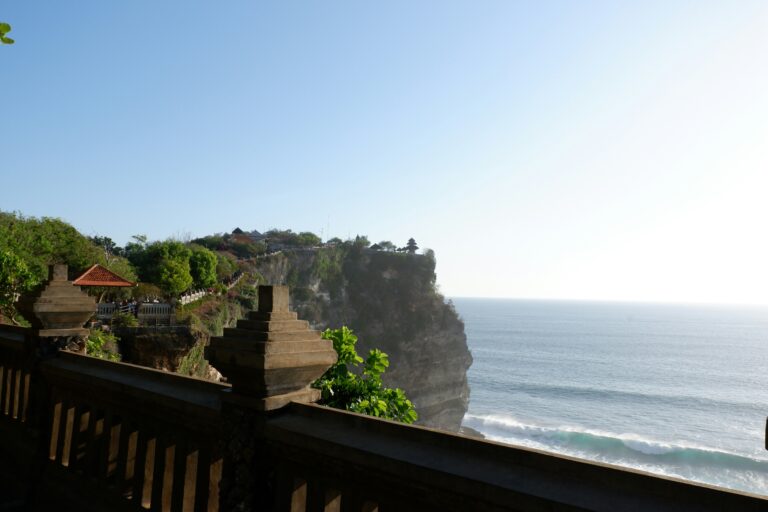
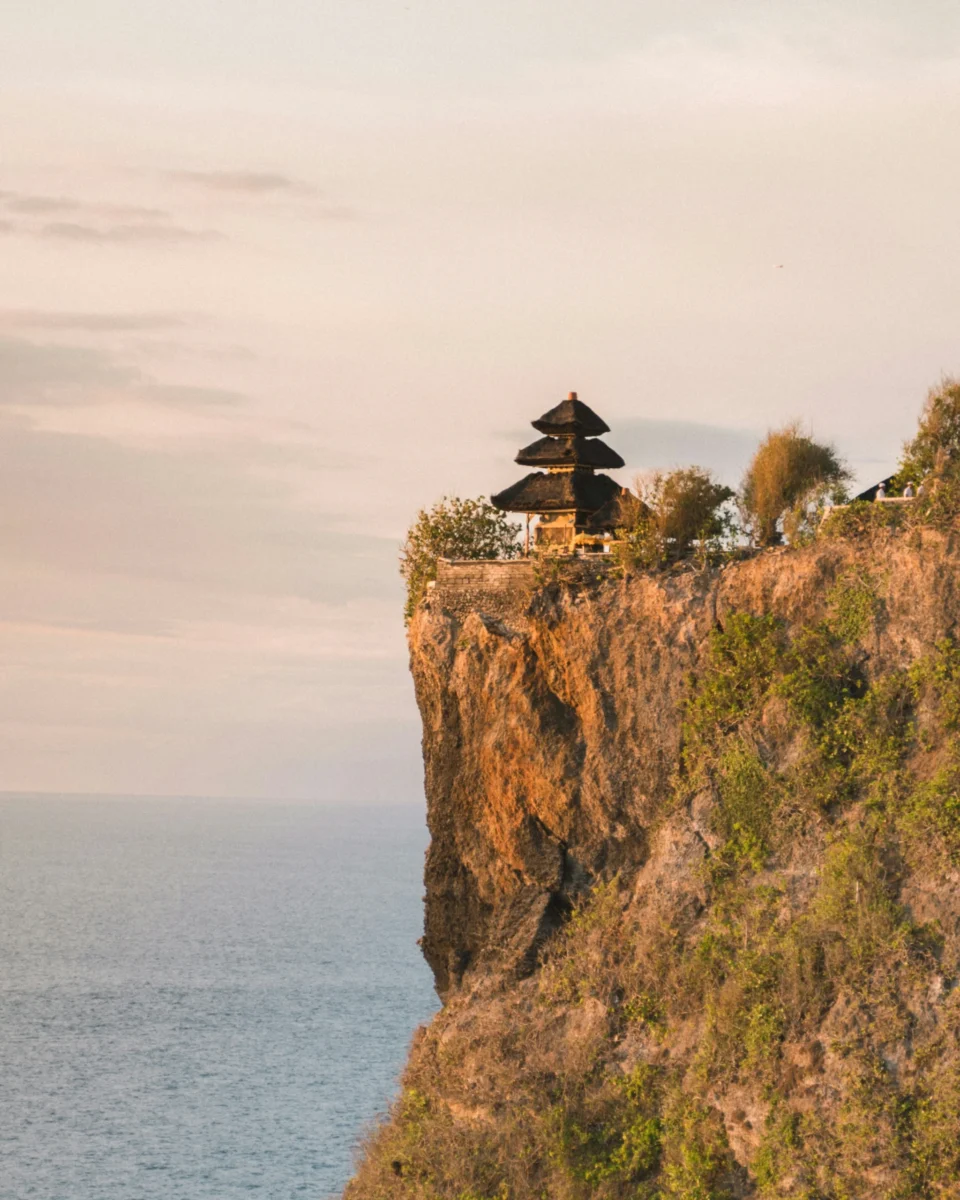
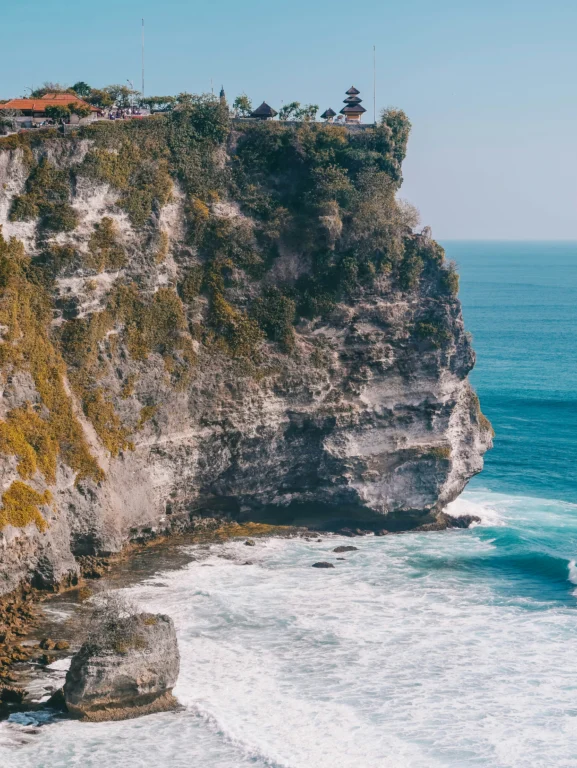
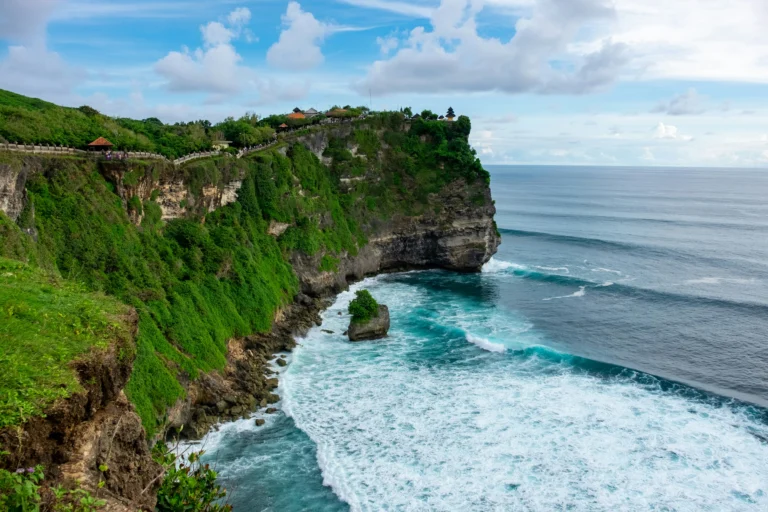



In southern Bali, the Uluwatu Temple immediately captures attention. This Hindu sanctuary stands on a cliff overlooking the Indian Ocean. The landscape creates a striking contrast between the rocky cliff and the vastness of the sea. As a result, the site combines a spectacular natural setting with a deeply spiritual atmosphere.
Balinese people call this temple Pura Luhur Uluwatu. In the local language, pura means temple and luhur refers to something sacred or elevated. The name therefore describes a sacred place located at the edge of a rocky promontory.
However, Uluwatu Temple is more than an impressive landscape. The site also plays an important role in Balinese culture. Temples help structure the spiritual organization of the island and connect sacred spaces with local communities.
Thus, Uluwatu Temple represents both a religious monument and a cultural symbol. Its spectacular location further strengthens its sacred dimension.
Uluwatu Temple is one of the main temples in Bali. Located at the southern tip of the island, the sanctuary is built on cliffs that plunge directly into the Indian Ocean. The temple dominates this coastal landscape from a remarkable vantage point.
Furthermore, in Balinese Hinduism, certain temples serve protective functions. They form a sacred network that surrounds the island. Each temple corresponds to a direction and contributes to the spiritual balance of the world.
Uluwatu Temple belongs to this group of major sanctuaries. Its position facing the sea gives it a protective role. Balinese people believe that this temple helps preserve harmony between spiritual forces.
Even today, the site maintains an important religious function. Local communities regularly visit the temple to make offerings. These rituals express respect for the deities and reinforce the connection between humans and the sacred.
The natural setting of Uluwatu Temple is immediately striking. The sanctuary stands on a cliff that overlooks the Indian Ocean. The rocky promontory rises almost seventy meters above the sea.
Moreover, from this position, the view naturally opens toward the horizon. Waves crash against the base of the cliff while ocean winds sweep across the site. This contrast between sea, rock and sky creates a unique atmosphere.
However, this landscape is not merely decorative. In Balinese culture, nature has a strong spiritual dimension. Mountains, seas and cliffs often represent sacred spaces associated with the divine.
The temple therefore stands in an environment that reinforces its symbolism. The presence of the ocean evokes the power of natural forces. At the same time, the cliffs mark a boundary between the terrestrial world and the maritime horizon.
Thus, the landscape actively contributes to the identity of the sanctuary.
The origin of Pura Luhur Uluwatu dates back to the 11th century. Balinese tradition associates the creation of the temple with the Javanese sage Empu Kuturan, an important religious figure who helped organize the island’s spiritual system.
Subsequently, several centuries later, in the 16th century, another figure marked the temple’s history: Dang Hyang Nirartha. This Hindu priest played a major role in the spread of Hinduism in Bali. According to local legends, he reached enlightenment near the cliffs of Uluwatu before leaving the earthly world.
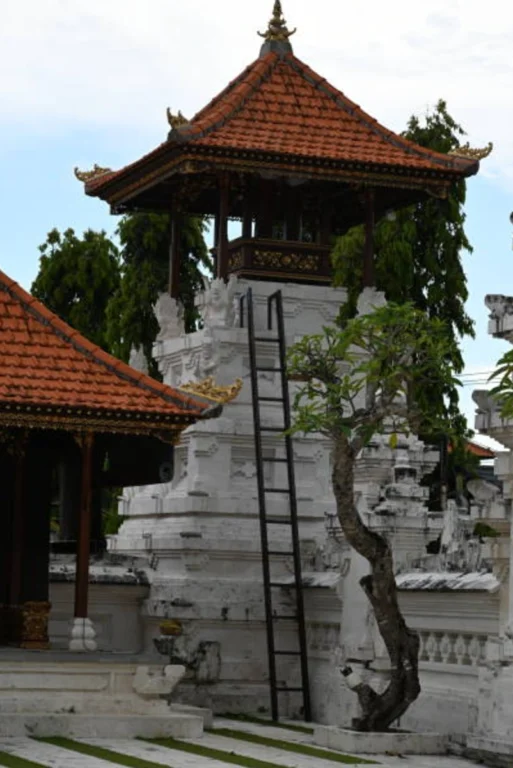
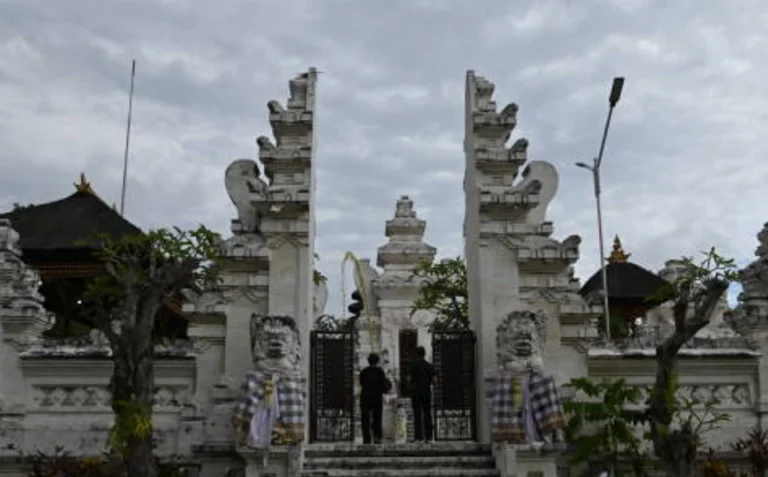
Over time, the sanctuary developed in order to host religious ceremonies and pilgrimages. The architecture of Balinese Hindu temples follows precise traditions. The complex includes several courtyards, monumental gates and sacred pavilions dedicated to different deities.
Each element has a symbolic meaning. The gates represent passages between different spiritual dimensions, while the courtyards organize sacred space within the temple.
In this way, the architecture and history of Uluwatu Temple reflect both the ancient roots of the site and the importance of religion in Balinese culture.
Uluwatu Temple remains above all a sacred place. Local inhabitants continue to perform religious practices that structure Balinese spiritual life.
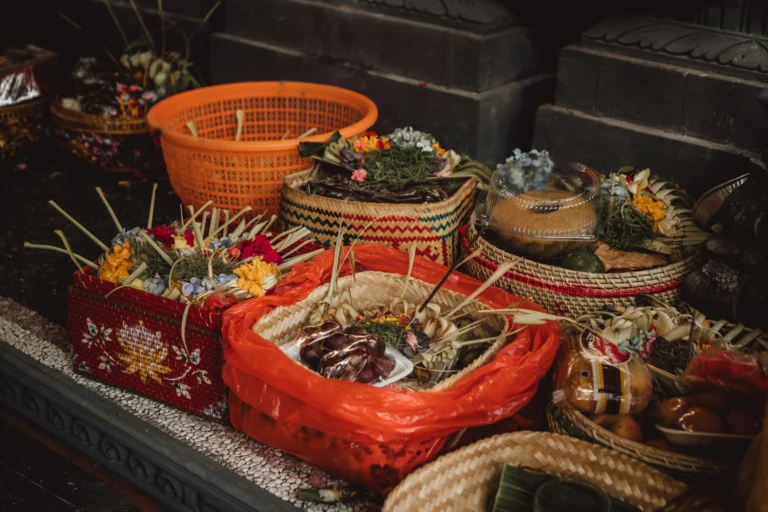
Indeed, offerings play a central role in these traditions. Every day, Balinese people place small woven baskets containing flowers, rice and incense. These offerings express gratitude and maintain harmony between humans and the deities.
Traditional ceremonies also take place regularly. During these events, participants wear traditional clothing. Music, fragrances and ritual dances contribute to the spiritual atmosphere surrounding the sanctuary.
Therefore, Uluwatu Temple is not only an ancient monument. It remains a living place where Balinese spirituality continues to be expressed.
Because of its location, cultural importance and religious practices, Uluwatu Temple represents one of the most remarkable symbols of Bali’s spiritual traditions.
To gain a better understanding of the island’s history and traditions, you may also wish to read the article on Bali, whose cultural and spiritual richness is reflected in its many temples and ceremonies. Uluwatu Temple is also famous for hosting the renowned Uluwatu Kecak Dance, a traditional Balinese performance that often takes place at sunset and offers visitors a spectacle as captivating as the surrounding scenery.
You can visit the official website of the Indonesian Tourist Board to find out more about Uluwatu Temple and Balinese traditions.
(External link to a reference site)