

Rinca and Komodo: wild landscapes and marine exploration
Between land and sea
A land of volcanoes and oceans
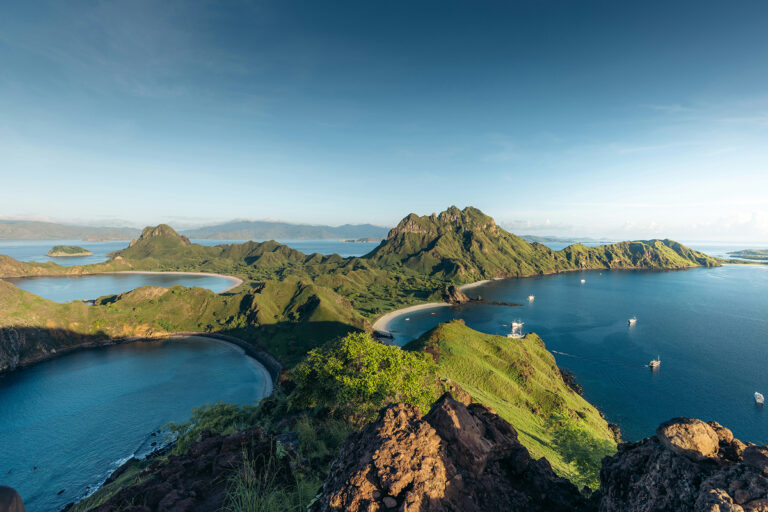
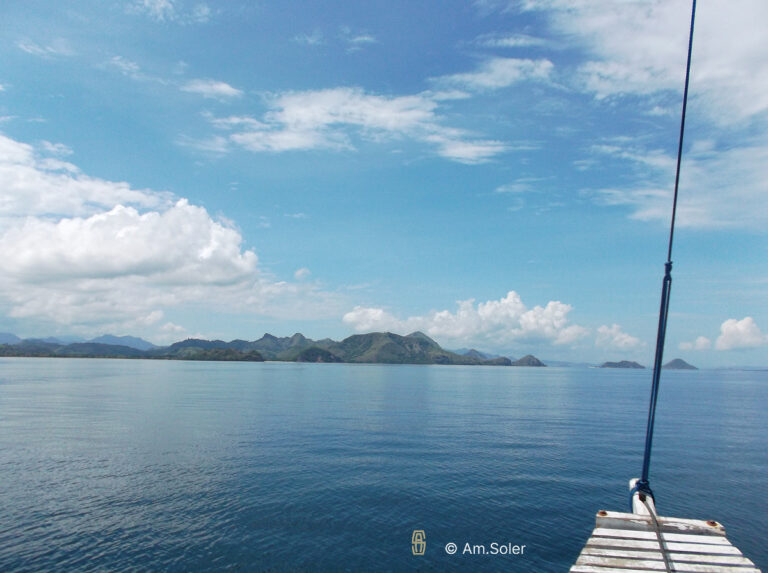
Komodo National Park, which includes the islands of Rinca and Komodo, reveals a majestic natural landscape where volcanic terrain meets tropical waters. In this region of eastern Indonesia, the scenery alternates between dry hills, open savannahs, secluded beaches and colourful coral reefs. The islands that make up this unique environment form a transitional territory where land and sea remain closely linked.
At the heart of this archipelago, ocean currents shape the coastlines whilst the terrain moulds terrestrial habitats. This constant interplay between volcanic features and marine ecosystems gives rise to remarkable biodiversity. As such, these spaces attracts both nature-loving travellers and marine exploration enthusiasts.
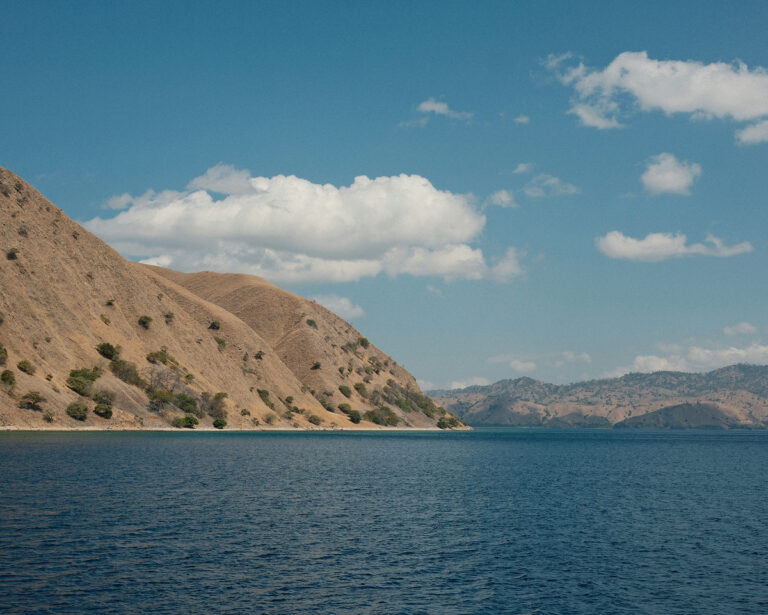
The region also possesses a distinct geographical identity. Arid mountains dominate certain landscapes, whilst turquoise lagoons line the more sheltered coasts. Through this natural diversity, Komodo National Park reveals contrasting environments that are constantly evolving under the influence of the tropical climate and ocean currents.
An archipelago shaped by volcanic landforms
Landscapes shaped by volcanic activity
These natural landscapes are the result of a long history of geological activity. The islands of the national park lie on an active volcanic zone that has gradually shaped the landforms visible today. The steep hills, rocky cliffs and dry valleys are a reminder of this volcanic origin, evident throughout the region.
On several islands, the vegetation adapts to conditions that are sometimes extreme. The long dry seasons favour the development of tropical savannahs, whilst certain wetter areas support denser vegetation. This contrast creates varied panoramas where the colours change with the seasons.
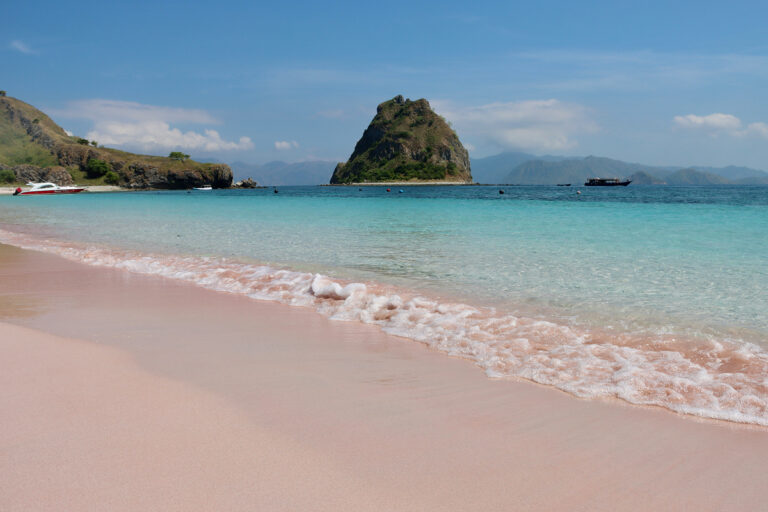
Around Rinca, the hills often rise above the coastline, offering sweeping views of the bays and neighbouring islands. Beaches sometimes appear at the foot of the hills, creating a striking contrast between the volcanic rock, the arid land and the turquoise waters.
Coasts opening out onto coral reefs
However, Komodo’s geography is not limited to its terrestrial landscapes. The seabed extends this natural wealth beneath the surface. Coral reefs surround much of the coastline and play a vital role in the region’s ecological balance.
The wilds of Rinca and the Komodo dragons
The savannahs and the dragons’ habitat
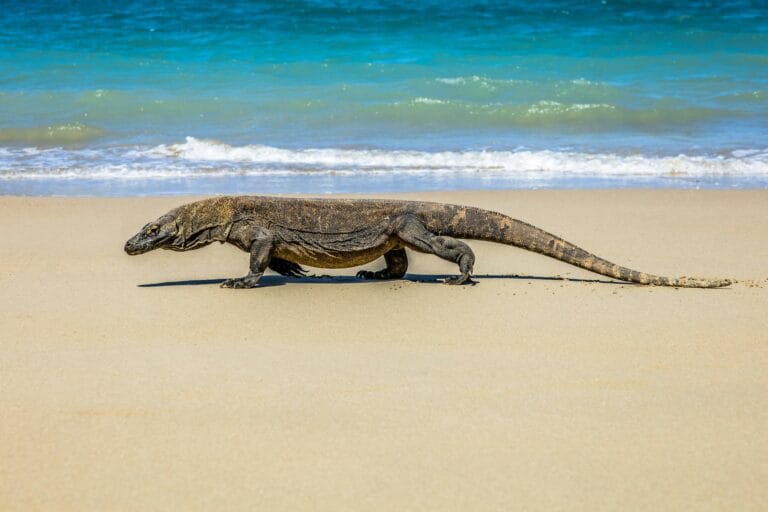
Rinca remains one of the best-known areas of the national park for observing Komodo dragons in their natural habitat. These large monitor lizards mainly inhabit the savannahs, dry hills and certain forested areas where they find food and shelter.
The island’s hot and relatively arid climate favours the development of ecosystems suited to this iconic wildlife. The dragons thrive in open environments where they can move easily between rocky areas, plains and natural trails.
At the same time, several other terrestrial species inhabit these landscapes. These include deer, wild boar and various tropical birds. This biodiversity contributes to the functioning of local food chains and reinforces the island’s natural balance.
Rinca’s landscapes play a direct part in this wild identity. The hills covered in dry grass, the dusty tracks and the isolated trees create a distinctive atmosphere that sets this region apart from other, more tropical Indonesian islands.
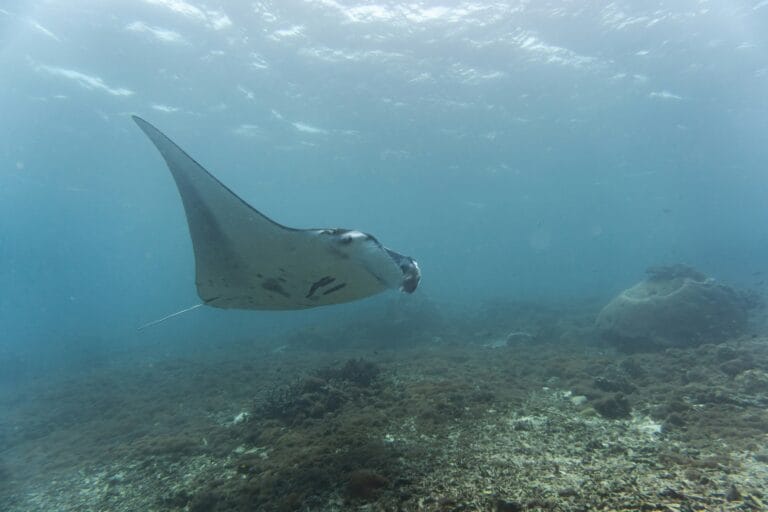
Terrestrial biodiversity adapted to the tropical climate
However, Rinca Island represents only part of the natural wealth of Komodo National Park. The marine areas surrounding these volcanic lands are also home to exceptional biodiversity.
The sea: a hub of movement and biodiversity
Ocean currents essential to the ecosystem
Around Komodo National Park, the tropical waters link the various islands in the region. Ocean currents flow through this spaces, situated between the Indian Ocean and the Pacific Ocean, facilitating the extensive movement of nutrients and marine species.
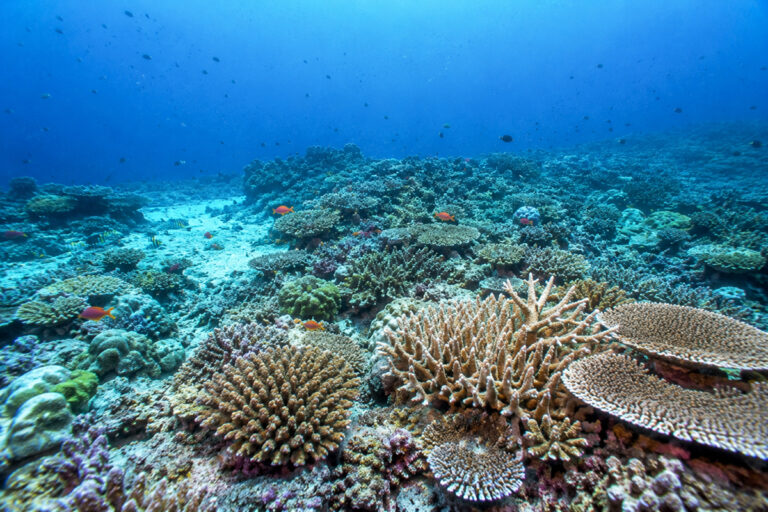
Thanks to these natural exchanges, coral reefs thrive in many coastal areas. These reefs are home to a wide variety of tropical fish, corals and marine species, which find favourable conditions here.
Mangroves also play a vital role in certain parts of the national park. They protect the coastline from erosion whilst serving as a refuge for many marine species during their development.
Furthermore, the shallow lagoons create calm areas where the crystal-clear waters make it easy to observe marine life. This ecological richness now attracts travellers wishing to discover Komodo’s marine landscapes through snorkelling or diving.
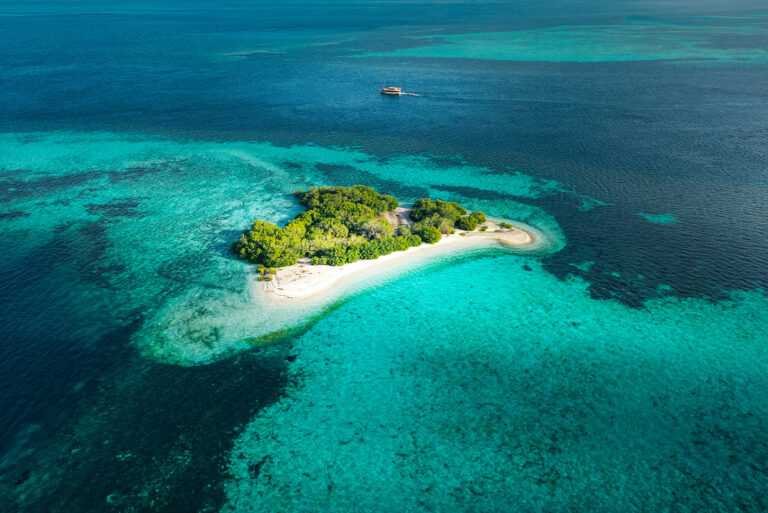
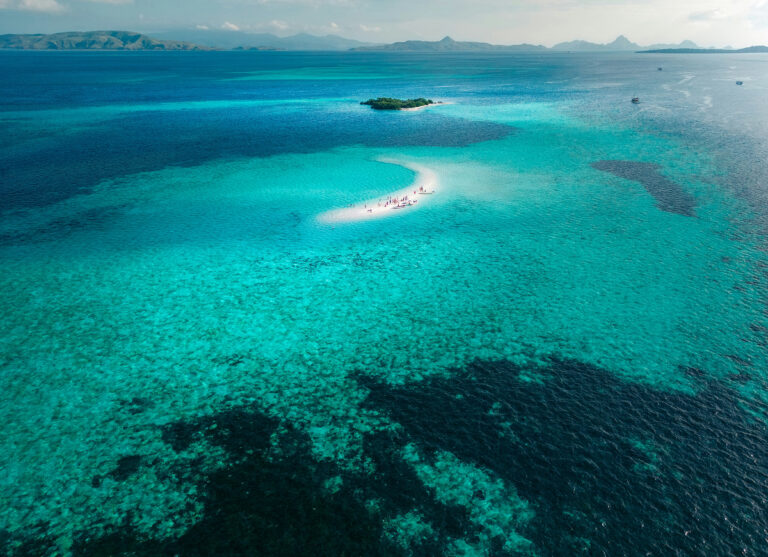
Mangroves, lagoons and marine biodiversity
Thus, the sea does not form a boundary around the islands. On the contrary, it connects the various ecosystems and contributes to the region’s natural continuity.
Marine exploration and the coral reefs of Komodo
The coral reefs of the national park
Marine exploration now plays a significant role in exploration of the region. The coral reefs are among the richest ecosystems in the national park and reveal a wide variety of shapes and colours beneath the surface.
In some areas, the corals extend close to the shore, whilst tropical fish swim above the rock formations. The crystal-clear waters often allow this biodiversity to be observed from just a few metres out.
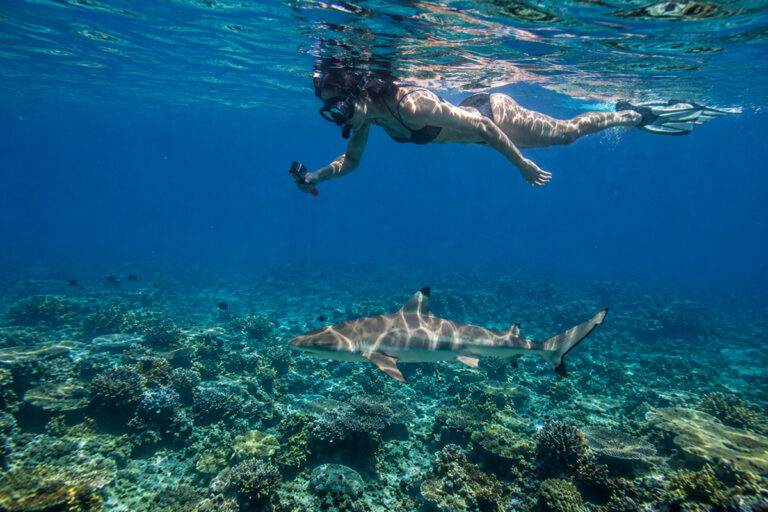
Snorkelling and exploring the seabed
Snorkelling attracts many visitors thanks to its natural accessibility. Several sites within the national park offer ideal conditions for exploring the reefs, sea turtles and large schools of tropical fish.
Sea currents have a significant influence on these underwater landscapes. They bring nutrients essential for coral growth and encourage the presence of a variety of marine species. In certain more exposed areas, these currents also create dynamic environments that are particularly popular with marine exploration enthusiasts.
However, these ecosystems remain fragile. The preservation of coral reefs is therefore a major challenge for Komodo National Park. Conservation initiatives aim in particular to limit environmental degradation and to preserve the balance between tourism and biodiversity.
Ecosystems in constant transition
A constant interaction between land and sea
One of the distinctive features of this region lies in the constant relationship between terrestrial and marine environments. The landscapes evolve under the combined influence of the tropical climate, volcanic terrain and oceanic currents.
Along the coast, waves gradually reshape certain beaches, whilst currents redistribute sediments around the reefs. Inland, the dry seasons transform the savannahs and influence the local vegetation.
This constant interaction promotes the diversity of natural habitats. Mangroves sometimes link marine environments to terrestrial areas, whilst volcanic landforms influence coastal ecosystems.
Furthermore, the fauna is constantly adapting to these changing conditions. Komodo dragons utilise the open spaces of the savannahs, whilst numerous marine species benefit from the protected reefs and lagoons.
This ecological continuity is one of the national park’s greatest assets. Each environment depends on the others and contributes to the overall functioning of the archipelag
The iconic natural landscape of Komodo National Park
A unique natural destination in Indonesia
This area is now one of Indonesia’s most iconic natural landscapes. The region combines spectacular volcanic terrain, unique terrestrial wildlife and some of the richest marine ecosystems in South-East Asia.
Here, travellers discover a land of contrasts where Komodo dragons roam alongside colourful coral reefs and secluded beaches. This natural diversity creates an immersive experience that blends land-based discovery with marine exploration.
Finally, Komodo National Park perfectly illustrates the interplay between geological forces and tropical ecosystems. The landscapes shift between arid hills, turquoise bays and living reefs, yet the whole retains a remarkable natural coherence.
Through this harmony between land and sea, this place reveals a strong identity that continues to fascinate travellers drawn to natural landscapes, biodiversity and the exploration of Indonesia’s marine environments.
To find out more about the various ways to explore the archipelago, please also visit Indonesian Komodo Tours.
__
(External link to a local tourism operator in Komodo)