

Mount Kawah Ijen: The Blue-Flame Volcano of Java
Mount Kawah Ijen is located at the eastern end of the island of Java, within a vast active volcanic complex. Known for its crater, its acidic lake, and its sulfur emissions, this volcano presents a landscape shaped by geological phenomena. In this blog, the approach is informative and descriptive. Kawah Ijen is presented as a volcanic territory. Here, natural processes, human uses, and symbolic representations intersect without adopting a touristic or practical perspective.
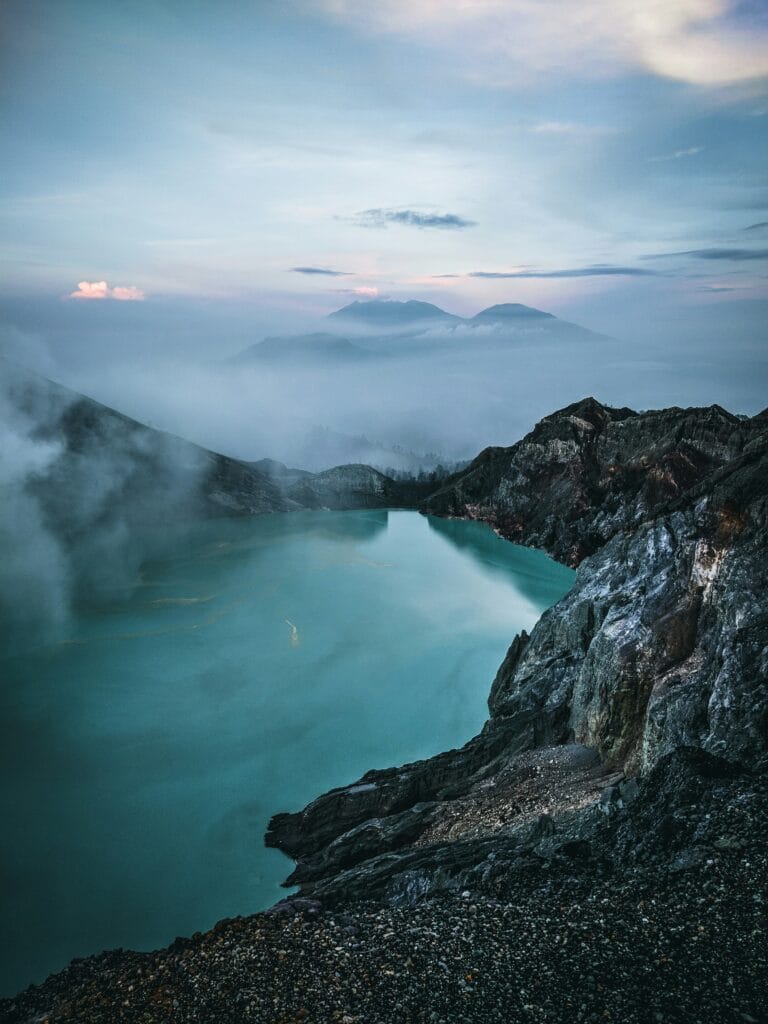
Kawah Ijen in the volcanic landscape of Java
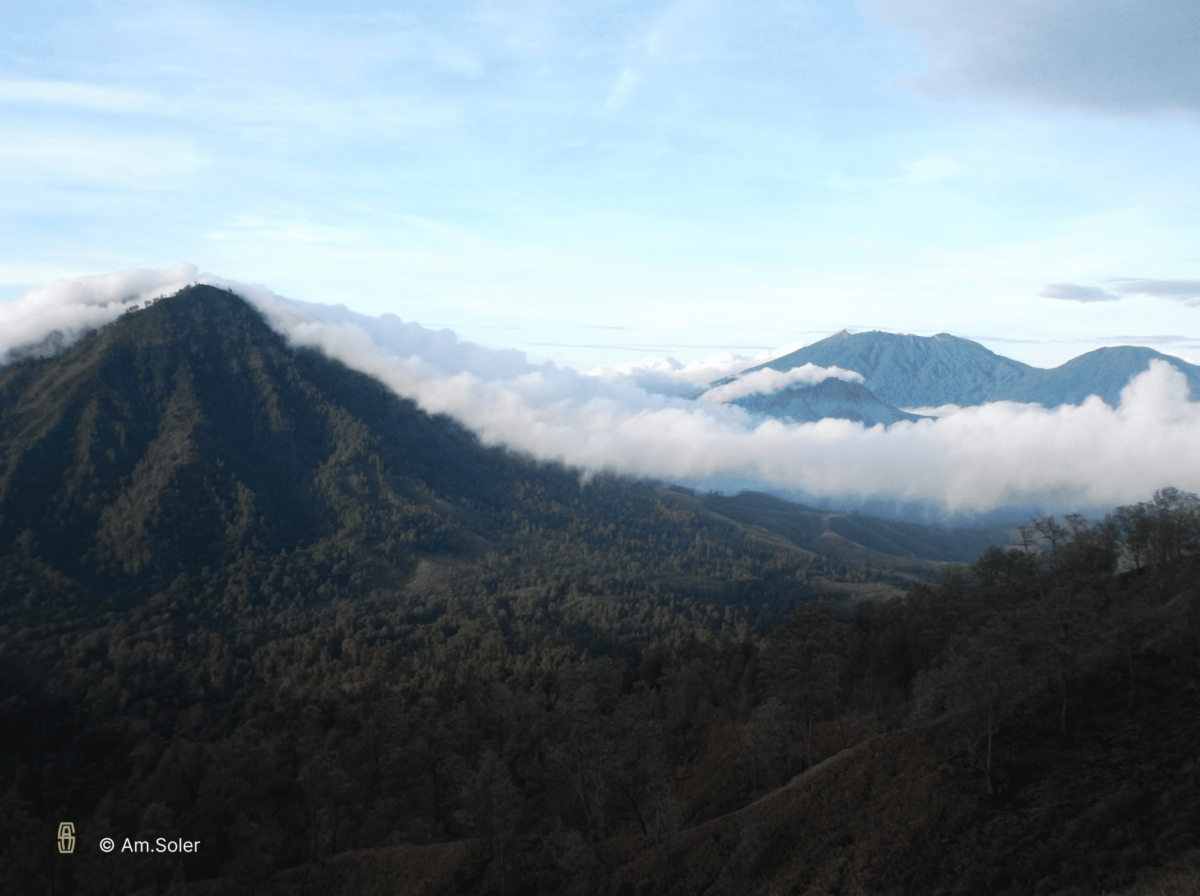
Eastern Java is marked by a high concentration of active volcanoes. Kawah Ijen forms part of this geological ensemble that permanently shapes the relief, soils, and landscapes.
Volcanic mountains, high-altitude forests, and mineral zones create a contrasting environment where the Earth’s internal activity remains visible at the surface. Here, volcanism influences both the appearance of the territory and the forms of human settlement.
An active volcano and a distinctive crater
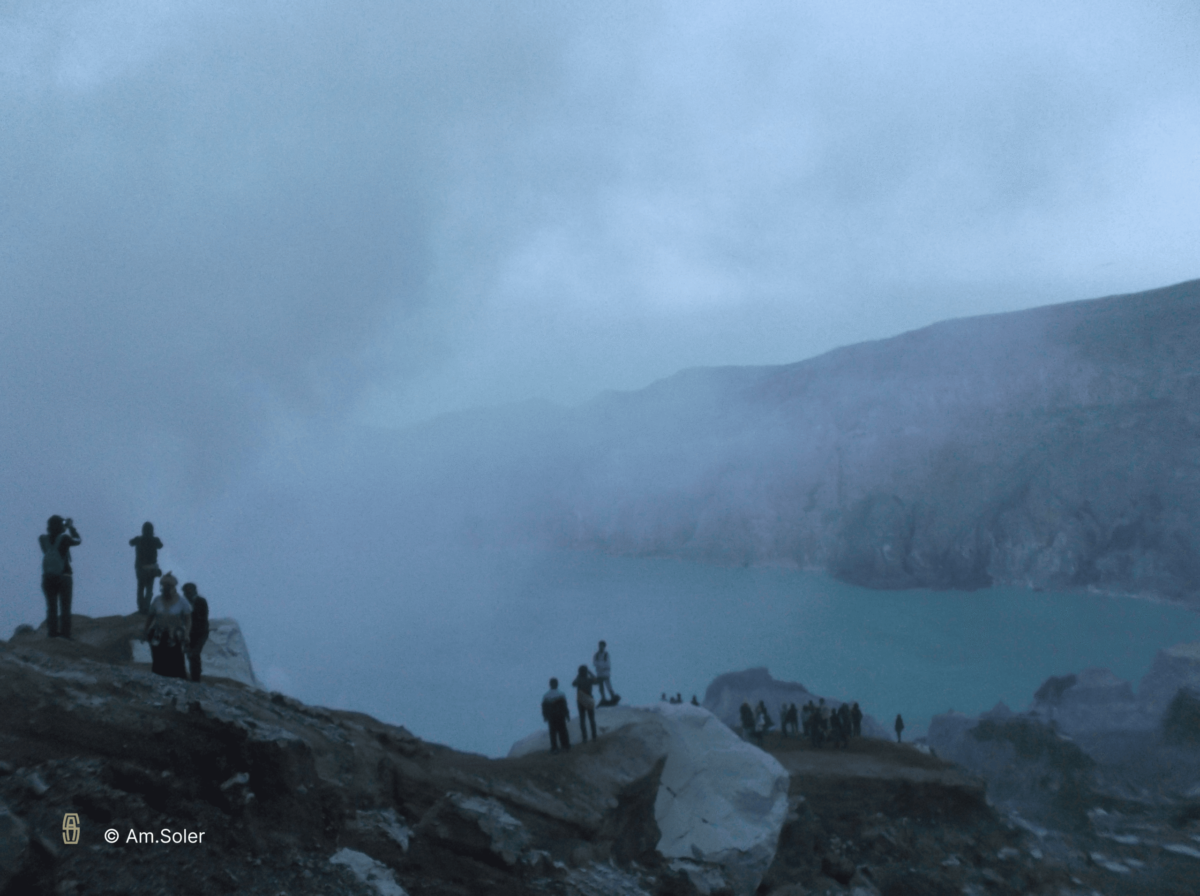
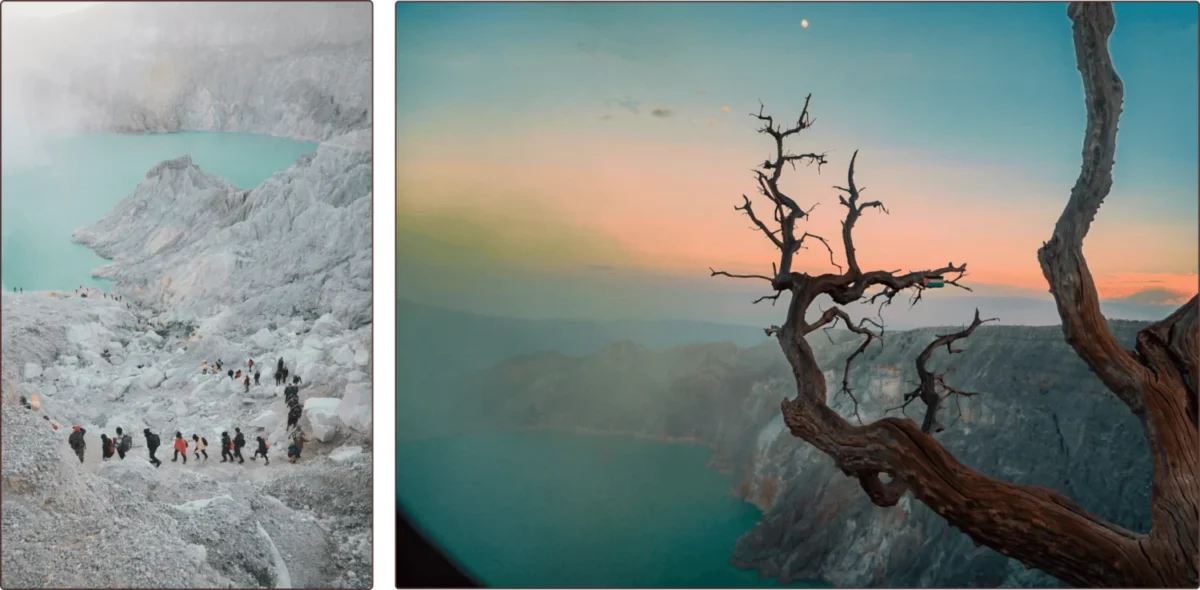
Mount Kawah Ijen is distinguished by a widely open crater, at the bottom of which lies an acidic lake with shifting colors. The extreme acidity of its waters results from dissolved volcanic gases, mainly linked to sulfur.
Fumaroles, mineral deposits, and gaseous emissions testify to ongoing volcanic activity. The crater landscape is constantly evolving under the effects of chemical reactions and atmospheric conditions.
The blue flames, a unique volcanic phenomenon
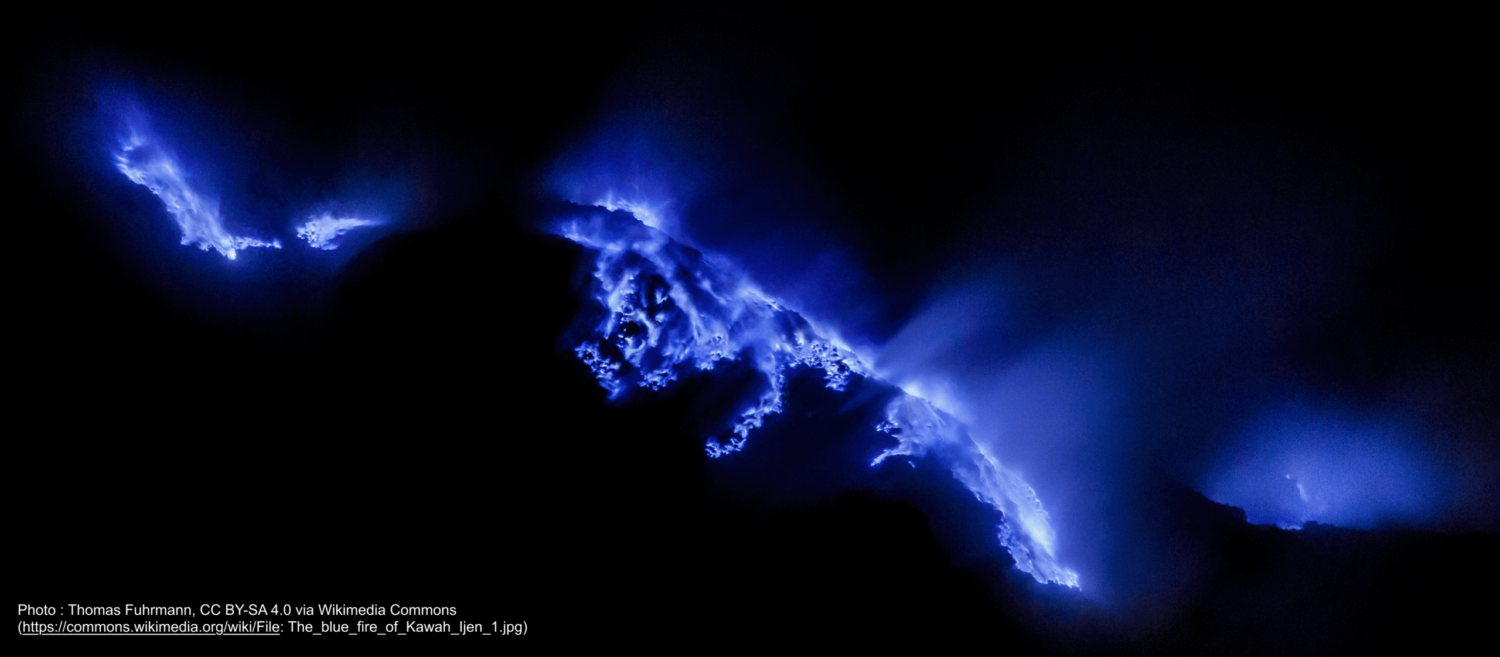
Among the most well-known features of Mount Kawah Ijen are the blue flames. This phenomenon is not related to lava, but to the combustion of sulfur-rich gases escaping from the volcano. When these gases come into contact with oxygen at high temperature, they ignite. They produce a bluish glow visible in the darkness.
This phenomenon remains relatively rare on a global scale. At Kawah Ijen, it is made possible by the exceptional concentration of sulfur and the configuration of the crater. The blue flames contribute to the site’s visual identity while also reflecting the chemical and energetic forces at work beneath the surface.
Sulfur: a central element of the landscape
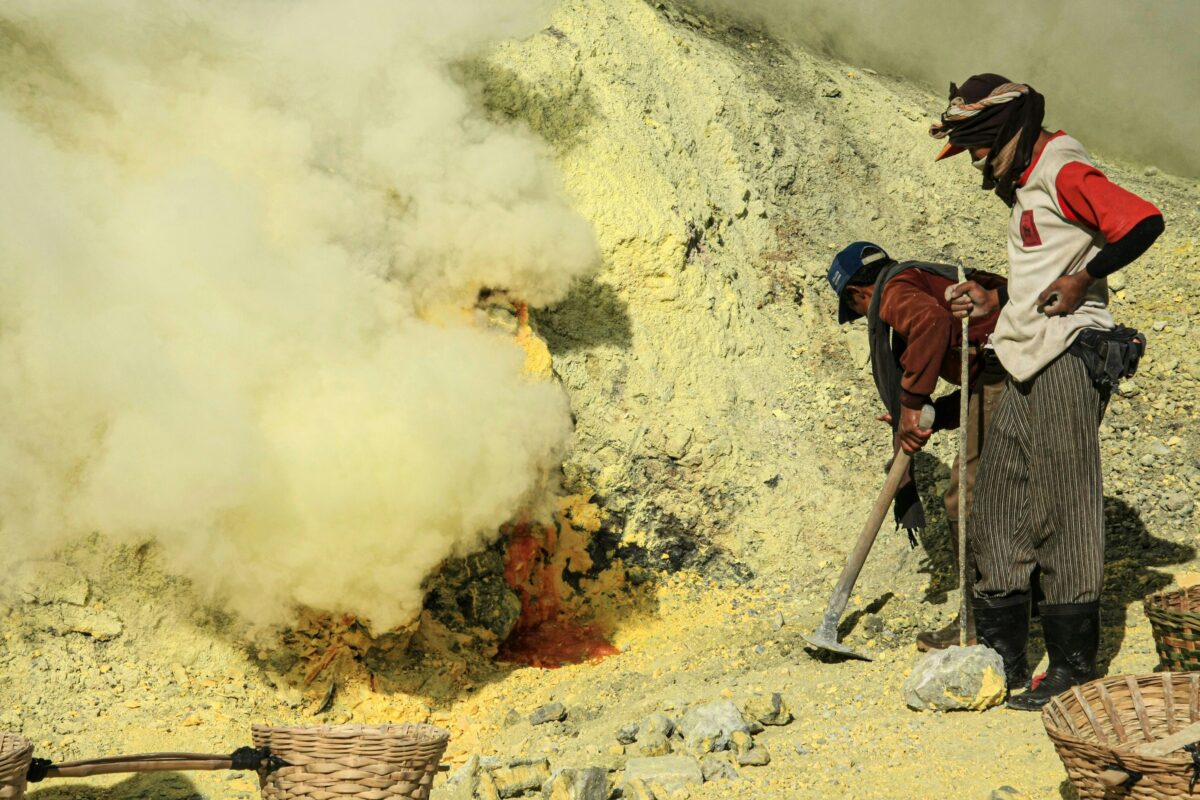
Sulfur is omnipresent at Kawah Ijen. It solidifies around fumaroles, colors the rocks in yellow and orange hues, and permeates the crater’s atmosphere. This chemical element directly shapes the landscape by altering the texture of the ground and rendering certain areas unsuitable for vegetation. Beyond its visual aspect, sulfur reflects the volcano’s internal activity. Its constant presence highlights the unstable and evolving nature of the site, where natural processes are visible on a human scale.
Sulfur miners and human activities
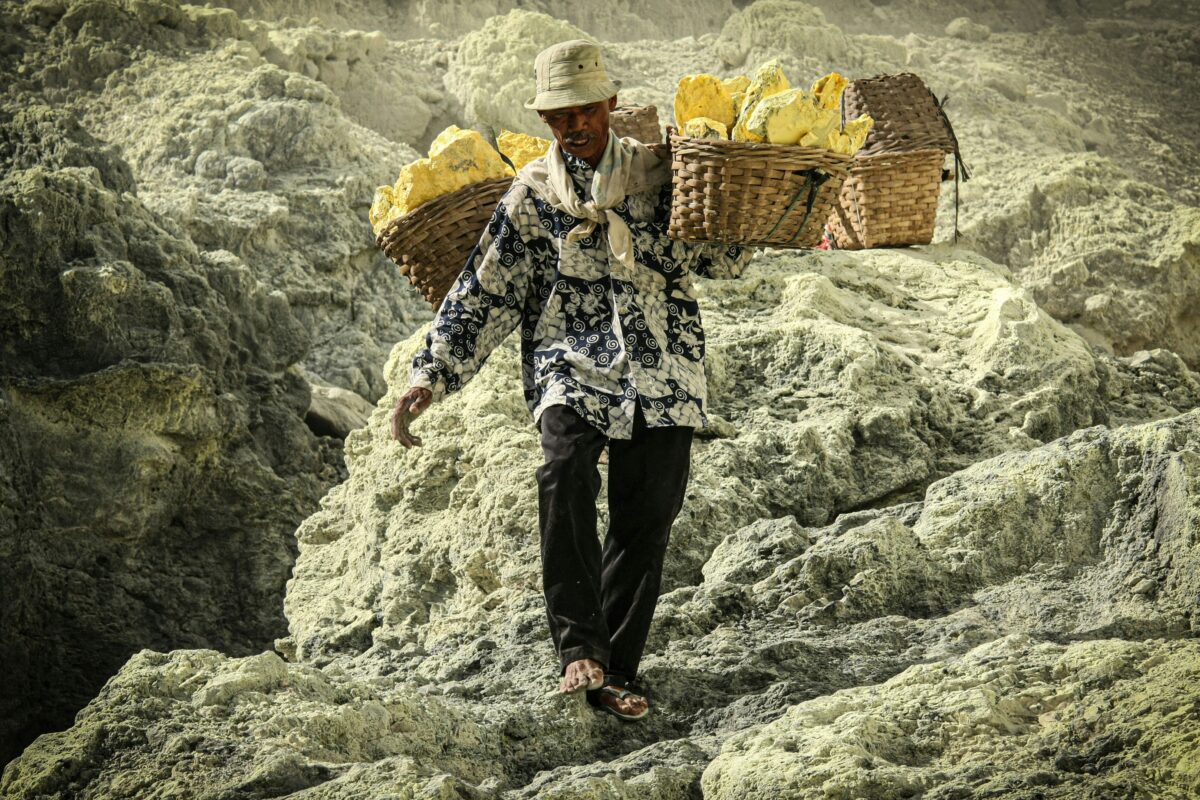
For several decades, the sulfur extracted at Kawah Ijen has been at the center of a distinctive human activity. Miners work daily inside the crater to extract and transport this material. This physically demanding work takes place in an extreme environment marked by volcanic gases and steep terrain. The miners play an essential role in sulfur extraction, which is used in various industrial applications. Their presence reminds us that Kawah Ijen is not only a spectacular natural landscape, but also a place of work and livelihood for local populations.
A territory shaped by volcanic constraints
The environment of Mount Kawah Ijen imposes strong constraints on human activities. Climatic conditions, toxic gases, and geological instability limit the possible uses of the territory. Yet these constraints have been integrated into specific forms of organization adapted to an active volcanic environment.
This coexistence between humans and the volcano illustrates a long-standing relationship between Javanese societies and their natural environment, where resource exploitation is accompanied by a strong awareness of risks.
Kawah Ijen and the symbolic perception of volcanoes
In Java, volcanoes hold a particular place in cultural and spiritual representations. They are often perceived as powerful places, carrying both creative and destructive energy. Kawah Ijen, through the visibility of its natural phenomena, fits fully into this perception.
The volcano thus becomes a symbolic space where natural forces, beliefs, and human practices meet. This dimension strengthens the connection between Kawah Ijen and the themes explored in the “Lava and Sacred” section of the site.
Hiking and ascent of Mount Kawah Ijen
The ascent of Kawah Ijen is short but demanding. The trail climbs steadily to the plateau before reaching the crater ridge. Due to sulfur gas emissions, it is necessary to remain cautious and wear an appropriate mask. However, the effort is worthwhile: the summit reveals a spectacular panorama over the caldera, the surrounding mountains, and the first light of day.
Tips for visiting Mount Kawah Ijen safely
A visit to Kawah Ijen requires certain precautions. Gases can shift quickly and become dangerous. For this reason, it is essential to follow the instructions of local authorities and never approach unstable areas.
For a responsible approach, it is recommended to:
- avoid interfering with the miners’ work,
stay on marked trails,
limit your environmental impact,
and respect the fragile nature of the volcano.
Kawah Ijen within the "Carnet d’Indonésie" blog
In this blog dedicated to Indonesia, Mount Kawah Ijen offers a deeper look into the relationship between volcanism, landscape, and society.
Through its blue flames, acidic lake, and the activity of sulfur miners, Kawah Ijen illustrates how a volcanic territory can be both an extreme natural environment and a structuring place of life.
In conclusion, Mount Kawah Ijen is a striking example of the power of volcanism in Java. Between spectacular natural phenomena, sulfur extraction, and symbolic representations, the site reflects a constant interaction between the Earth and human societies.
This descriptive approach follows the continuity of the blog, offering a reading of Indonesian territory where landscapes, traditions, and human activities are inseparable.
Mount Kawah Ijen forms part of a broader exploration of the links between volcanism, beliefs and landscapes, as explored in the Java theme. In Java, this relationship between land and spirituality is also reflected in numerous religious and historical sites, notably the temples of Java, which bear witness to the island’s cultural and symbolic significance.
The Bali Autrement website also features an article on Kawah Ijen, its acidic lake and
the unique volcanic landscape that characterises this region of Java.
(External link to a reference site)