

Komodo dragons: natural giants of the Indonesian archipelago
Komodo dragons are among the most emblematic animal species of Indonesia. Found only in a limited area of the archipelago, these large monitor lizards embody both the biological uniqueness and the geographic isolation of certain Indonesian islands.
Komodo dragons are approached as an essential component of a natural territory shaped by complex balances between land, climate, and surrounding ecosystems.
Rinca and the Komodo islands: a unique territory
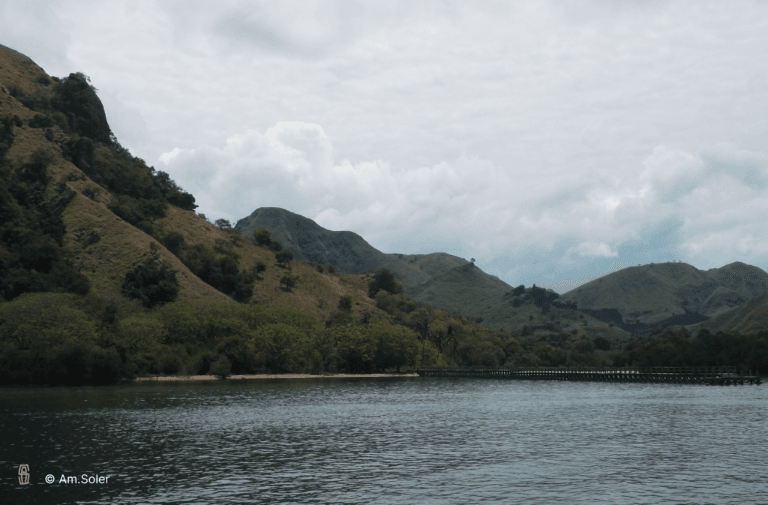
Komodo dragons live mainly on a few islands located in eastern Indonesia, including Komodo, Rinca, Padar, and certain parts of Flores. These islands belong to Komodo National Park, a protected area characterized by contrasting landscapes.
There, one can observe arid hills, dry savannas, sparse forests, and mangrove areas along the coast.
This natural setting imposes particular living conditions. As a result, the species that inhabit it have developed specific adaptations, closely linked to resource availability and the region’s semi-arid climate.

A natural habitat shaped by isolation
The geographic isolation of the Komodo islands plays a fundamental role in the presence of the dragons. Separated from the rest of the archipelago by stretches of sea, these lands have evolved relatively independently.
As a result, the local fauna shows a strong endemic character, with the Komodo dragons being the most well-known example.
Their natural habitat includes open areas suitable for hunting, as well as wooded spaces and steep reliefs that serve as shelters. Thus, the dragons occupy a dominant position within the local terrestrial ecosystem.
Physical characteristics of Komodo dragons
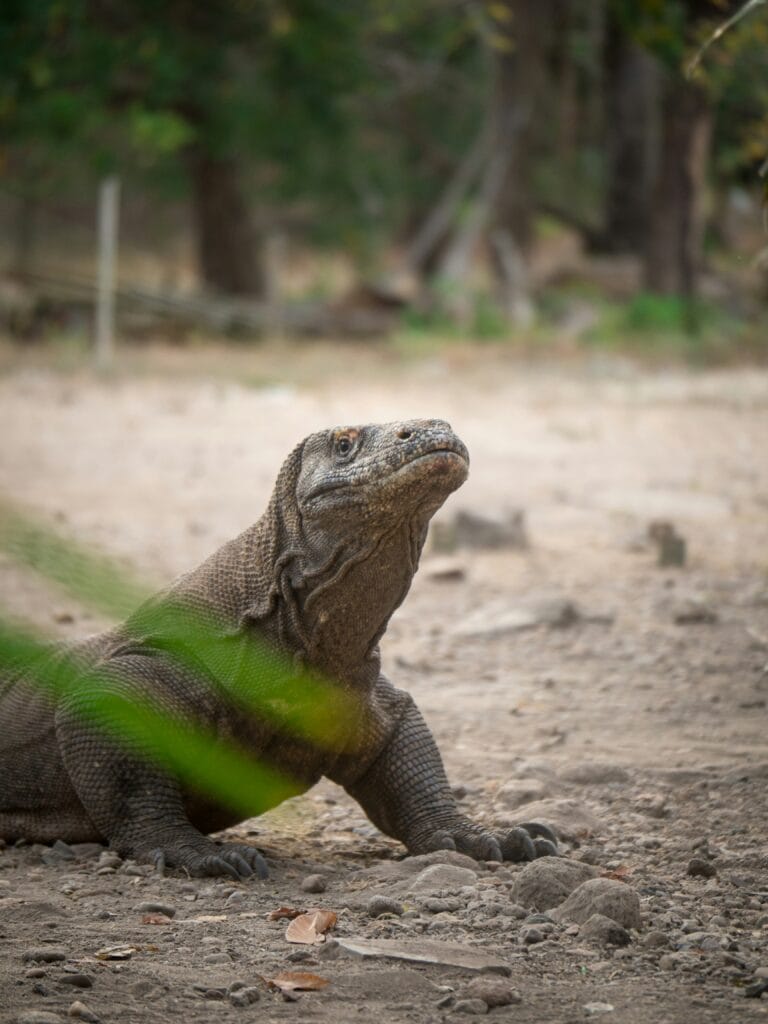
Komodo dragons are the largest living lizards currently known. An adult individual can reach several meters in length and possess an impressive mass. Their massive bodies, powerful limbs, and sturdy tails give them great stability on rough terrain.
Moreover, their thick, scaly skin provides natural protection against external threats. Their dentition, composed of sharp teeth, is perfectly adapted to their diet.
These physical characteristics explain their status as dominant predators on the islands where they live.
Behavior and role as a predator
Komodo dragons occupy the top of the food chain in their environment. As such, they exert a direct influence on the animal populations present on the islands. Their diet includes various animals, which helps regulate local ecological balances.
Their behavior reflects adaptation to a demanding environment. In addition, the relative scarcity of resources has shaped effective survival strategies, allowing the dragons to assert themselves in this specific habitat.

A species shaped by island evolution
Komodo dragons clearly illustrate the mechanisms of island evolution. The prolonged isolation of the islands has encouraged the development of specific traits, both morphological and behavioral.
Thus, these reptiles represent an important case study for understanding evolutionary processes in restricted environments. This biological singularity explains the constant scientific interest in the species, far beyond its spectacular image.
Komodo dragons and their relationship with other ecosystems
Although they mainly inhabit land, Komodo dragons cannot be separated from their overall environment. The terrestrial ecosystems of the islands interact directly with coastal and marine environments.
Komodo dragons on Rinca Island
On Rinca Island, Komodo dragons live in an environment marked by dry savannas, open hills, and vegetation adapted to contrasting climatic conditions. As such, these reptiles fully occupy the natural space and rank among the island’s dominant predators.
Their presence is part of a territory where wildlife coexists with local human activities, which influences the ways the species is observed and managed.
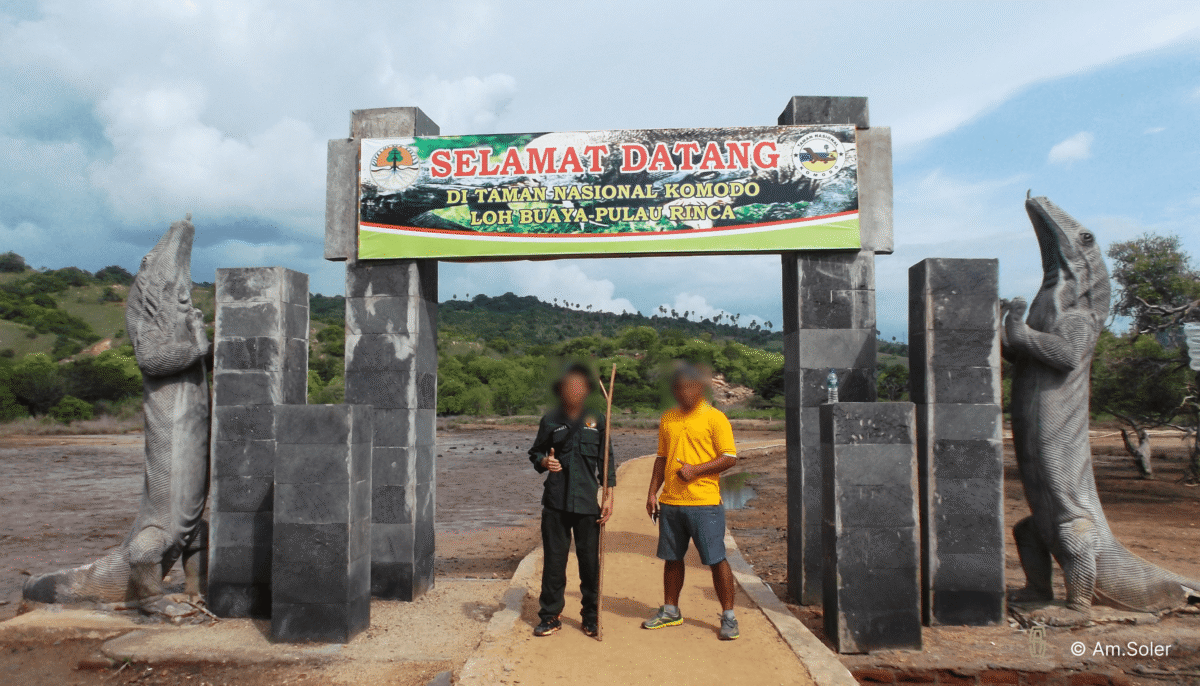
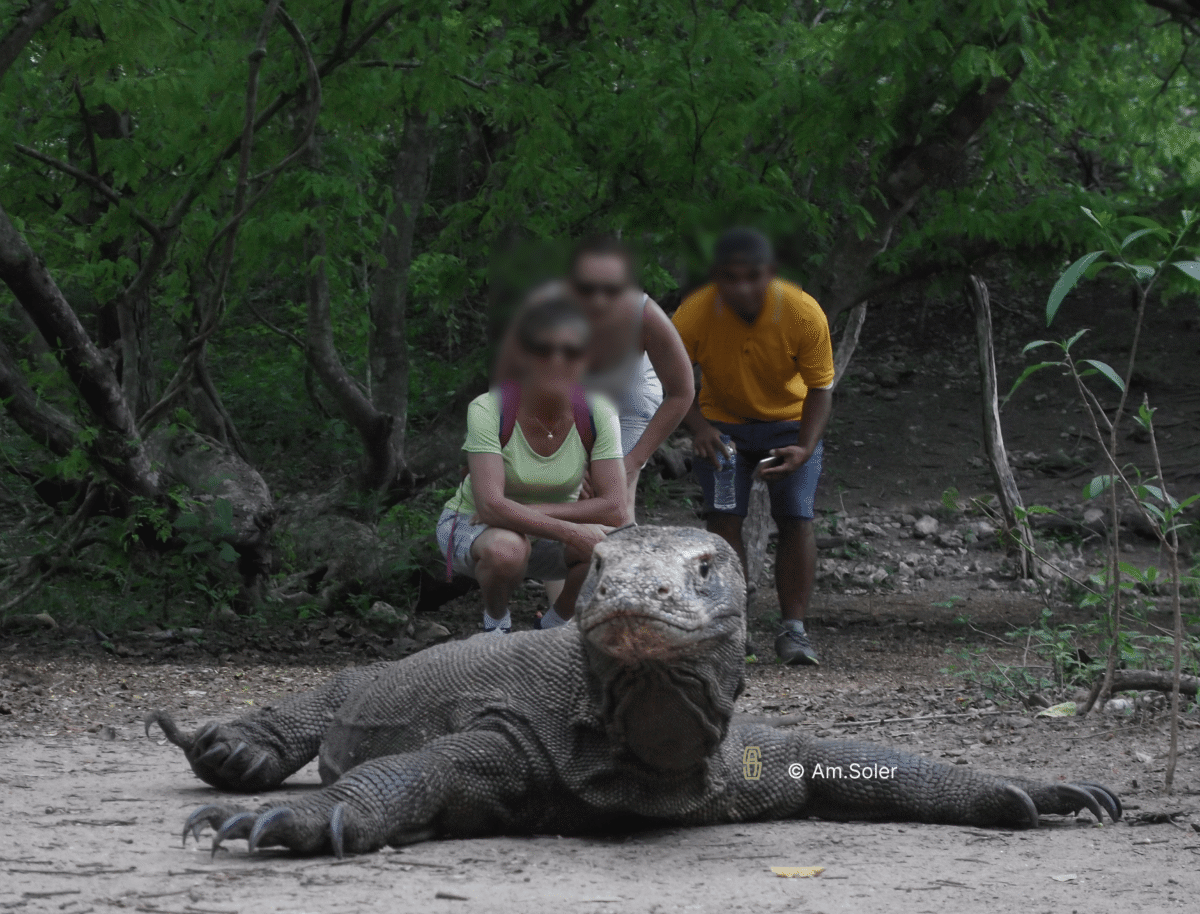
As a result, approaching dragons on Rinca relies on supervision by local guides, who are accustomed to the presence of these animals and the specifics of their behavior. This organization reflects a direct relationship between Komodo dragons and their environment, in a context where the species retains a central role in the island’s ecological balance.
Respectful observation on Rinca
Rinca allows visitors to observe the dragons in a natural environment. To ensure a safe and respectful visit, follow a few essential rules:
Always stay with a guide.
Keep a sufficient distance so as not to disturb the animals.
Wear clothing suited to the heat and terrain.
Never feed the animals.
These simple actions help protect the dragons and preserve the quality of the experience.
An emblematic species of Indonesia
Komodo dragons hold a special place in the collective imagination. They symbolize Indonesia’s natural richness and biological diversity. However, beyond this image, they mainly represent the fragile balance of an island territory subject to strong natural constraints. Their presence reminds us that certain regions of the archipelago still preserve unique forms of life, shaped by millions of years of evolution.
Thus, a visit to Rinca Island offers a rare immersion into the heart of one of Indonesia’s most emblematic animals.

This emblematic species is part of a broader reflection on the relationship between land and sea → Between land and sea
The surrounding marine ecosystems complement this natural balance →Marine exploration