

Kecak Dance of Uluwatu: Balinese ritual and tradition
A ritual dance at the heart of Balinese culture
The Kecak dance of Uluwatu is a traditional form of artistic expression in Bali. It stands out for the absence of musical instruments and for the importance given to chanting. In this performance, a group of men forms a circle and rhythmically produces repetitive vocal sounds. This collective chant creates an immersive atmosphere. In this context, the Kecak dance is considered an element of Balinese cultural heritage.
Today, the Kecak dance of Uluwatu is one of the most emblematic cultural experiences in Bali. Performed facing the ocean at sunset, it attracts visitors every evening who come to witness a spectacular ritual blending spirituality, theater, and ancestral traditions.
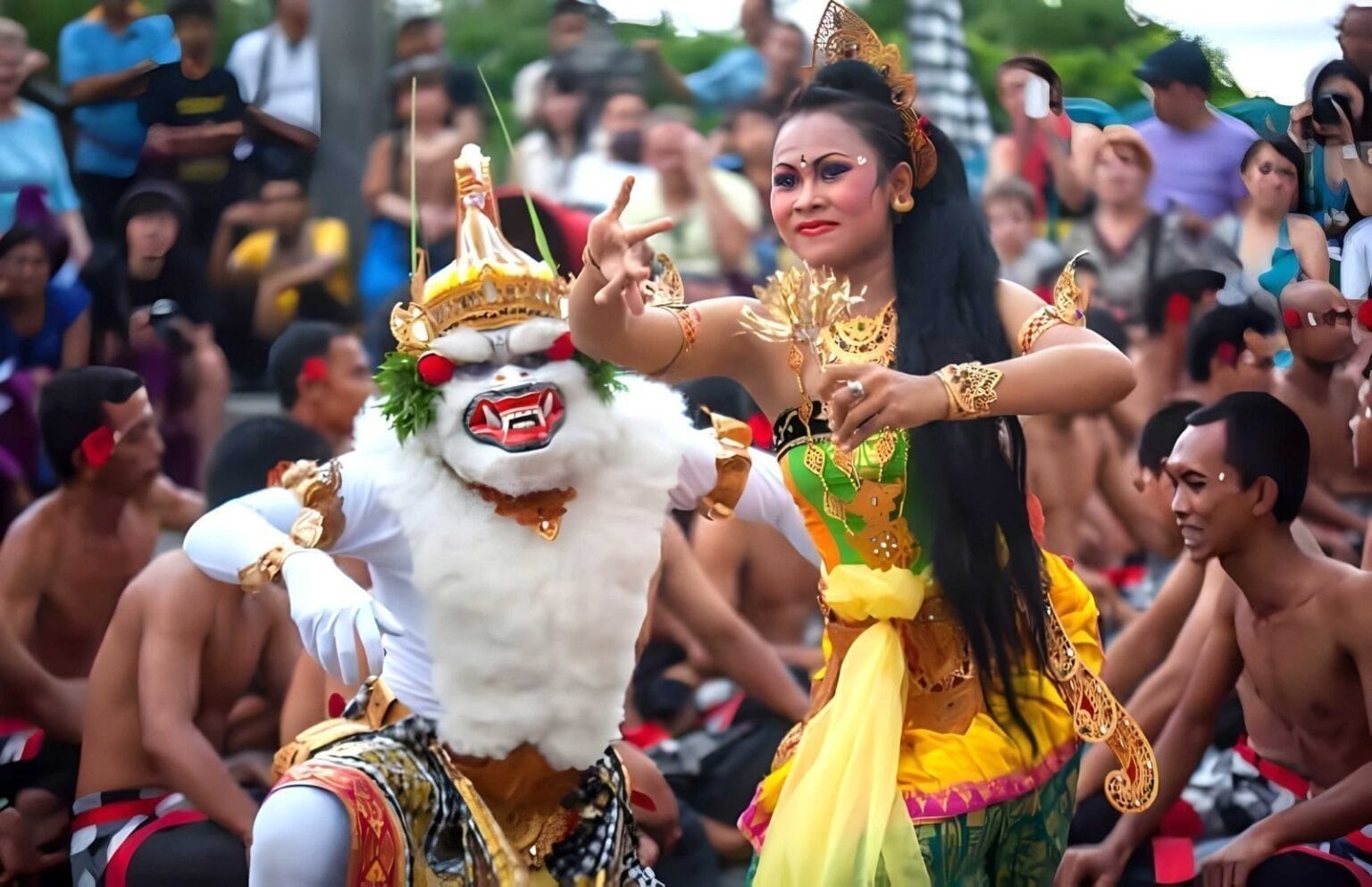
Origin and development of the Kecak dance of Uluwatu
The Kecak dance has its origins in the ancient trance rituals of Bali. These ceremonies aimed to establish a connection between the human world and the spiritual realm. Over time, the dance gradually took on its current theatrical form during the 20th century. It incorporated narrative elements inspired by the Ramayana while preserving its ancestral influences.
In Uluwatu, the Kecak dance has become a widely recognized performance that offers a strong visual dimension. The shows presented in Uluwatu draw on traditional ceremonies and retain the essential elements of the original Kecak: the circle of men, rhythmic chanting, and mythological storytelling. This adaptation has helped preserve the tradition while making it accessible to an international audience.
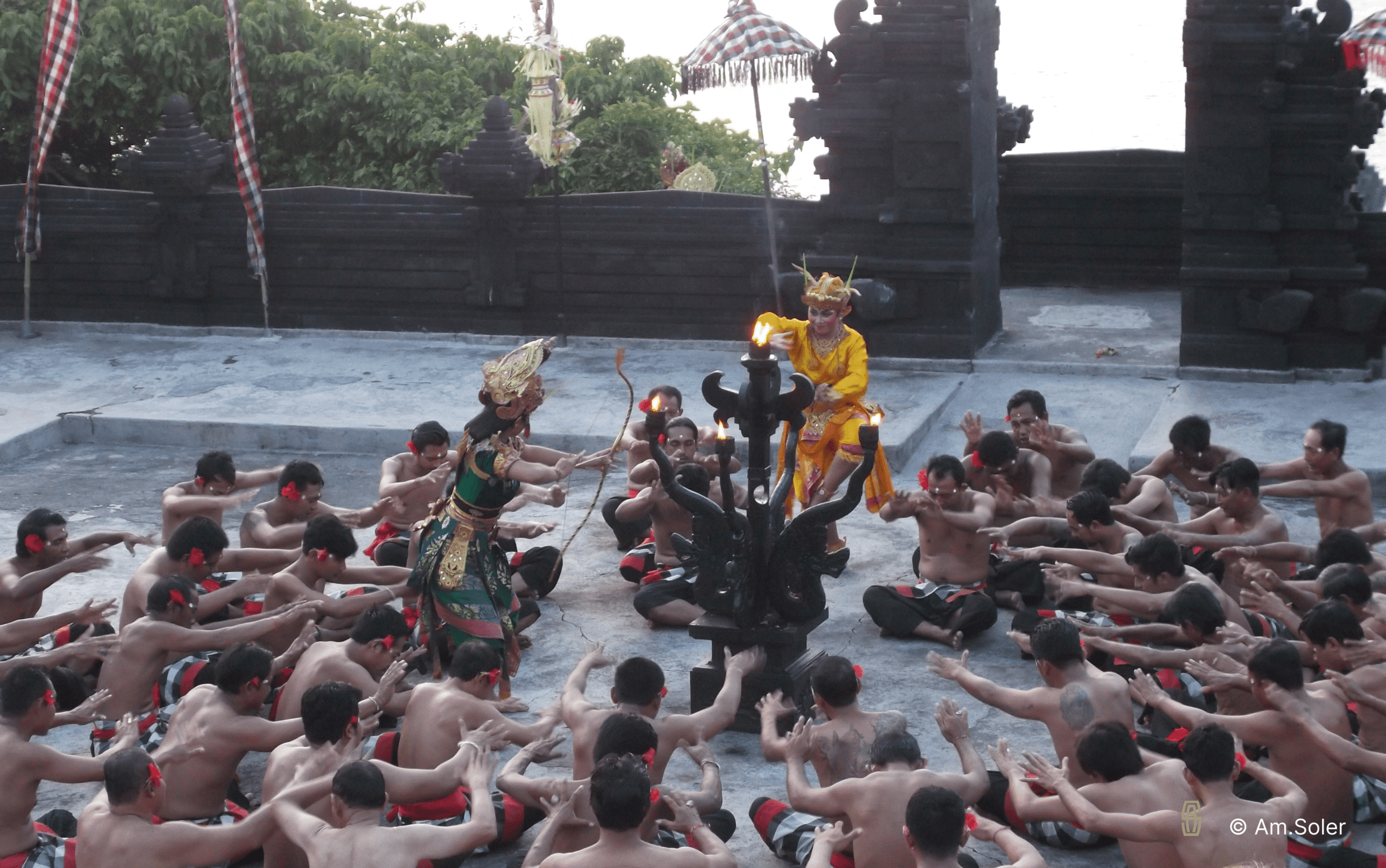
The role of chanting and vocal rhythm
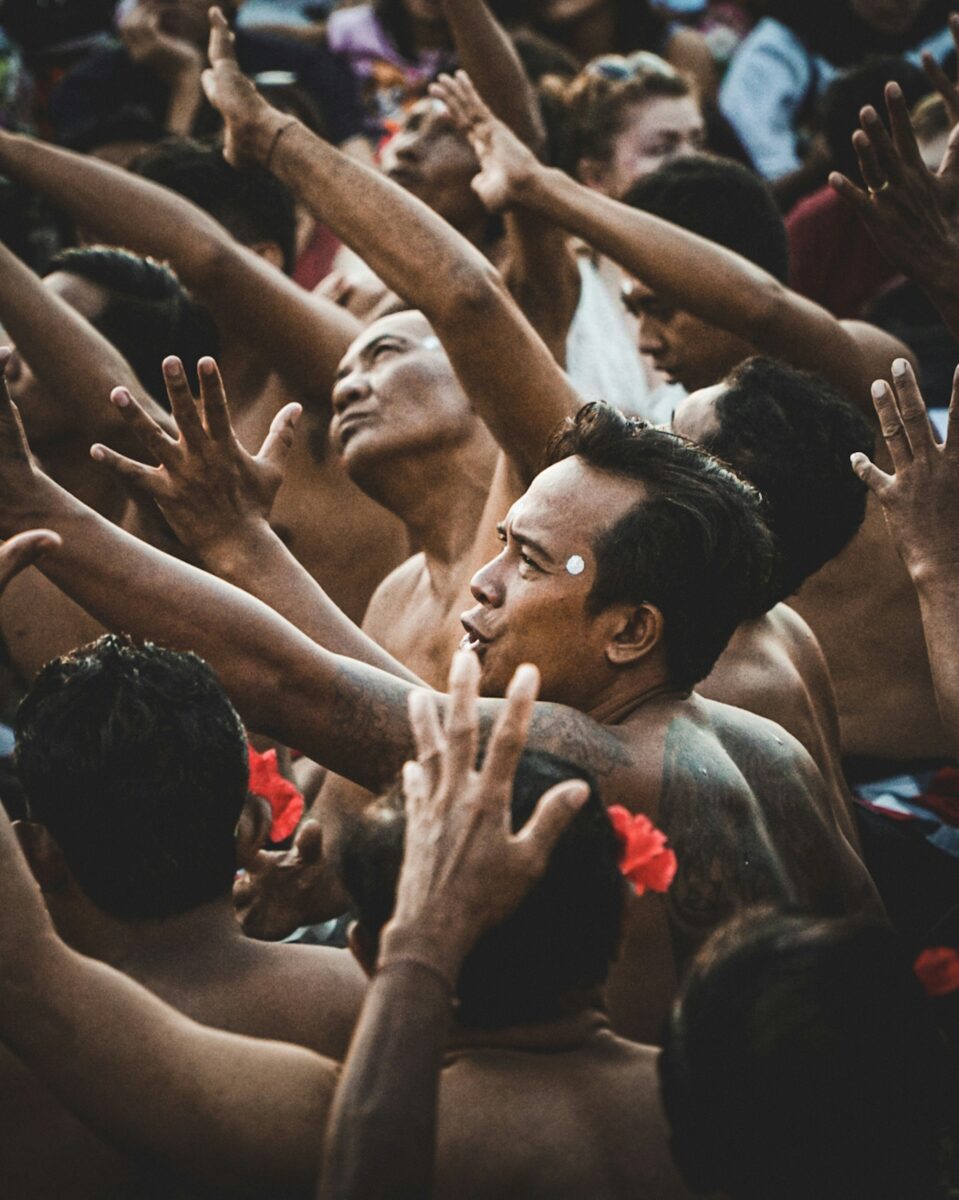
Chanting is the central element of the Kecak dance. The dancers form a circle and produce a continuous rhythm using repeated syllables. In this way, the choir replaces musical instruments. It creates a dynamic sonic structure for the performance. As a result, the human voice becomes the main vehicle of the ritual’s intensity.
In the Kecak dance of Uluwatu, this male choir creates a unique soundscape, amplified by the site’s natural acoustics. The rhythm of the voices, combined with the glow of the fire and the sunset, transforms the performance into an immersive experience where the spectator finds themselves in an atmosphere that is both mystical and theatrical.
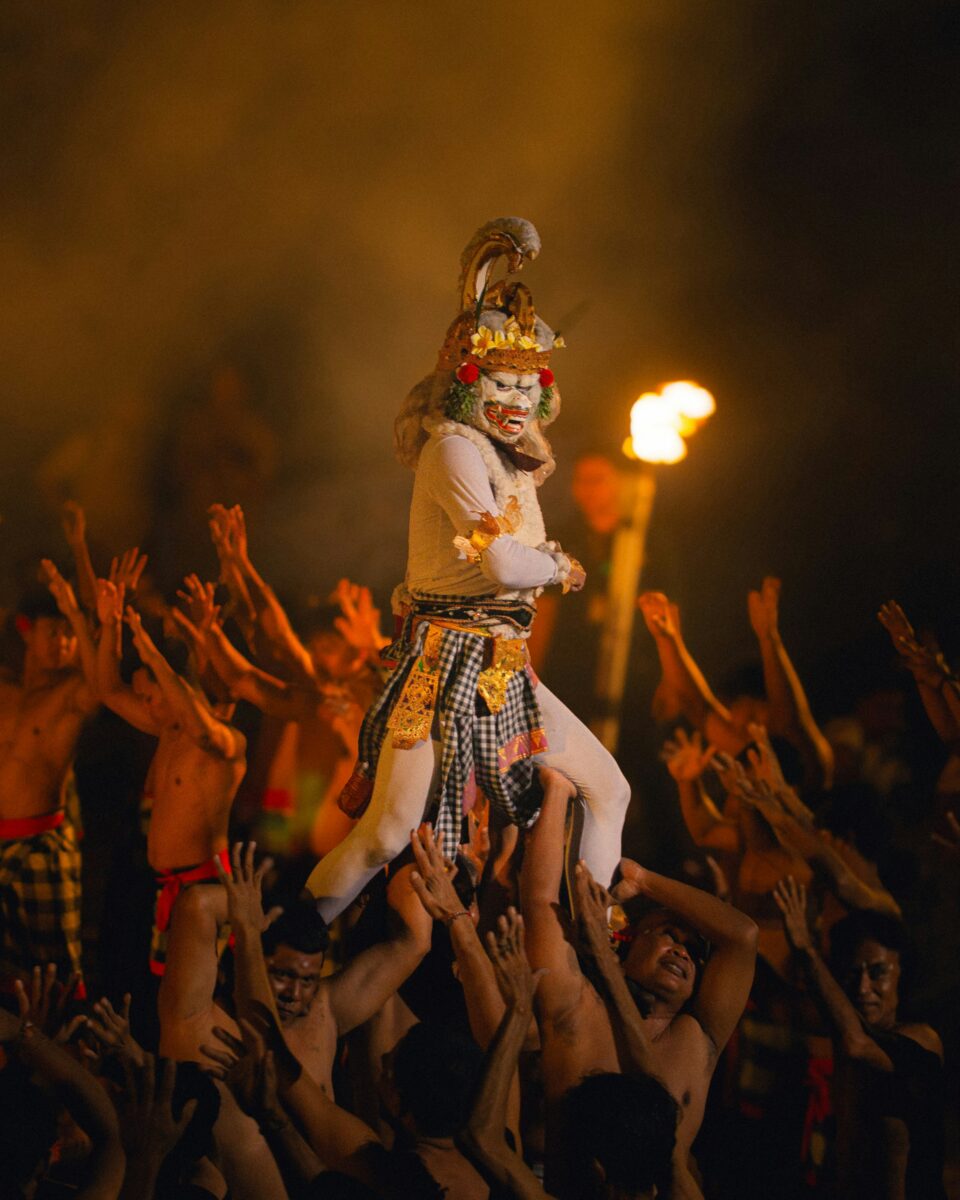
Symbolism and narration of the Ramayana
The Kecak dance stages episodes from the Ramayana, a foundational text of the Hindu tradition. The characters embody symbolic figures linked to good and evil, divine and human forces. In this way, the narrative illustrates universal moral values. From this perspective, the dance becomes a medium of cultural transmission.
The Kecak dance of Uluwatu particularly recounts the episode of Sita’s abduction and the battle between the forces of good and evil. The dancers’ gestures, expressive movements, and facial expressions make this story accessible to all audiences. This universal dimension explains why the performance fascinates visitors from around the world.
Uluwatu, a symbolic setting
The Uluwatu site regularly hosts Kecak dance performances. Located on a cliff overlooking the ocean, it offers a natural setting that reinforces the symbolic dimension of the performance. The connection between the sea, the sky, and the ritual reflects the spiritual imagery of Bali. Thus, the site fully contributes to the cultural meaning of the dance.
Attending a Kecak dance in Uluwatu at sunset also strengthens the spiritual dimension of the performance. The temple, perched on the cliff and dedicated to the protective spirits of the sea, is part of the Balinese sacred geography. As a place of worship at the heart of daily life, the presence of a performance in this setting highlights the connection between art, religion, and nature.
Cultural function and transmission
The Kecak dance plays an important role in the transmission of Balinese traditions. It helps preserve collective forms of artistic expression. In addition, it encourages the continuity of mythological narratives within local communities. In this way, the dance contributes to safeguarding Bali’s intangible heritage.
The Kecak dance of Uluwatu also supports local communities. Performances involve dozens of men from the villages, as well as dancers, costume makers, and musicians. This model helps maintain living traditions while providing a source of income for residents.
The Kecak dance in contemporary Balinese culture
Today, the Kecak dance holds a recognized place in Balinese culture. Although it is associated with ritual practices, it has also become a major cultural spectacle. However, its spiritual symbolism remains central. The Kecak dance thus illustrates the ability of Balinese traditions to adapt to modern contexts while preserving their deep meaning.
Today, attending the Kecak dance in Uluwatu is considered a must-see cultural experience during a stay in Bali. It represents a meeting point between ritual, spectacle, and tourist appeal, while still respecting local communities. This capacity for adaptation reflects the vitality of Balinese culture and its strong attachment to spiritual roots.
This ritual is part of a broader set of Balinese cultural practices → Bali
Other sacred sites on the island, such as Tirta Empul, also illustrate this spiritual dimension → Tirta Empul Temple
To learn more about Balinese traditions, you can consult the official Indonesian tourism website → Uluwatu Temple
(External link to a reference site)