

Natural landscapes of Indonesia: Komodo and marine exploration
Between land and sea
Indonesia offers some of the most spectacular natural landscapes in the world. Composed of thousands of islands, the territory is shaped by volcanic activity, tectonic forces and the surrounding seas. Active volcanoes, coral reefs and dense forests form an exceptional mosaic, where the diversity of relief and ecosystems creates a remarkable variety of environments.
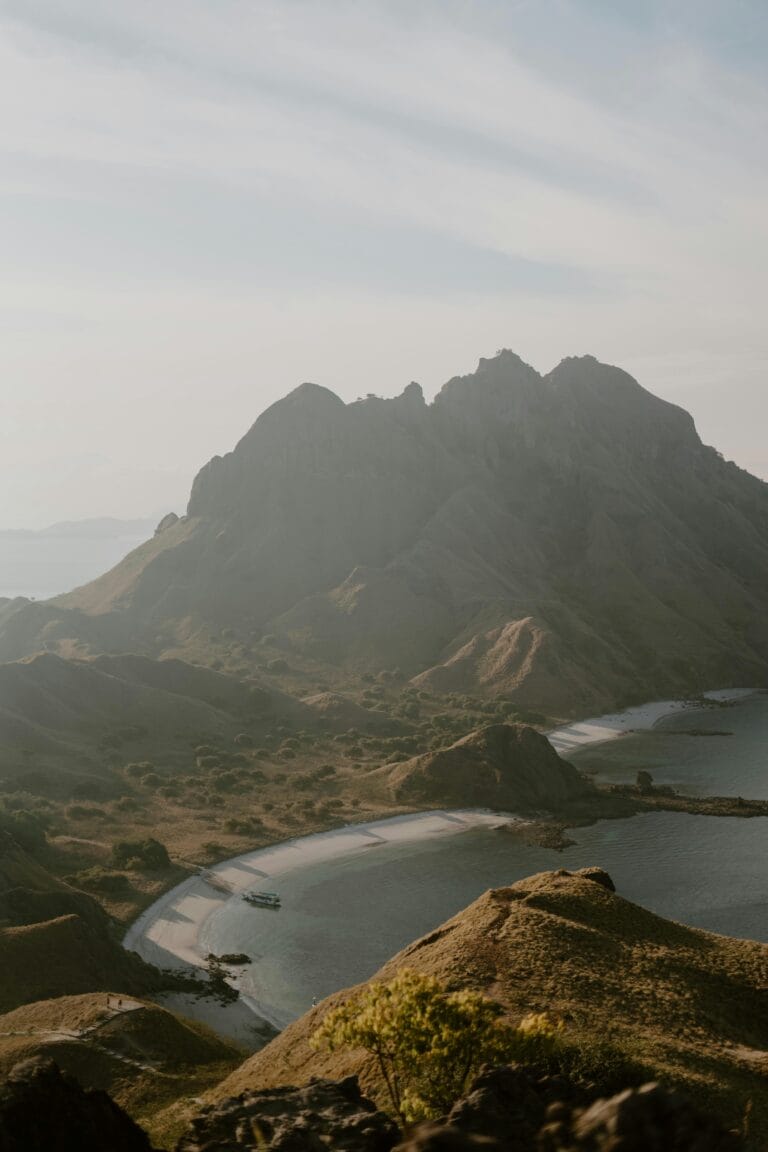
In this context, Indonesia appears as a territory in constant transformation. The meeting of land and sea produces striking contrasts: steep coasts, open beaches, mountainous islands or coral lagoons. These interactions shape a great diversity of ecosystems, visible in many regions of the archipelago.
An archipelago shaped by geography
Indonesia is made up of thousands of islands spread across a vast ocean area. This fragmented configuration creates great ecological diversity, ranging from tropical mountains to coastal plains, including tropical lagoons and coral reefs. Each island, or even each region of the same island, has its own characteristics.
In addition, each region is associated with a specific climate, relief and vegetation. The proximity of the sea and volcanic activity strongly influence the natural environment. Some areas are covered with dense tropical forests, while others present drier or more open landscapes.
Volcanic lands as the backbone of the islands
Volcanoes play a central role in the formation of Indonesian islands. Their successive eruptions enrich the soils with minerals and influence the local climate. Over time, these processes shape varied landscapes, where volcanic slopes, calderas and fertile valleys coexist.
On many islands, these volcanic structures are visible in the landscapes. Steep slopes give way to plains and savannas, while the coasts often present a more arid character. This diversity of environments encourages a rich and varied flora and fauna, characteristic of the Indonesian landscapes.
In the Komodo region, volcanic relief also influences navigation between the islands. Turbulent currents create particular marine environments, which directly affect underwater ecosystems.
The sea, a space of continuity and circulation
In Indonesia, the sea does not merely surround the islands; it connects them. It facilitates exchanges, transports nutrients and links terrestrial and marine ecosystems. Straits, bays and lagoons thus play an essential role in the ecological balance of the archipelago.
Moreover, marine areas contribute to overall biodiversity. They host a multitude of species and provide transition zones between terrestrial and aquatic environments. Seagrass beds, for example, form essential habitats for many species. The sea therefore acts as a permanent link between the different landscapes.
Around Komodo, marine currents foster exceptional biodiversity. Nutrient-rich waters attract a wide variety of species, further enhancing the ecological and visual richness of the natural landscapes.
Ecosystems between land and sea
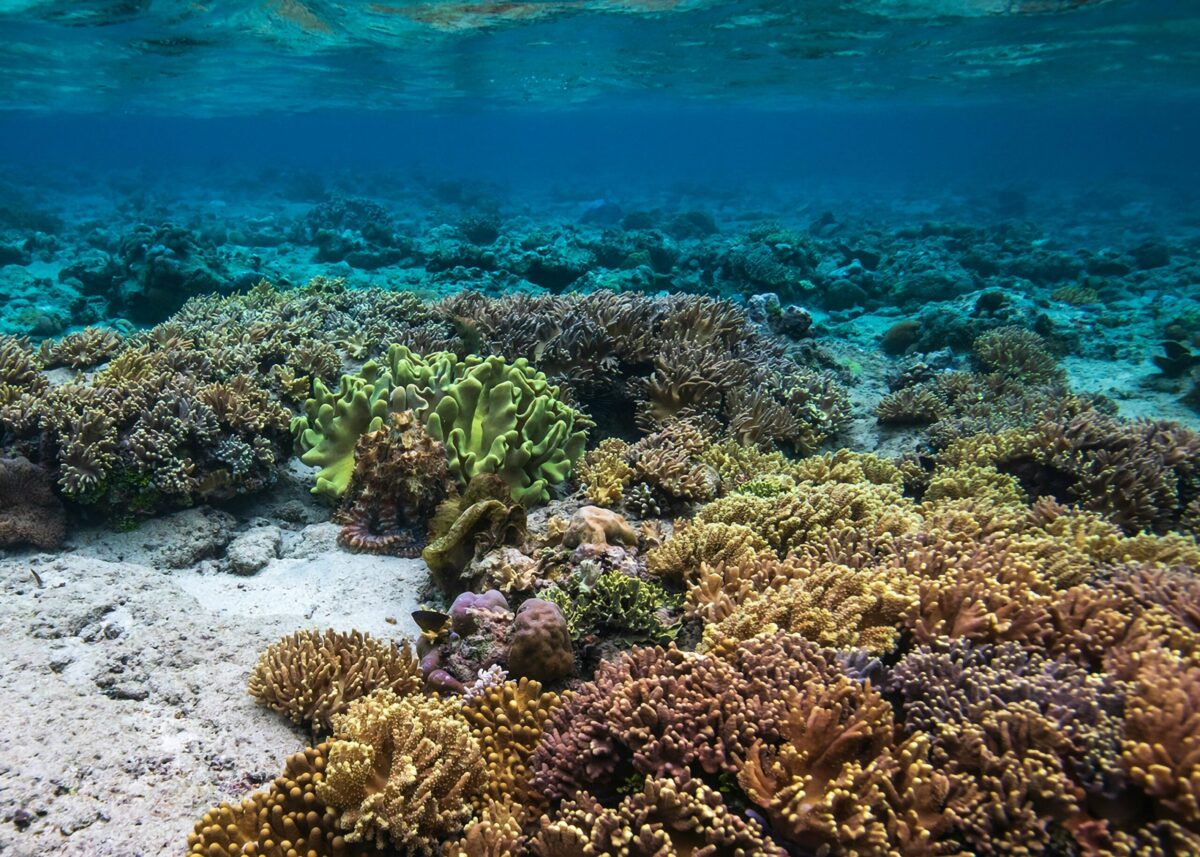
Between land and sea, coastal ecosystems, several meters deep, form transition zones. Mangroves, beaches and coral reefs illustrate this encounter between two worlds. These areas concentrate a wide diversity of species while playing an essential role in ecological balance.
For example, mangroves stabilize the shores, filter sediments and provide shelter for many marine and coastal species. Coral reefs, on the other hand, form underwater habitats rich in biodiversity.
These transition environments reveal the complexity of natural interactions. Tides, currents and climatic variations directly influence their evolution. Thus, they concretely illustrate the links between terrestrial and marine forces.

Natural landscapes of Indonesia: extreme environments shaped by land and sea
Terrestrial ecosystems dominated by dragons
In some areas of Komodo National Park, the landscapes are characterized by arid reliefs, savannas and rocky hills. Volcanic activity, the tropical climate and the surrounding seas create environments that are sometimes dry and exposed, but rich in biodiversity.
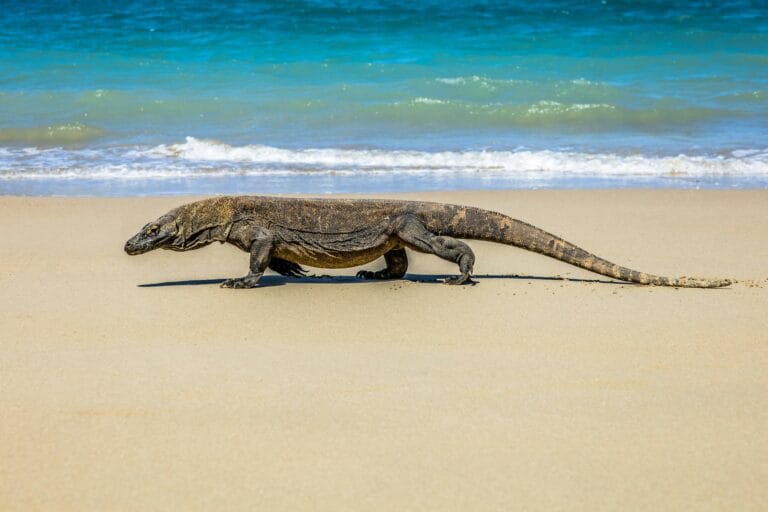
These environments form the natural habitat of the Komodo dragon, an emblematic species adapted to these particular conditions. The landscapes of Komodo thus illustrate a balance between dry land and the surrounding seas.
In these landscapes, the interactions between climate, relief and fauna illustrate the singular evolution of ecosystems. The presence of the Komodo dragon reinforces the unique natural identity of the islands.
This environment creates a direct connection with the Dragons of Komodo and Rinca, where similar environments extend across several islands.
The seabed, a world of currents and reefs
Around the islands, the seabed of Komodo National Park shelters one of the richest marine biodiversities in Indonesia. Strong currents, located at the junction between the Indian and Pacific Oceans, promote the circulation of nutrients and the presence of diverse ecosystems.
Coral reefs, numerous in the region, form a mosaic of colorful underwater landscapes. These environments are home to a great diversity of tropical fish, sharks and rays, as well as a wide range of corals.
This underwater richness is largely linked to the area’s geological dynamics. The sea depths and underwater currents create a balance between land and ocean, where the currents constantly shape the marine landscapes.
A permanent transition between two worlds
In the Komodo region, terrestrial and marine environments form a coherent whole, where each element influences the other. The islands, the seas and the reefs are in constant interaction.
This continuity of landscapes strengthens the impression of unity between terrestrial and marine environments. The landscapes, both volcanic and marine, illustrate the balance between the forces of land and sea.
Thus, the Komodo region, between land and sea, offers a complete reading of the links between the “dragon” landscapes and the coral reefs, in a continuous transition between terrestrial and marine worlds.
Home | Indonesian Komodo Tours
(External link to reference site)