

Bali : landscapes and traditions
Bali landscapes and traditions, understanding the island through its cultural sites
Bali occupies a unique place in the Indonesian archipelago. Often associated with lush landscapes and a strong spiritual dimension, the island actually reveals a more complex reality. In fact, these landscapes only take on their full meaning when they are connected to the cultural traditions that run through them. In Bali, places are not just settings: they carry a function, a symbolism, and a collective memory.
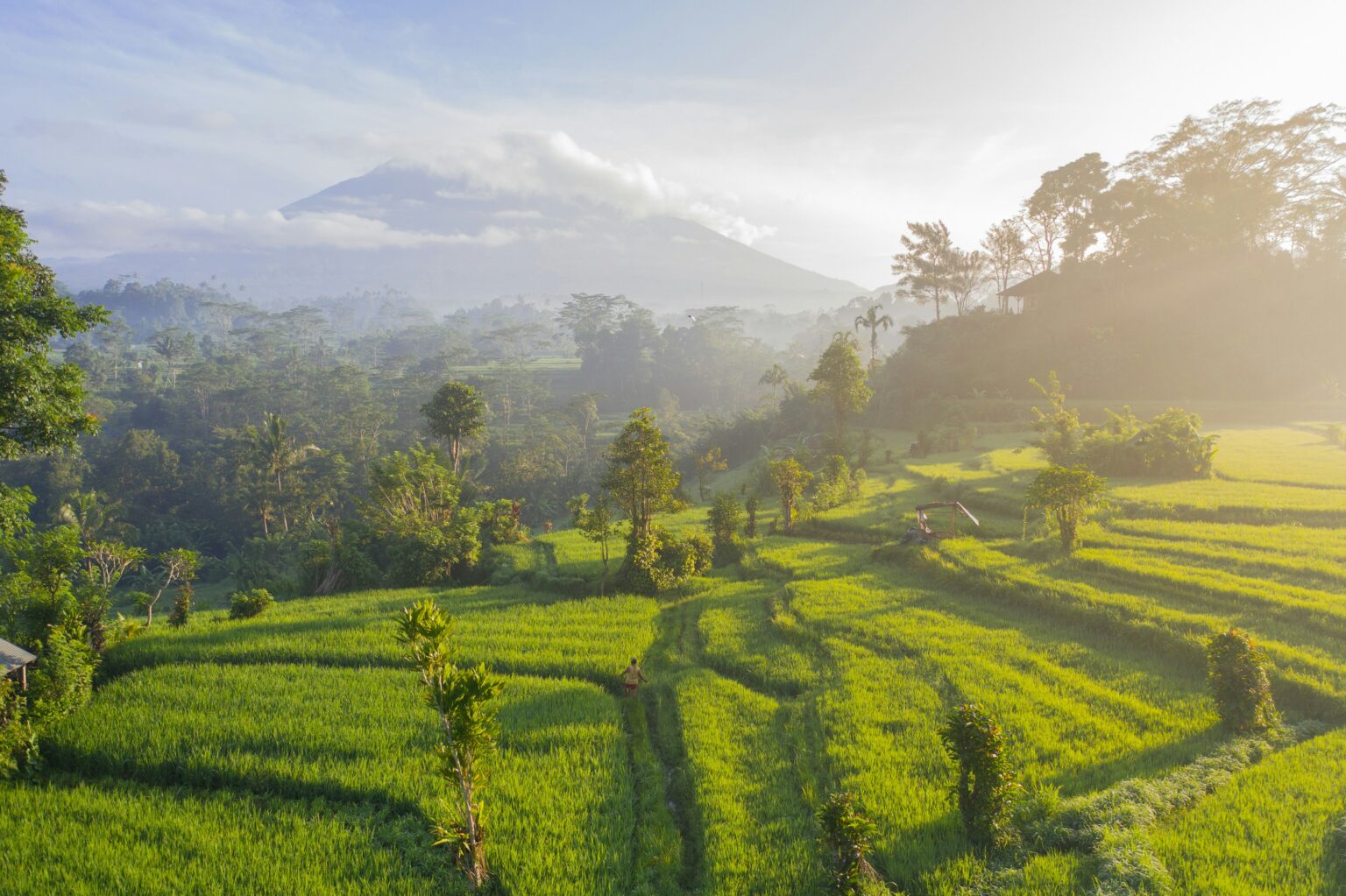
Thus, Balinese landscapes are not limited to natural scenery. They are genuine cultural frameworks, shaped by centuries of social, religious, and community practices. Whether forests, agricultural areas, or sacred sites, these spaces all follow the same logic: maintaining a balance between humans, nature, and the spiritual world.
A culture where the landscape structures practices
Balinese culture is based on a worldview in which the environment plays a central role. The Balinese consider landscapes as living spaces, loaded with precise meanings. As a result, this conception directly influences the organization of the territory, the distribution of human activities, and the forms of cultural expression.
Each type of landscape refers to a specific symbolic function. For example, some spaces evoke the sacred, while others are more closely associated with community life or daily activities. In this context, cultural traditions are always anchored in specific places. The territory is therefore never a simple backdrop: it gives meaning to practices and contributes to their transmission.
Collective traditions rooted in the land
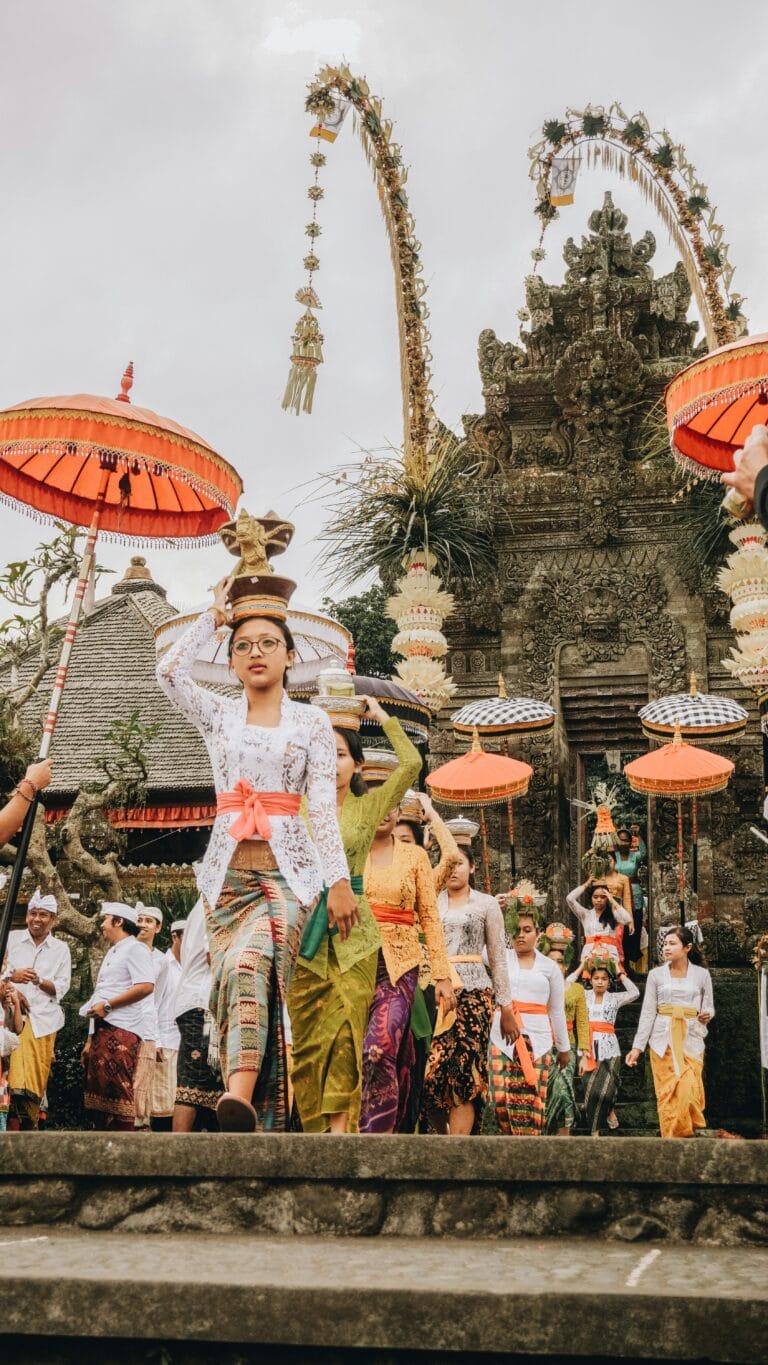
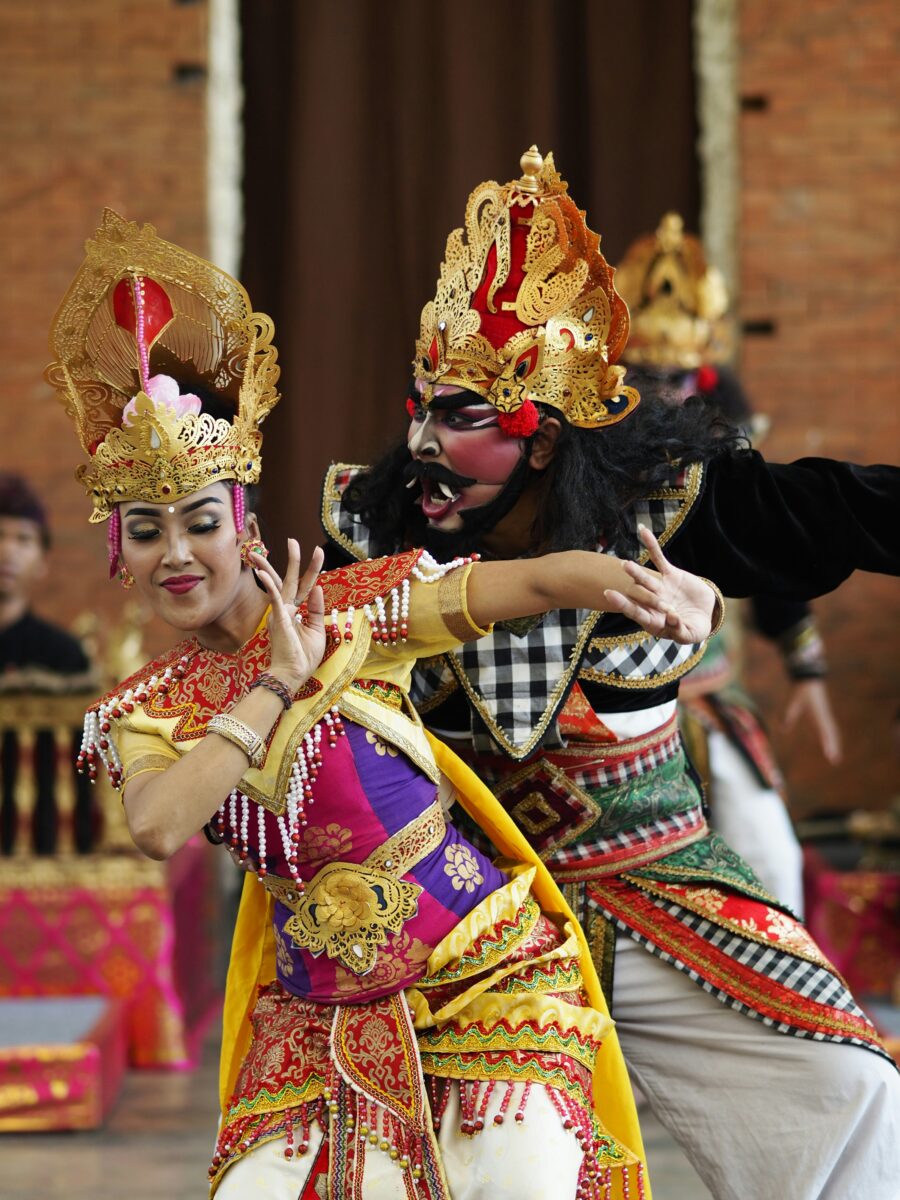
In Bali, cultural traditions are frequently expressed in open spaces. These places then become gathering points where the collective dimension takes on importance. Moreover, the territory acts as a link between mythological narratives, collective memory, and contemporary practices.
The choice of these places is never random. Their configuration, orientation, or relationship with natural elements reinforces the symbolic scope of the traditions that take place there. Thus, the landscape amplifies the message carried by the ritual and embeds the tradition within a territorial continuity.
This close relationship between collective practices and the environment clearly appears in the article dedicated to the Kecak dance at Uluwatu, which illustrates the link between culture and landscape.
Natural spaces as cultural landmarks
Indeed, natural spaces occupy a fundamental place in Bali’s cultural organization. Forests, in particular, play a specific role. They are perceived as transition zones between the human world and more spiritual dimensions. Communities therefore attribute specific functions to these environments and respect particular rules associated with them.
Places located in forests are governed by specific rules drawn from local traditions. Thanks to these principles, communities maintain a balance between human use and respect for the sacred. Forests thus become cultural landmarks, passed down from generation to generation.
Moreover, the cultural approach to forests is developed in the article dedicated to the Monkey Forest.
Agricultural landscapes as living heritage
In addition, agricultural landscapes play a prominent role in Balinese identity. They embody a collective organization based on cooperation and the shared management of resources. These agricultural practices constitute a living heritage, transmitted over time.
These activities are not limited to an economic function. On the contrary, they are part of a cultural logic closely tied to natural cycles and seasonal rhythms. Some agricultural products even have a strong ritual significance, thus revealing the transformations of traditions in the face of economic and social dynamics.
In the same way, the connection to agricultural practices is found in the article dedicated to Luwak coffee plantations.
Water, a central element of landscapes and beliefs
Furthermore, water plays a structuring role in Balinese landscapes and traditions. It organizes the territory, supports agriculture, and nourishes spiritual representations. The places associated with it—such as water temples—symbolize strength, the idea of balance, and continuity.
The Balinese use water as a mediating element between the material world and the spiritual world. Thus, the management of these sites reflects a cultural conception deeply rooted in respect for natural cycles.
This symbolic dimension clearly appears in the article dedicated to Tirta Empul Temple.
“Bali is a place where art and nature meet in perfect harmony, creating a beauty that cannot be imitated or reproduced.”
Walter Spies
(German artist, musician, and explorer, pioneer of Balinese art in the early 20th century.)
A cross-sectional reading of Balinese landscapes
Taken separately, each emblematic site offers a partial understanding of Bali. However, when they are connected to one another, a more coherent vision emerges. The landscapes then form a network where each element plays a specific role.
This cross-sectional reading makes it possible to move beyond a fragmented approach. It highlights the shared logics that govern traditions, the environment, and social organization. Thus, Balinese landscapes appear as the result of constant interactions between culture and nature.
Understanding Bali through its cultural places
Finally, Bali’s landscapes and traditions constitute essential keys to understanding the island’s identity. Each emblematic place refers to a specific aspect of Balinese culture, whether related to spiritual practices, the relationship with nature, or living heritage.
The page presented here offers an overall vision, while the thematic articles of the blog allow each site to be explored in greater depth. Together, this content provides a coherent and complementary reading of Bali’s landscapes and traditions.
(External link to a reference site)