

Mount Agung and the rice fields of Bali: agricultural landscapes at the foot of the volcano
At the foot of Mount Agung, Bali’s rice fields form perfect curves. These green terraces have been climbing the volcano’s slopes for nearly a thousand years. Behind this beauty lies a story of hydraulic engineering and faith. This agricultural landscape is the result of a rare balance between nature and culture. Indeed, the volcano provides water and fertility. The Balinese, for their part, contribute their expertise and spirituality. This partnership has produced one of the most remarkable rice-growing landscapes on the planet.
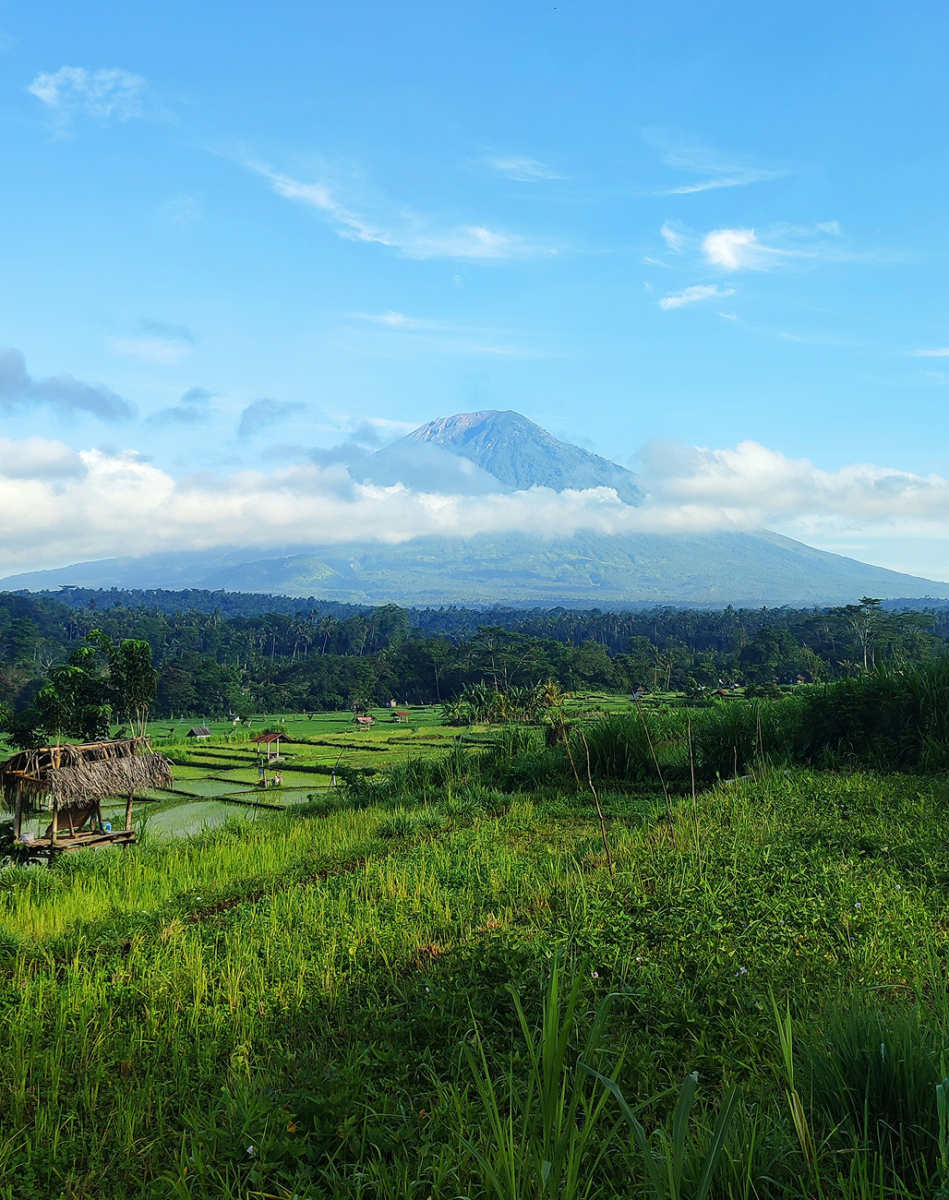
Mount Agung, the hidden source of the agricultural landscapes
A volcano that produces exceptional soils
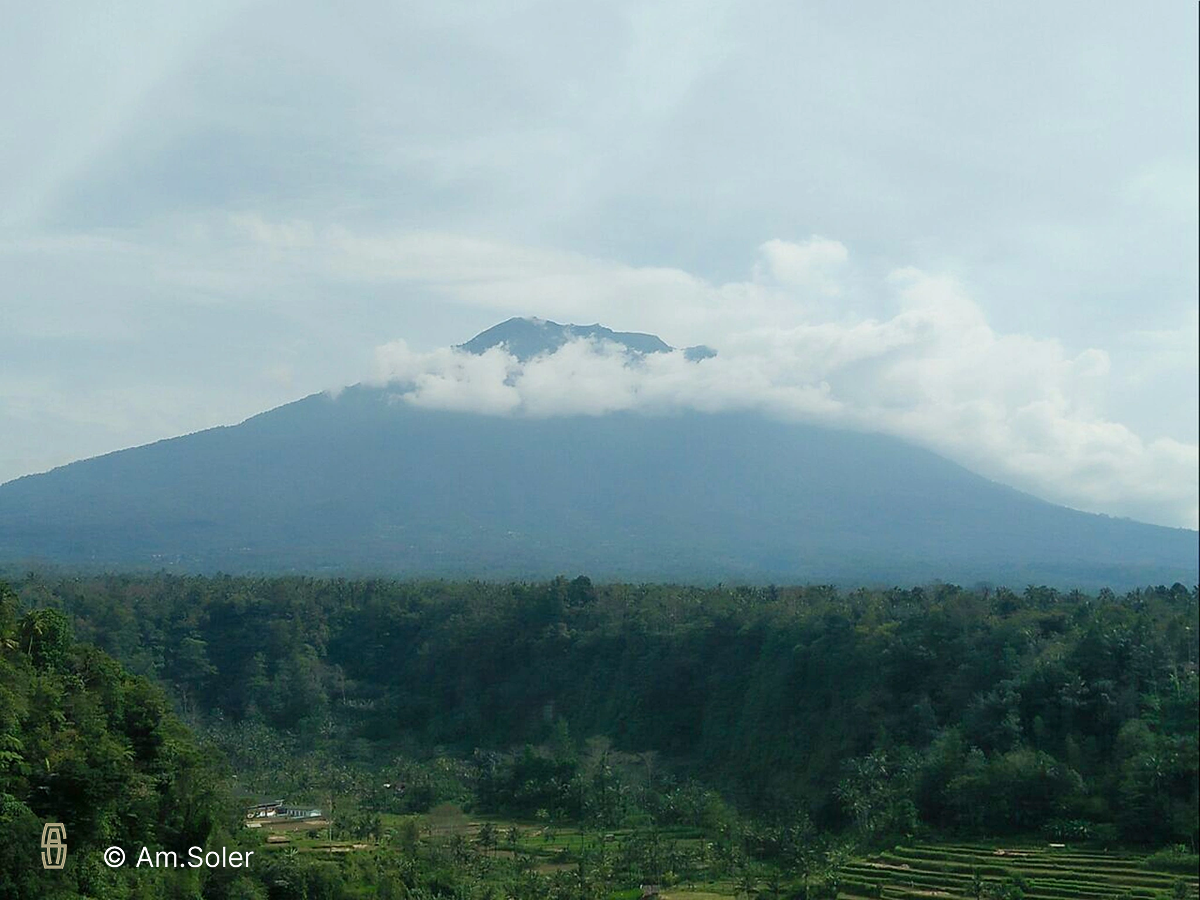
Mount Agung rises to 3,031 metres in eastern Bali. This stratovolcano towers over the Karangasem regency. Furthermore, its past eruptions have deposited thick layers of ash. This ash is slowly transforming into remarkably fertile soil. Consequently, the volcano’s slopes are among the richest lands on the island. Balinese farmers have been cultivating this soil for centuries. Thanks to them, the island is able to feed a dense population despite its small size.
Furthermore, Mount Agung occupies a central place in Balinese spirituality. Ancient texts describe it as a replica of Mount Meru. In Hinduism, this cosmic mountain is the abode of the gods. The Balinese therefore regard their volcano as a gift from heaven. This belief directly shapes the way the land is cultivated. Indeed, one does not work the garden of the gods with impunity.
From the mountains to the rice fields: the water’s journey
Water is the second treasure bestowed by the volcano. The slopes of Mount Agung catch the rain and feed numerous springs. These springs then flow into rivers such as the Telaga Waja. Such rivers flow through the agricultural valleys of eastern Bali. Farmers then channel this water into irrigation canals. From there, it fills the terraces one after the other. This journey, from the spring to the rice field, follows a sacred order. The water first flows past the temples before reaching the fields. This detail encapsulates the entire Balinese concept of agriculture.
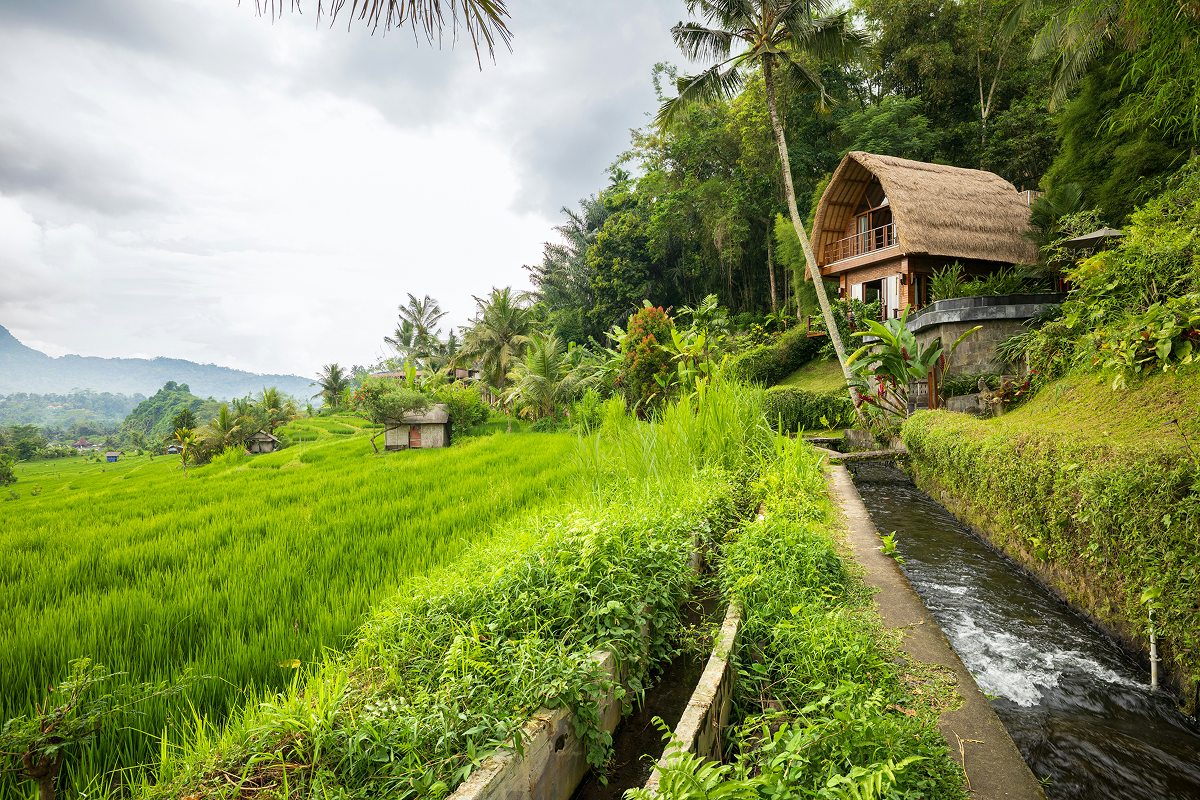
The subak, a millennia-old irrigation system
A democratic co-operative founded a thousand years ago
The word ‘subak’ refers to a traditional Balinese irrigation cooperative. The earliest references to this system date back to the 9th century. This model therefore has a history stretching back over a thousand years. Each subak brings together farmers who share the same water source. Depending on the source, a subak has between 50 and 400 members. There are now said to be more than 1,200 subaks in Bali. Together, they irrigate around 100,000 hectares of rice fields.
However, the subak extends far beyond a purely technical framework. Each cooperative has its own written legal code, the awig-awig. This document sets out the rights and duties of each member. The farmers also elect a leader, the pekaseh. The pekaseh convenes meetings and allocates water amongst the members. In the event of a dispute, he applies the penalties laid down by custom. Each member has an equal say in decision-making. Consequently, historians describe the subak as an agricultural democracy. Indeed, the kings of Bali played only a marginal role in its development. This system stems from the people, not from those in power.
In Bali, this ancient collective system continues to shape the rice fields a heritage that Indonesia Travel brings to light.
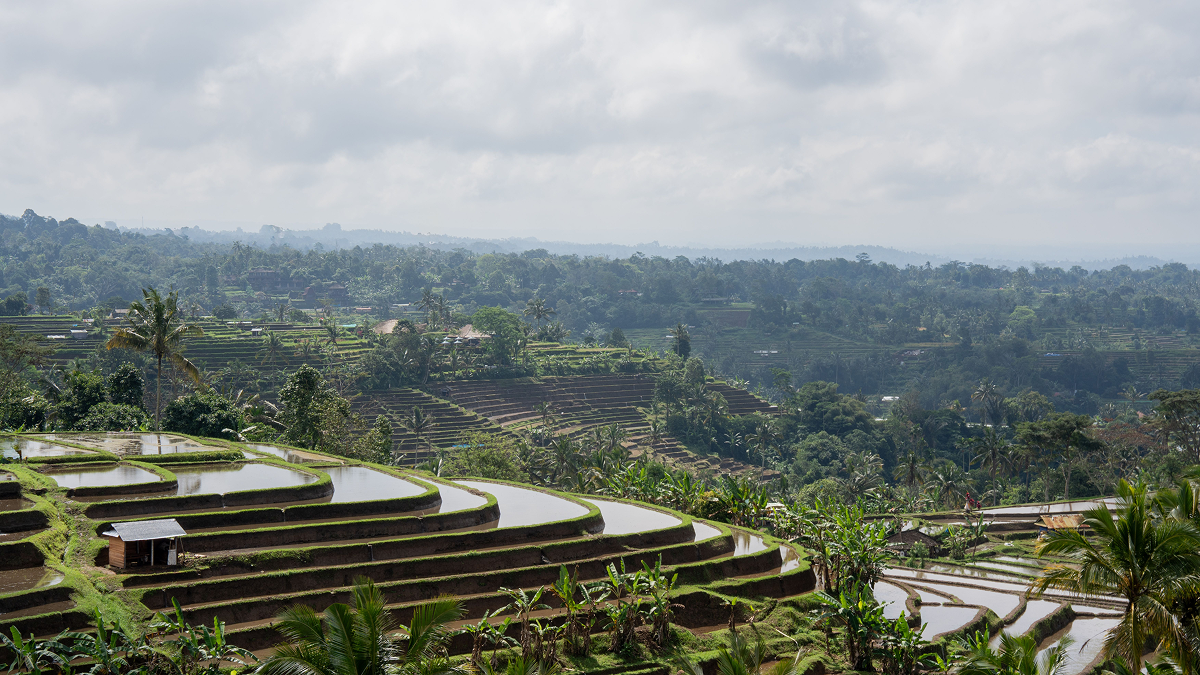
Kertamasa and gadu: rice in tune with the seasons
Balinese subaks also regulate the planting seasons. Two sets of rules govern the agricultural calendar: the kertamasa and the gadu. In December, during the rainy season, the kertamasa allows all members to plant. In contrast, August corresponds to the dry season. During this period, the gadu allows only half of the members to cultivate. This rule addresses the shortage of water during the dry months. Thus, each farmer plants every other year during the dry season. This system yields a total of three harvests over two years. Furthermore, planting is concentrated within a window of fifteen consecutive days. This concentration prevents a single plot from attracting all the pests. Birds and insects are thus dispersed across all the terraces. Once again, the collective rule protects each individual farm.
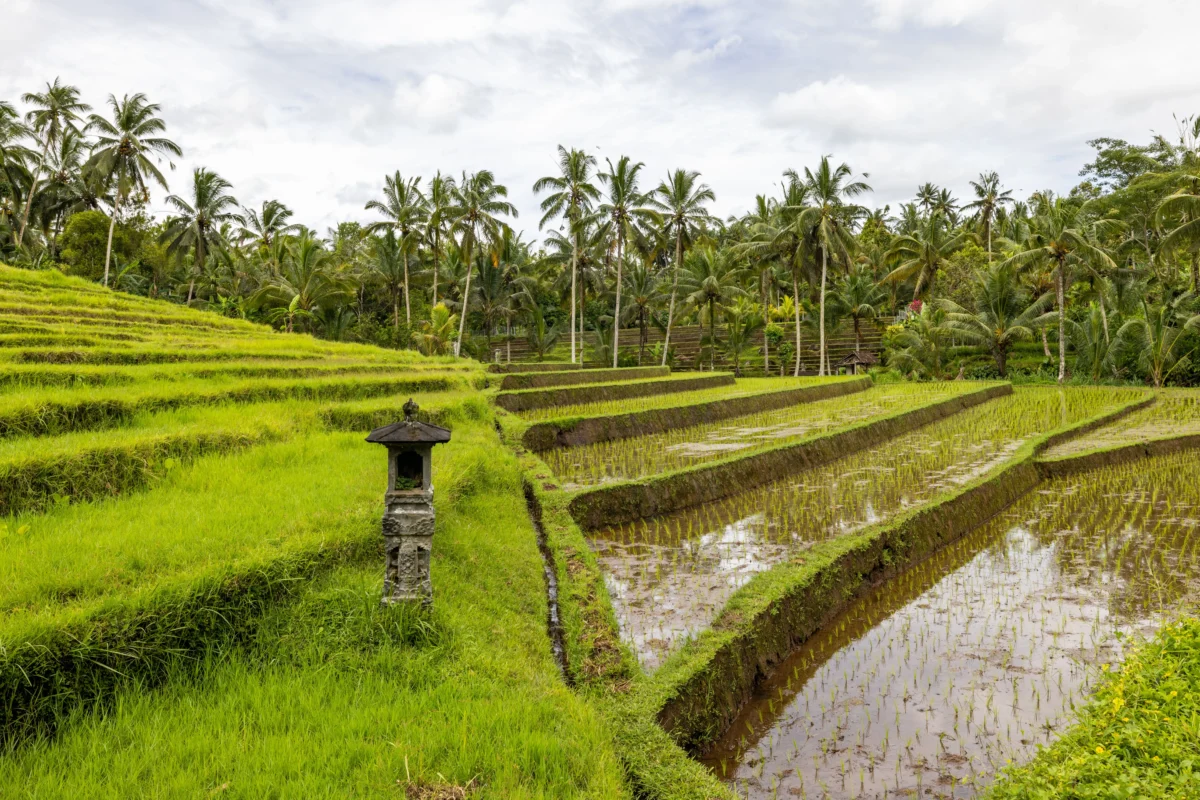
The water temples: true centres of decision-making
The water temples form the spiritual heart of the system. The priests of these temples set the planting and harvesting calendars. To do this, they rely on the Balinese lunar calendar. Farmers adhere to these dates with great discipline. Those in charge pull up any seedlings that have been sown too early. This rule may seem strict. However, it protects the entire community.
Indeed, the synchronisation of crops serves a specific ecological purpose. Simultaneous fallow periods deprive pests of their habitat. Furthermore, they cover vast areas at the same time. Destructive insects and birds therefore disappear due to a lack of food. This system controls pests without the use of any pesticides. Furthermore, fallow periods prevent peaks in water demand. The subak thus optimises the sharing of this resource amongst all members. Every farmer benefits from adhering to the collective calendar. This is why the system has functioned continuously for centuries.
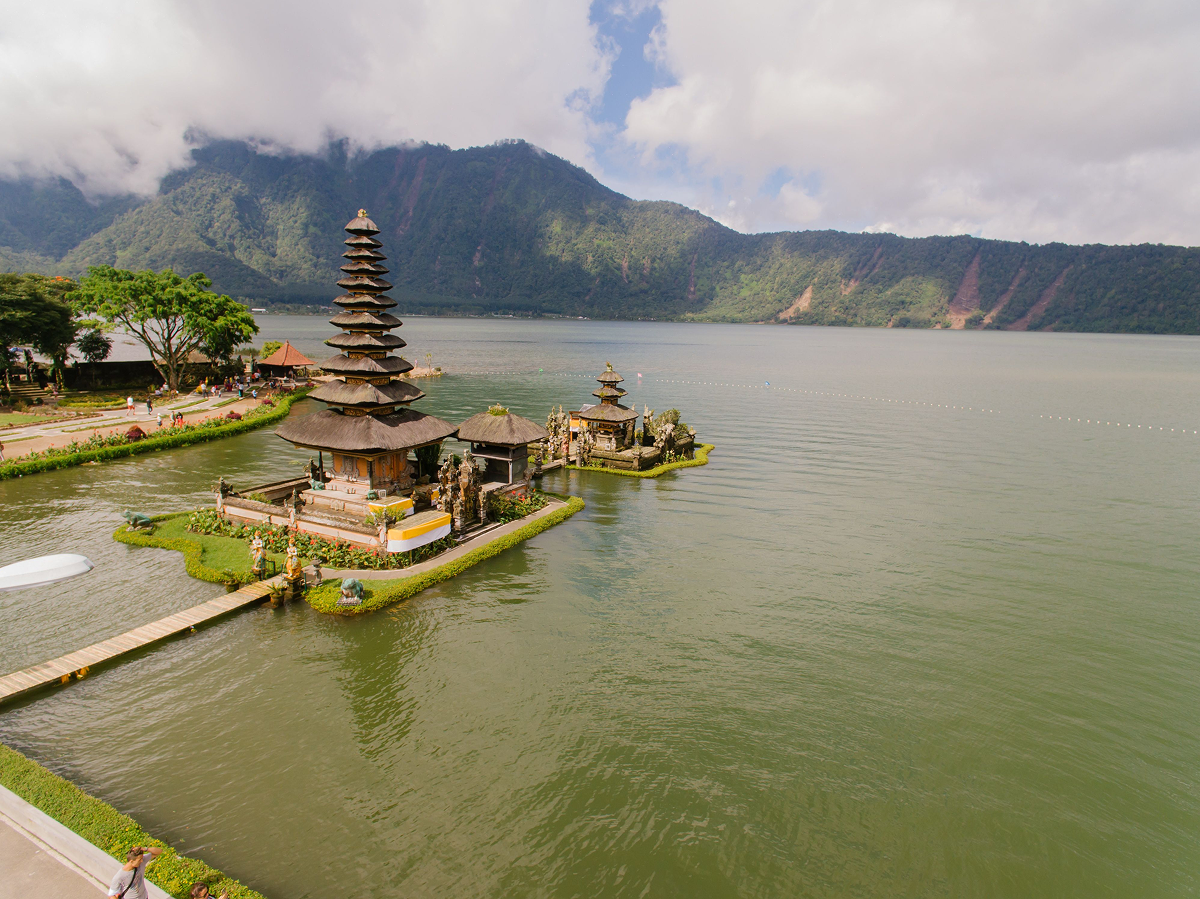
Pura Ulun Danu Batur
Farmers are creating terraced rice paddies
Sidemen, the valley at the foot of Mount Agung
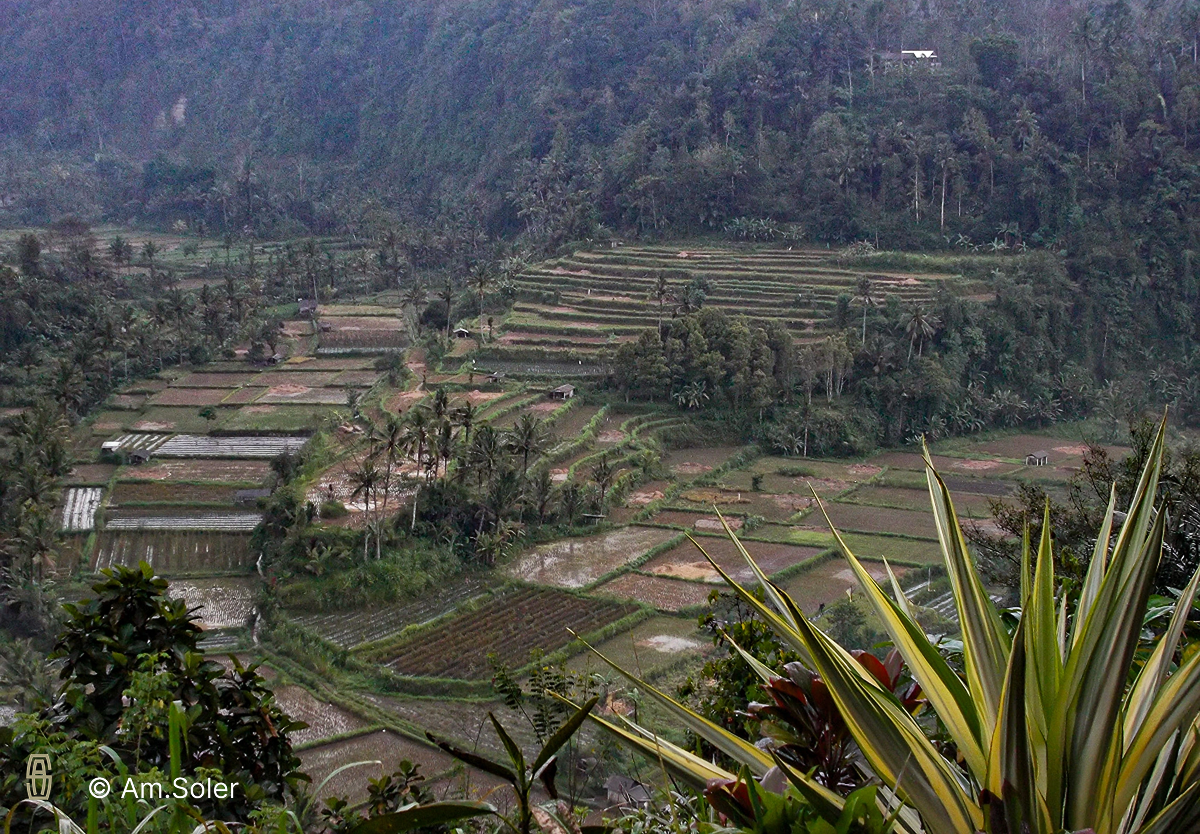
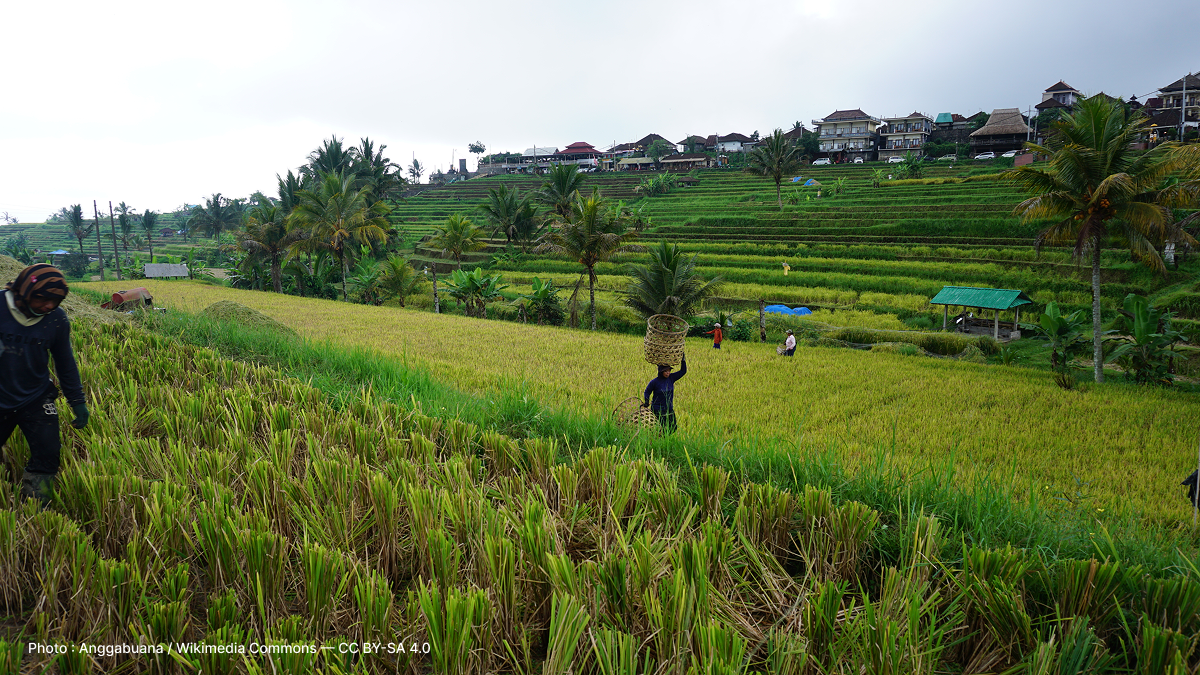
The Sidemen Valley offers the purest expression of this landscape. This area is situated in the Karangasem Regency, in the east of the island. Terraced rice fields follow the course of the Telaga Waja River. In the background, Mount Agung towers over the valley. This setting attracts photographers from all over the world. The villages in the valley also make their living from ikat weaving. This textile tradition keeps households busy between rice-growing cycles. However, these images rarely reveal the complexity hidden behind the colours. Each terrace is the result of collective labour spanning thousands of years. The dykes, canals and tunnels require constant maintenance. Members of the subak maintain these structures generation after generation.
The rice paddies also fulfil little-known ecological functions. They temporarily store rainwater and help to prevent flooding. Furthermore, they replenish groundwater reserves and regulate river flow. This irrigation system extends from the mountain forests down to the coastal plains. Each tier slows the water down and distributes it evenly. In this way, the agricultural landscape protects the island far beyond the fields themselves.
Ducks: the rice paddies’ companions
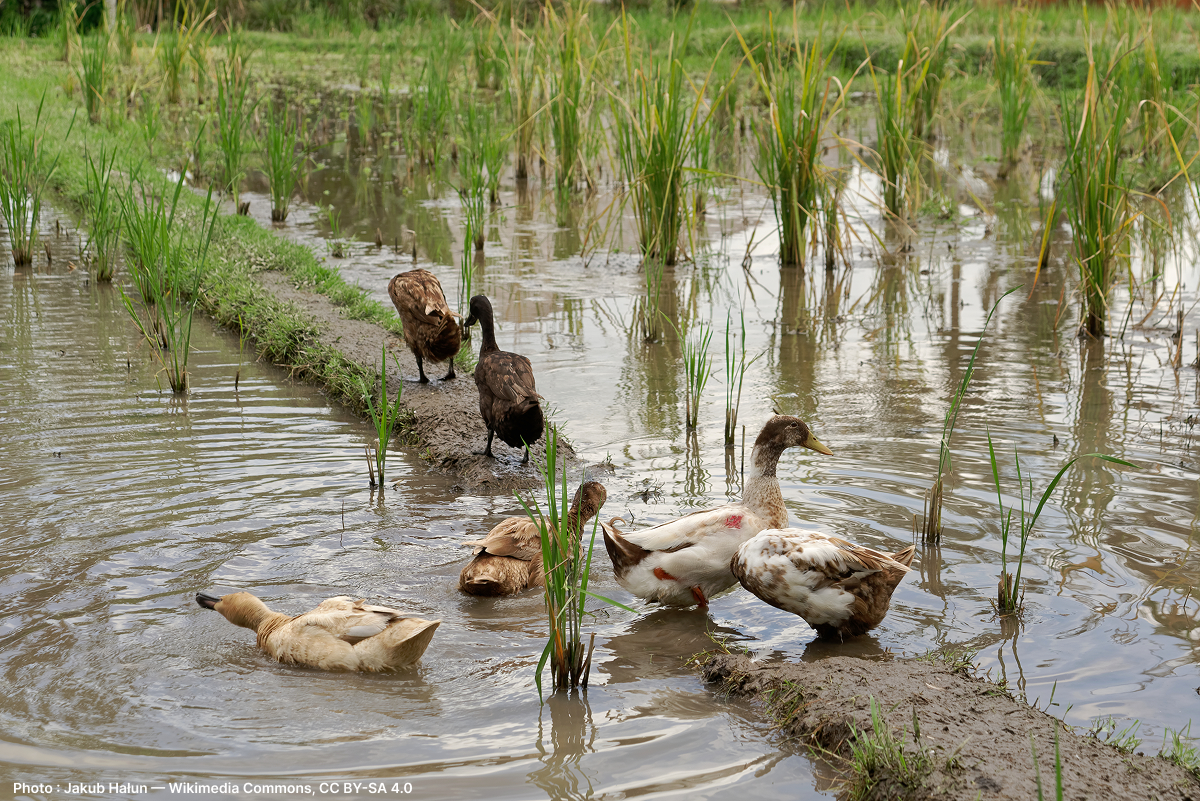
Ducks are a familiar sight in Bali’s rice fields. In the sawah, they may be herded between plots after the growing season. There they find some of their food, notably small animals and insects found in the wetlands. Their presence thus contributes to the life of the rice field ecosystem.
Beyond their role in the agricultural landscape, ducks also hold symbolic significance in Balinese culture. The white duck, in particular, is associated with wisdom and discernment in certain traditions.
UNESCO’s global recognition
UNESCO inscribed this cultural landscape on the World Heritage List in June 2012. This inscription recognises the subak system as a whole. The listed property encompasses five iconic sites on the island. First among these is the supreme water temple, Pura Ulun Danu Batur. This temple stands on the shores of Lake Batur, a crater lake. The Balinese regard this lake as the source of all rivers. Next come Lake Batur and the Pakerisan catchment area. The terraces of Catur Angga Batukaru have been present there since the 10th century. Finally, the royal temple of Pura Taman Ayun completes this ensemble. UNESCO thus highlights the unity between the volcano, the water, the temple and the rice.
Rice: much more than just a crop
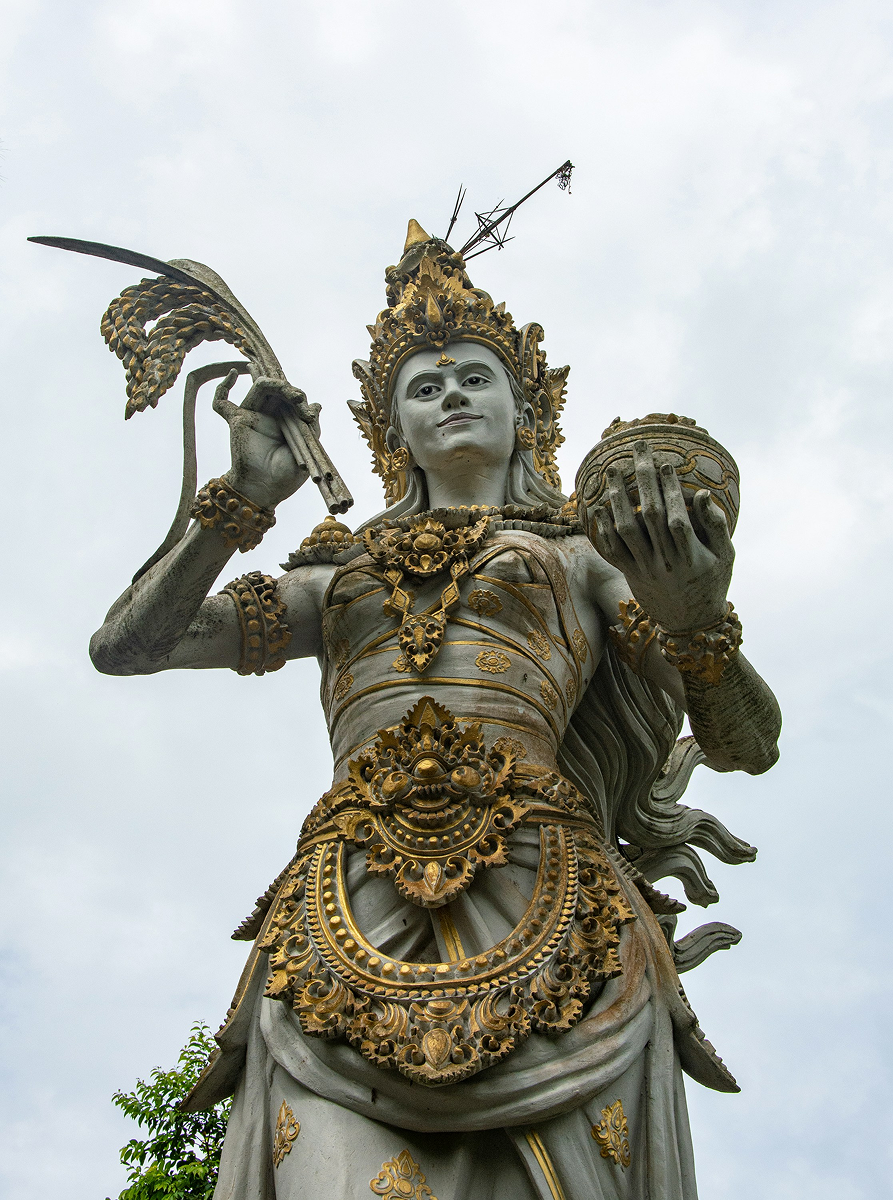
Dewi Sri, the goddess of rice
Rice holds a sacred place in Balinese Hinduism. Dewi Sri, the goddess of rice and fertility, watches over the harvests. The Balinese pay special homage to her in every rice field. Each plot has a small altar dedicated to this deity, where farmers place offerings of flowers and grains. Furthermore, they place these altars in the most sacred corner of the field. This corner always faces the direction of Mount Agung. The first rice seedlings are planted in this area. At harvest time, the stalks from this corner come to symbolise the goddess. No one eats this sacred rice; the farmers offer it to the temples during ceremonies.
Rituals that mark the rhythm of farm life
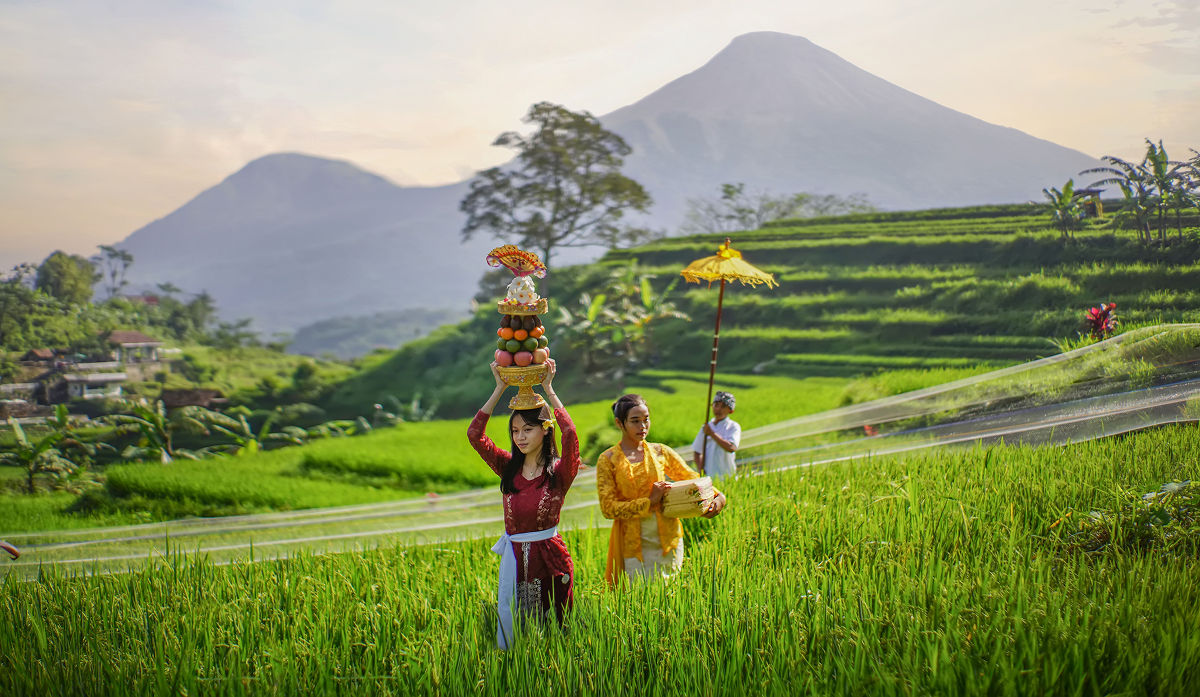
The agricultural calendar follows a strict religious rhythm. First, a ceremony accompanies the transplanting of the young seedlings. These seedlings are initially grown in a special ‘nursery’. Next, further rituals mark the growth of the rice. Finally, a festival celebrates the harvest and gives thanks to the gods. These ceremonies shape the social life of the villages. Thus, the agricultural year and the religious year are one and the same. White rice, red rice and black rice all share this sacred dimension. Indeed, the Balinese use the word ‘nasi’ to mean ‘meal’. This language reveals the central role of rice in the local culture.
Three types of rice, four sacred colours
Bali grows three traditional varieties of rice. ‘Barak’ refers to a nutrient-rich red rice. Families often give this to babies when they start eating solid foods. ‘Injin’, on the other hand, is a very dark purple colour. The Balinese cook it as a sweet pudding, known as ‘bubur injin’. Finally, ‘ketan’ is a type of sticky white rice, which features in almost every meal. A Hindu legend explains the absence of yellow rice on the island. Shiva wanted to give the Balinese rice in the four sacred colours. He sent a bird to carry the seeds to the island. However, the bird devoured the yellow rice on the way. All that remained of this variety were a few forgotten grains. These gave rise to turmeric, the golden spice of local cuisine. Yet ceremonies sometimes require yellow rice. The Balinese therefore colour white rice with this turmeric. This culinary trick gives life to a myth: the fourth type of rice exists through this combination. This story further illustrates the deep connection between rice and the sacred.
Tri Hita Karana, the philosophy of the three harmonies
The subak system is based on a specific philosophy: Tri Hita Karana. This expression literally means ‘three causes of happiness’. The first harmony connects humans to the gods. The second unites humans with one another. The third concerns the balance between humans and nature. Thus, prosperity depends on these three balanced relationships. This vision treats nature as a partner. We do not exploit it; we cooperate with it.
This philosophy permeates every aspect of Balinese rice farming. The sawah, or rice field, even serves as a school for children. There, they learn about the ecosystem, water and respect for all living things. Bali’s ancient religion was, in fact, known as Agama Tirtha. This term means ‘religion of water’. This detail highlights the paramount importance of water in local spirituality. Mount Agung, the source of this water, naturally embodies this sacredness. The rice fields thus become open-air places of worship.
Landscapes caught between tradition and modern pressures
This age-old system now faces new challenges. Pressure from the property sector is gradually encroaching on agricultural land. Furthermore, tourism is transforming certain valleys into picture-postcard settings. Rice paddies sometimes generate more income as a landscape than as a crop. Furthermore, short-cycle rice varieties have gained ground. These hybrid rice varieties produce a harvest more quickly, but require fertilisers and pesticides. Some subaks have therefore abandoned the traditional varieties. However, UNESCO-listed sites maintain the ancient methods. There, farmers still grow Balinese rice without chemical inputs. The listing thus protects both a landscape and a way of life. This resilience illustrates the vitality of Balinese culture. The landscapes of Mount Agung embody this agricultural heritage. They serve as a reminder that a field can become a collective work of art.
Conclusion
A volcano, a people, a living landscape
Bali’s rice fields tell a story of interdependence. Mount Agung provides water, ash and the sacred. The Balinese respond with hydraulic engineering and cooperation. The subak system transforms these gifts into landscape and society. In short, the mountain and the rice field form a single organism. To understand this connection is to understand the soul of Bali. For here, the landscape is not merely a backdrop to agriculture. In every curve of the terraces, it expresses a worldview.
FAQ
Mount Agung and the rice fields of Bali
Why is Mount Agung sacred to the Balinese?
Ancient texts describe the volcano as a replica of Mount Meru. In Hinduism, this cosmic mountain is the abode of the gods. Furthermore, the Balinese regard it as the source of all fertility. This is why every temple on the island has a shrine dedicated to it.
What is the subak system?
The subak is an irrigation cooperative unique to Bali. This system has existed since the 9th century and comprises more than 1,200 units. Each cooperative manages water, planting schedules and rituals. Farmers make all decisions on an equal footing.
Why have Bali’s rice fields been inscribed on the UNESCO World Heritage List?
UNESCO designated this cultural landscape as a World Heritage Site in June 2012. This inscription recognises the subak system as a whole. Indeed, it links the volcanoes, the water temples and the terraces. The Tri Hita Karana philosophy has guided this model for a thousand years.
Where can you see the most beautiful rice fields at the foot of Mount Agung?
The Sidemen Valley offers the most iconic scenery in eastern Bali. Its terraces follow the course of the Telaga Waja river beneath the volcano. Visitors will also come across villages of ikat weavers there. Other areas, such as Jatiluwih, illustrate the same system further west.
Who is Dewi Sri in rice cultivation?
Dewi Sri is the goddess of rice and fertility in Bali. Every rice paddy has a small altar dedicated to this deity. Farmers place flowers, grains and offerings there every day. In this way, even the smallest plot becomes a place of worship.
How does water reach the rice paddies?
The slopes of the volcano catch the rain and feed the springs. From there, canals and tunnels carry the water down to the terraces. It first passes through the temples before reaching the fields. This sacred route shapes the entire Balinese agricultural landscape.