

Komodo dragons: natural giants of the Indonesian archipelago
An Introduction to Komodo Dragons
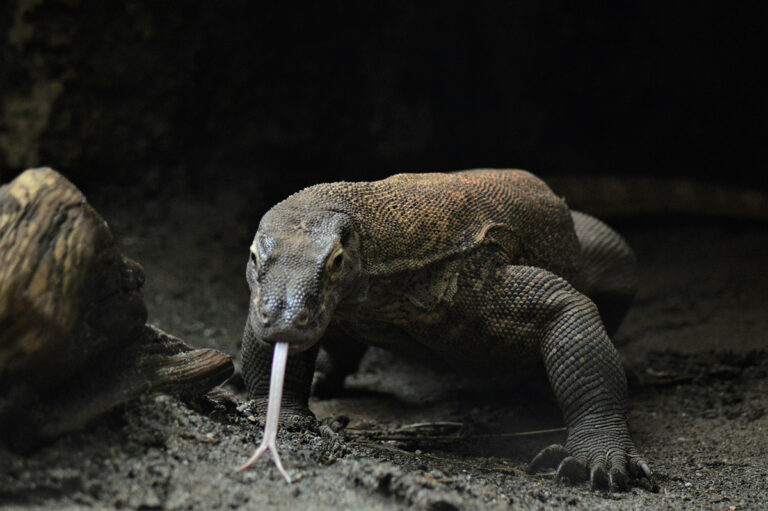
Komodo dragons have always fascinated travellers, scientists and nature lovers. Found exclusively in Indonesia, these gigantic reptiles are the largest living lizards on Earth. From the very first moment, their massive build, slow gait and piercing gaze immediately command respect. Nevertheless, beyond their impressive appearance, they play a vital role in the ecological balance of the islands where they live.
In addition, these iconic animals inhabit a unique environment, shaped by geographical isolation and specific climatic conditions. Therefore, understanding Komodo dragons also means discovering a fragile ecosystem, where each species has found its place over the millennia. Moreover, their presence bears witness to a complex natural balance, in which predation, survival and adaptation are closely intertwined.
Rinca and the Komodo Islands: a unique region
An exceptional national park
Komodo dragons live mainly in Komodo National Park, situated between the islands of Sumbawa and Flores. In fact, this park, a UNESCO World Heritage Site, comprises several islands, including Komodo, Rinca and Padar. As a result, it is one of the last natural sanctuaries where these reptiles still roam freely in their natural habitat, away from human disturbance.
Moreover, this protected area plays a particularly important role. It actively helps to preserve not only the Komodo dragons, but also the wider local biodiversity. Indeed, the park is home to a wide variety of animal and plant species. Consequently, these species constantly interact within a delicate and interdependent balance.

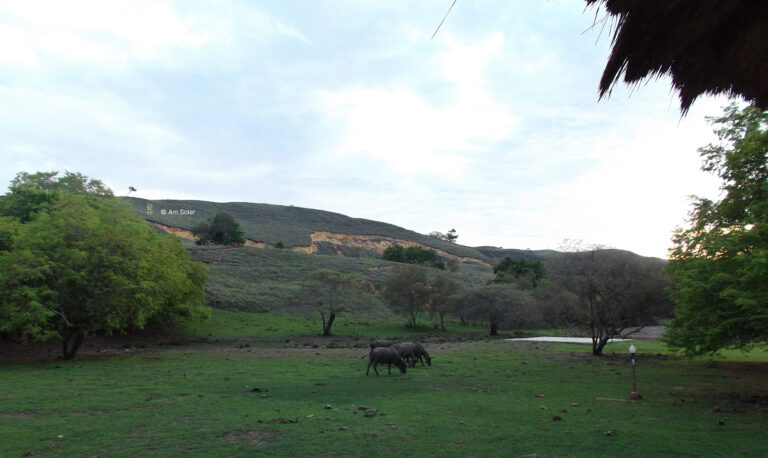
Landscapes and Natural Diversity
Contrary to what one might imagine, the Komodo Islands do not feature dense jungles. Instead, they reveal open landscapes comprising dry savannahs, arid hills and spectacular coastal areas. This diversity of natural habitats directly influences the behaviour of the Komodo dragons. In particular, it plays a role in their movements and hunting strategies.
Additionally, these landscapes also offer visitors exceptional vantage points, ideal for exploration and contemplation. Set against a backdrop of turquoise seas and rugged terrain, the contrast is immediately striking. It reinforces the impression of being in a world apart, almost untouched by the passage of time.
The natural habitat of Komodo dragons
The impact of insularity
The isolation of the islands has had a profound influence on the evolution of Komodo dragons and has directly shaped their characteristics. Indeed, having been cut off from the rest of the world for thousands of years, these animals have gradually developed unique traits. As a result, these set them apart from other species.
Thus, in the absence of large competing predators, they have gradually risen to the top of the food chain and come to dominate their environment. Consequently, this exceptional situation partly explains their impressive size. Indeed, in an isolated environment, certain species evolve towards gigantism. Furthermore, this phenomenon is well known to scientists and frequently observed on islands.
Dominant ecosystems
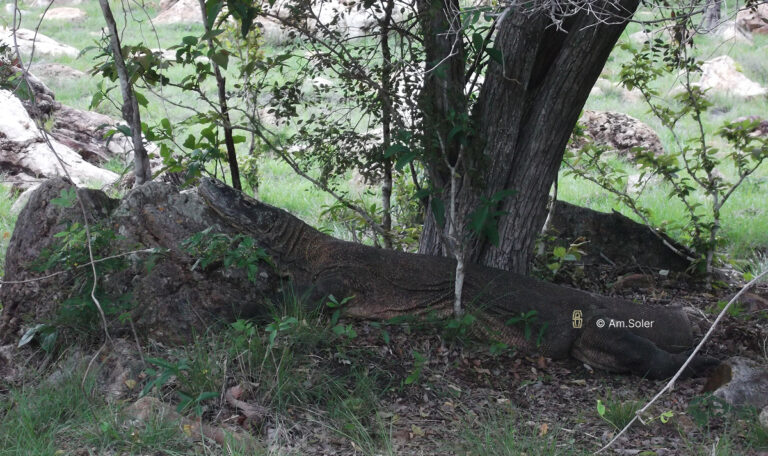
Moreover, Komodo dragons inhabit a variety of environments, ranging from open savannahs to denser forested areas. These reptiles make use of these different habitats according to their needs, using them to hunt, rest or breed, which demonstrates their great adaptability.
For example, they favour open areas so they can spot their prey more easily, whilst at the same time seek out shaded areas to protect themselves from the intense heat and regulate their body temperature. Moreover, this ability to adapt plays a vital role in their survival. Such flexibility enables them to thrive in an environment that is sometimes hostile and ever-changing.
Physical characteristics of Komodo dragons
Size and strength
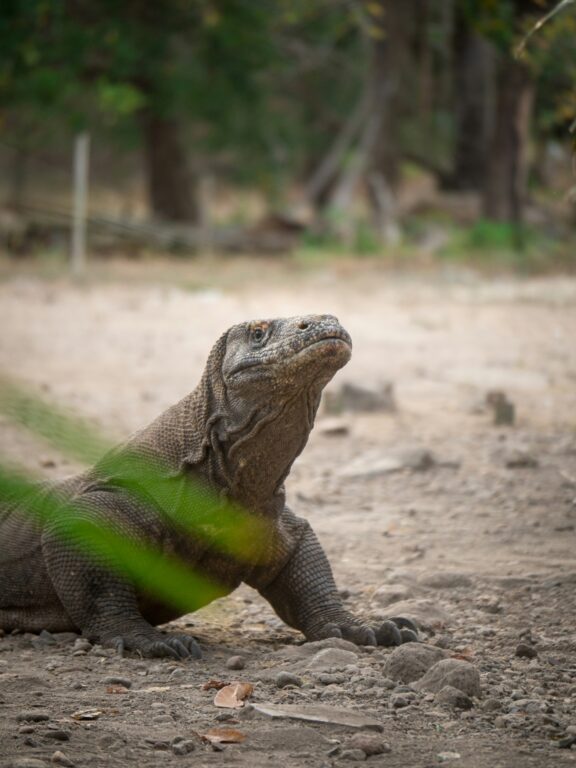
Komodo dragons are impressive in terms of their size and strength, as they can grow to over three metres in length and weigh up to 90 kilograms. These powerful reptiles are supported by powerful limbs, enabling them to move efficiently despite their heavy and slow-moving appearance. Additionally, their remarkable size contributes significantly to their dominance within the ecosystem.
In addition, their jaws are particularly formidable and constitute a major asset when hunting. Equipped with sharp teeth, they enable the dragons to tear the flesh of their prey with great efficiency. Consequently, this physical power, combined with their hunting strategy, makes them feared predators in their natural environment. As a result, they occupy a prominent position within the local food chain.
A remarkable adaptation
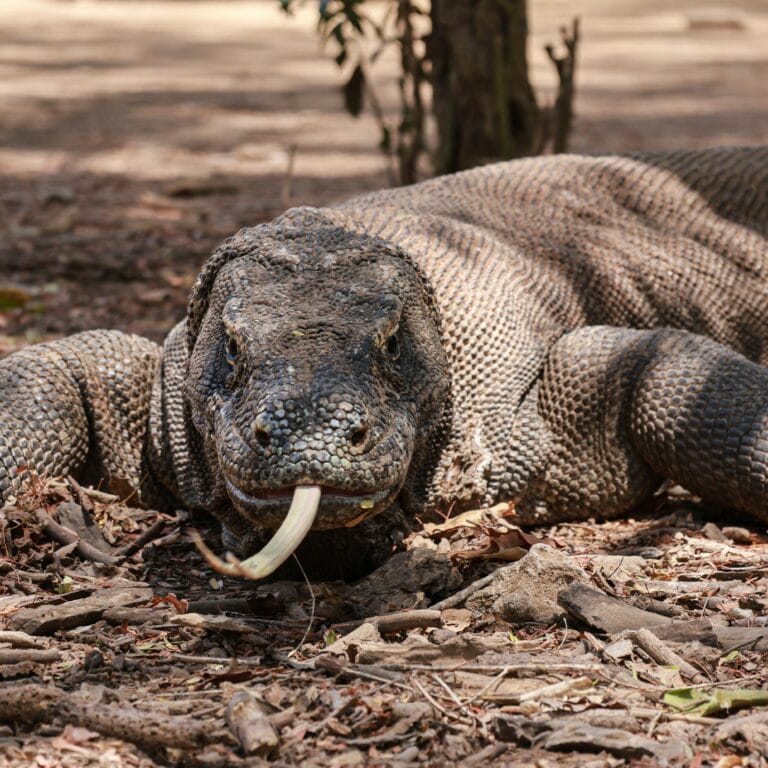
Beyond their size, Komodo dragons possess impressive adaptations that enhance their ability to survive. Indeed, a layer of thick skin, covered in sturdy scales, acts as a natural armour and protects them from external threats.
Moreover, the forked tongue plays a vital role in their perception of the environment, as it enables them to detect smells with remarkable precision. Thanks to this highly developed sense of smell, they can detect a carcass from several kilometres away, even in difficult conditions. Consequently, this ability allows them to survive even when prey is scarce and to maximise their feeding opportunities. Furthermore,, it gives them a significant advantage when searching for food across vast territories.
Behaviour and ecological role
The Komodo dragon, an apex predator
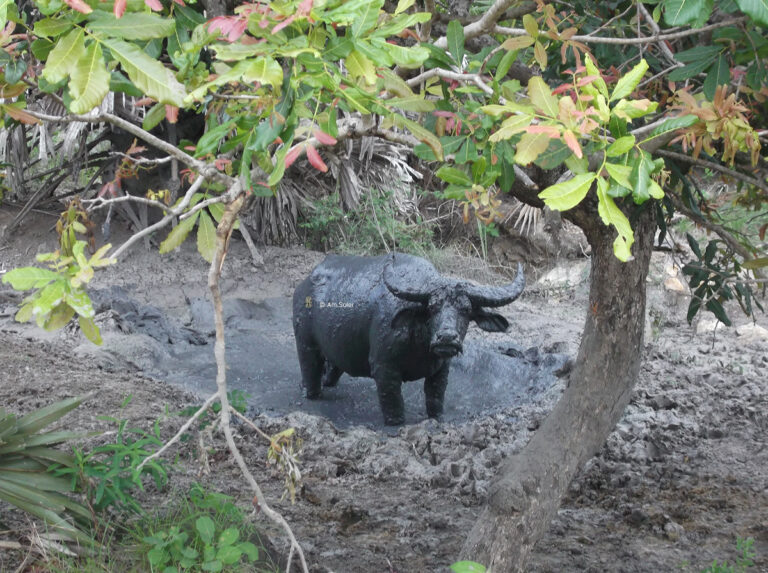
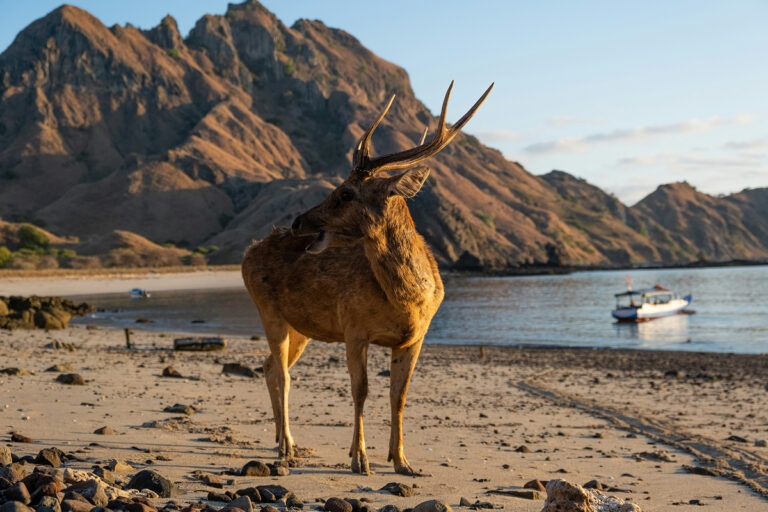
Komodo dragons clearly sit at the top of the food chain and dominate their environment. Indeed, these predators feed mainly on deer, wild boar and, more occasionally, buffalo. As such, they favour a hunting technique based on ambush: they wait patiently for prey to pass by, often concealed within their surroundings, then strike with speed and precision at the right moment.
Subsequently, once the prey is wounded, they sometimes track it for several days using their highly developed sense of smell, which can detect scents from a great distance, until it succumbs. Consequently, this strategy not only allows them to conserve energy but also significantly increases their chances of success.
Population control
However, the role of Komodo dragons is not limited to hunting. By actively controlling animal populations, they help to maintain a vital and sustainable ecological balance. Indeed, without them, certain species might proliferate excessively, which would deplete available resources and disrupt the entire ecosystem.
Thus, their presence is essential to the stability of the natural habitats in which they live. Additionally, they contribute to the healthy functioning of interactions between different species and to the preservation of local biodiversity. As a result, their ecological importance extends far beyond their role as predators.
Komodo Dragons on Rinca Island
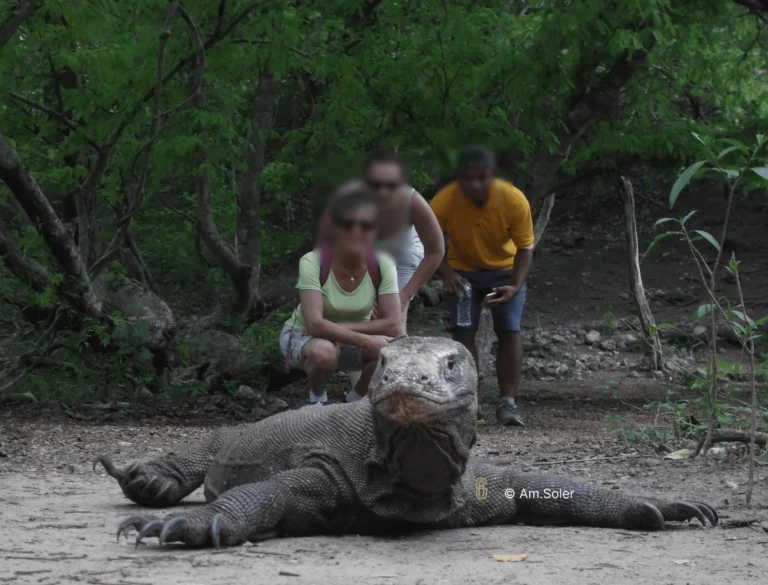
Komodo dragons are particularly easy to spot on Rinca Island, which offers ideal conditions for observing them. Indeed, unlike Komodo Island, which is often more crowded, Rinca offers a more authentic, peaceful and immersive experience.
Visitors can therefore observe these reptiles directly in their natural environment, providing a more realistic insight into their behaviour. During these excursions, visitors are accompanied by experienced guides who know the terrain and the animals’ habits inside out. Furthermore, the guides play a vital role: they ensure visitors’ safety, anticipate risky situations and share valuable information about these fascinating animals, their way of life and their ecosystem. In addition, they help visitors better understand the importance of preserving these unique habitats.
Observing Komodo Dragons Safely
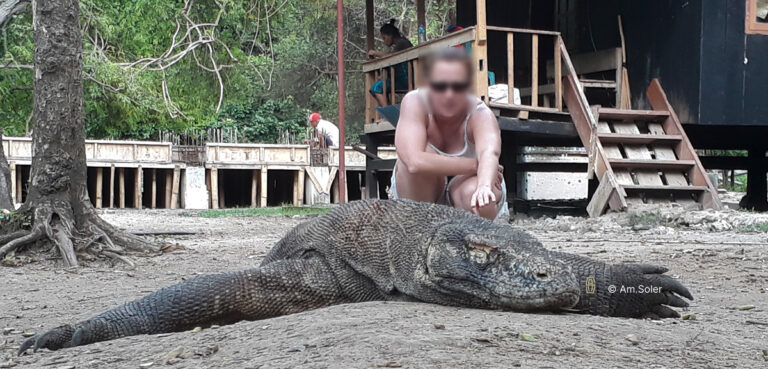
Observing Komodo dragons is a unique and memorable experience, but it nevertheless requires certain essential precautions to avoid any risk. For this reason, it is essential to keep a safe distance and to follow the instructions of the local guides carefully; they are specially trained to supervise visitors and anticipate the behaviour of these animals.
Furthermore, it is strongly advised not to feed the animals or attempt to approach them, even out of curiosity or to get better photos. Strict adherence to these rules not only ensures the safety of visitors but also helps to preserve the natural behaviour of the Komodo dragons and the fragile balance of their environment.
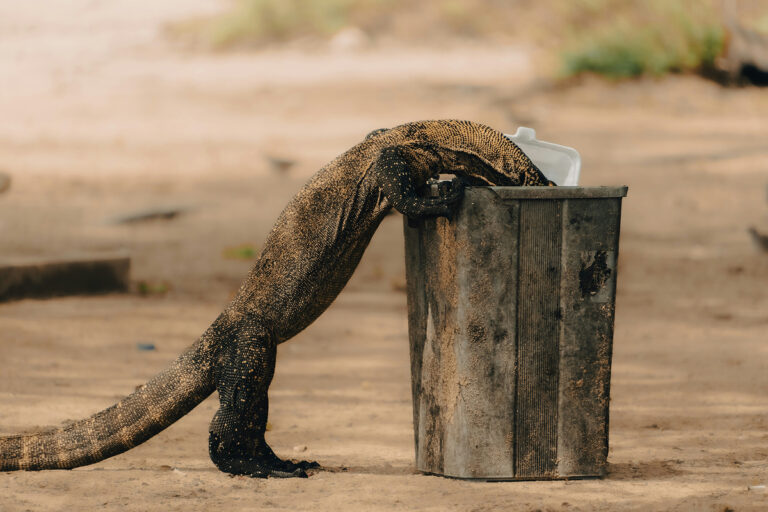
An iconic species of Indonesia
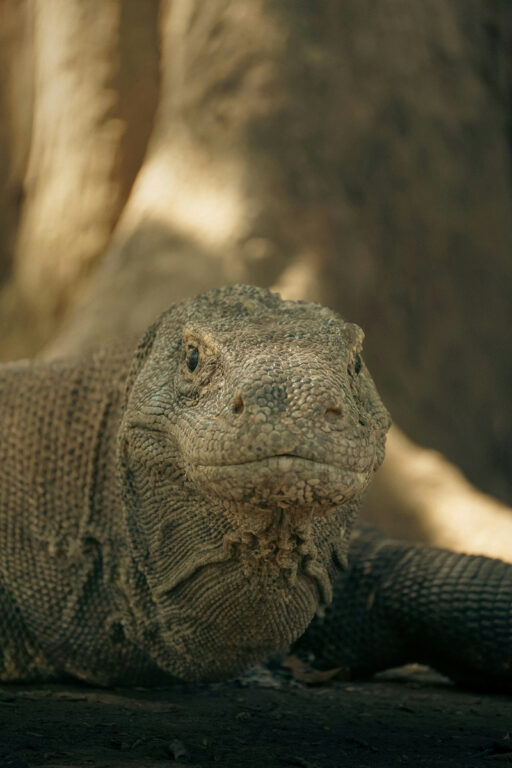
Today, Komodo dragons are a powerful symbol of Indonesia and embody the country’s natural wealth. As such, they attract thousands of visitors from all over the world every year, eager to observe them in their natural habitat and discover this unique ecosystem.
However, this growing popularity comes with a significant responsibility. Indeed, tourist numbers and environmental pressures make the protection of their habitat more essential than ever to ensure their long-term survival. Consequently, local authorities and organisations are implementing concrete conservation efforts to preserve this unique species, whilst ensuring a balance is maintained between tourism and the protection of biodiversity.
FAQs about Komodo Dragons
1. Where do Komodo dragons live?
They live mainly in Komodo National Park, Indonesia.
2. Are they dangerous?
Although powerful predators, incidents involving humans remain rare.
3. What do they eat?
Their diet mainly consists of mammals such as deer and wild boar.
4. Are they easy to spot?
Indeed, visitors can spot them quite easily on Rinca Island with a guide.
5. Why are they unique?
What makes them unique is their size and island evolution.
6. Are they protected?
Today, they are protected within Komodo National Park.
Conclusion
Ultimately, Komodo dragons are much more than just a natural curiosity. Indeed, they embody the fragile balance of a unique ecosystem, shaped by thousands of years of evolution. As such, their presence illustrates the complexity and richness of the interactions between species and their environment.
Consequently, their conservation is essential, not only for local biodiversity but also for future generations. By protecting these fascinating giants and their habitat, we enable future generations to continue to marvel at these iconic animals and to better understand the importance of preserving natural ecosystems. In this way, their protection contributes to safeguarding both biodiversity and natural heritage for the long term.
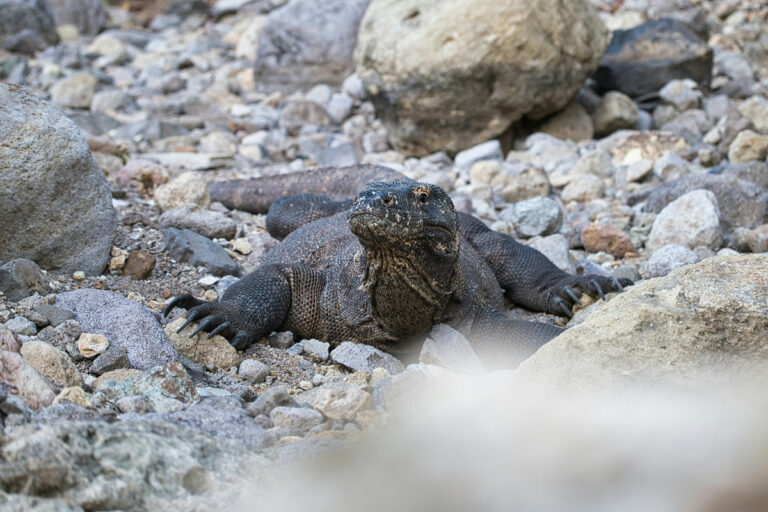
This iconic species forms part of a wider exploration of the Komodo National Park, where interactions between different habitats shape unique ecosystems. Nearby, the surrounding marine ecosystems complement this natural balance and offer numerous opportunities for marine exploration, revealing exceptional biodiversity both underwater and along the coastline.
To round off this exploration, you can consult a practical guide dedicated to Komodo dragons, which covers their habitat, behaviour and the best conditions for spotting them in the archipelago.